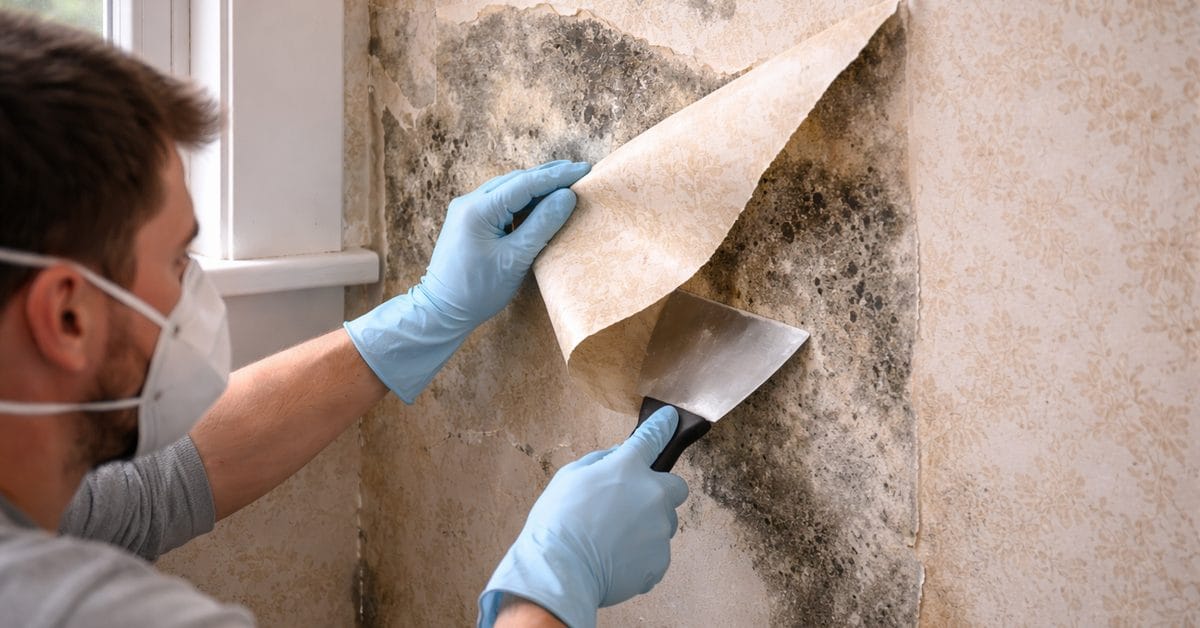
Mold on wallpaper almost always means the wallpaper needs to come down before painting. Never paint over mold — it traps moisture and the growth returns underneath. Protect yourself with an N95 mask and gloves, remove the wallpaper, treat the wall with a bleach or biocide solution, allow full drying, then prime with oil-based or shellac stain-blocking primer. When mold has reached the drywall itself, that section needs replacement first.
Mold on wallpaper is more common than most homeowners expect, and it is more serious than it looks. A patch of discoloration along a bathroom wall or in a corner behind furniture is not a cleaning problem. It is a moisture problem, and the wallpaper usually has to come down before anything can be done about it.
I deal with this regularly on interior painting and wallpaper removal jobs throughout Auburn and Placer County. This is how the process actually works.
How Do You Identify Mold on Wallpaper?
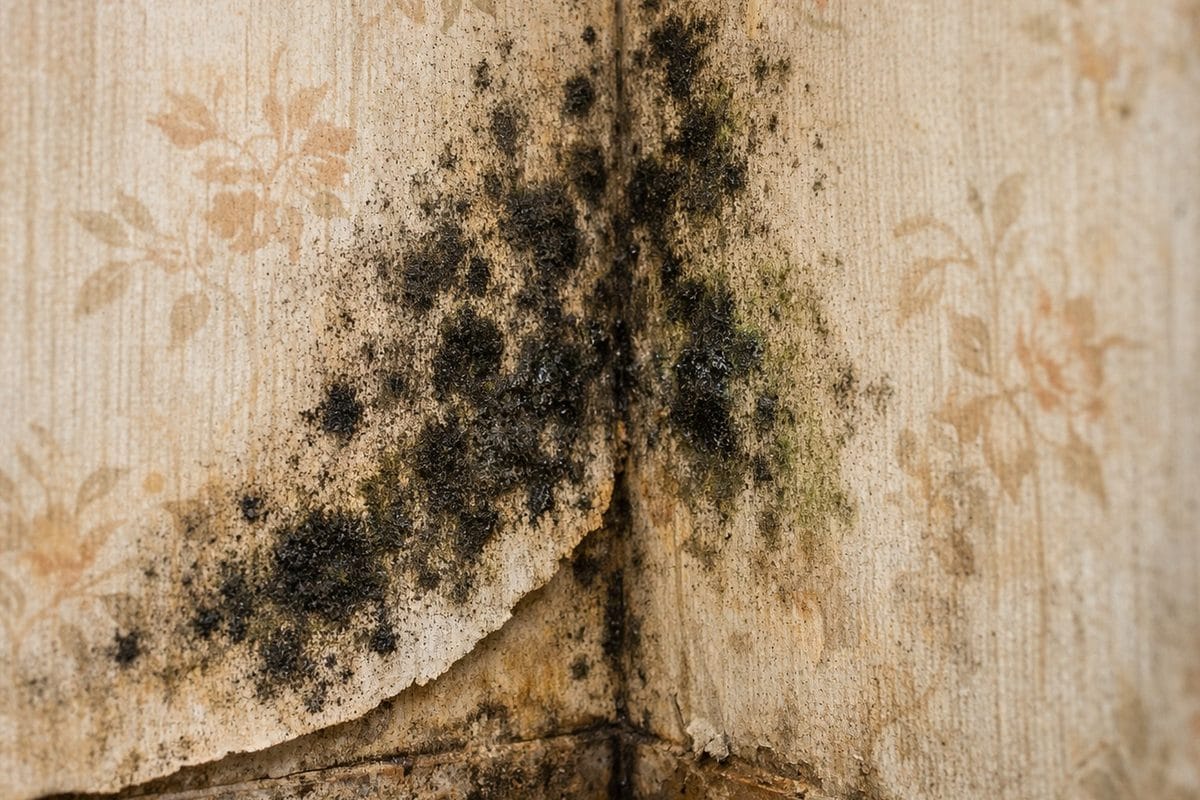
Mold on wallpaper typically shows up as dark spots, patches, or streaks, most often black, green, or gray. It is most common in areas with high moisture: bathrooms, kitchens, laundry rooms, and exterior walls with insulation or vapor barrier issues.
Surface mold on the face of the wallpaper is visible and obvious. The more serious issue is mold that has developed behind the wallpaper, between the paper and the wall surface. That kind of mold shows up as a musty smell, soft or bubbled wallpaper, or discoloration that does not wipe clean.
If the wall feels soft or spongy, or if there is a persistent musty smell in the room, the problem likely extends into the drywall itself. That may require drywall replacement, not just wallpaper removal.
Why Should You Never Paint Over Mold?
Painting over mold does not solve the problem. It seals the mold in temporarily, but mold feeds on the organic material in paper, drywall facing, and paint itself. Without removing the source and addressing the moisture, the mold continues to grow behind the new paint layer and the problem resurfaces, usually worse than before.
Any responsible paint job in a room with known mold starts with wallpaper removal and mold treatment, not a coat of stain-blocking primer.
What Materials Do You Need?
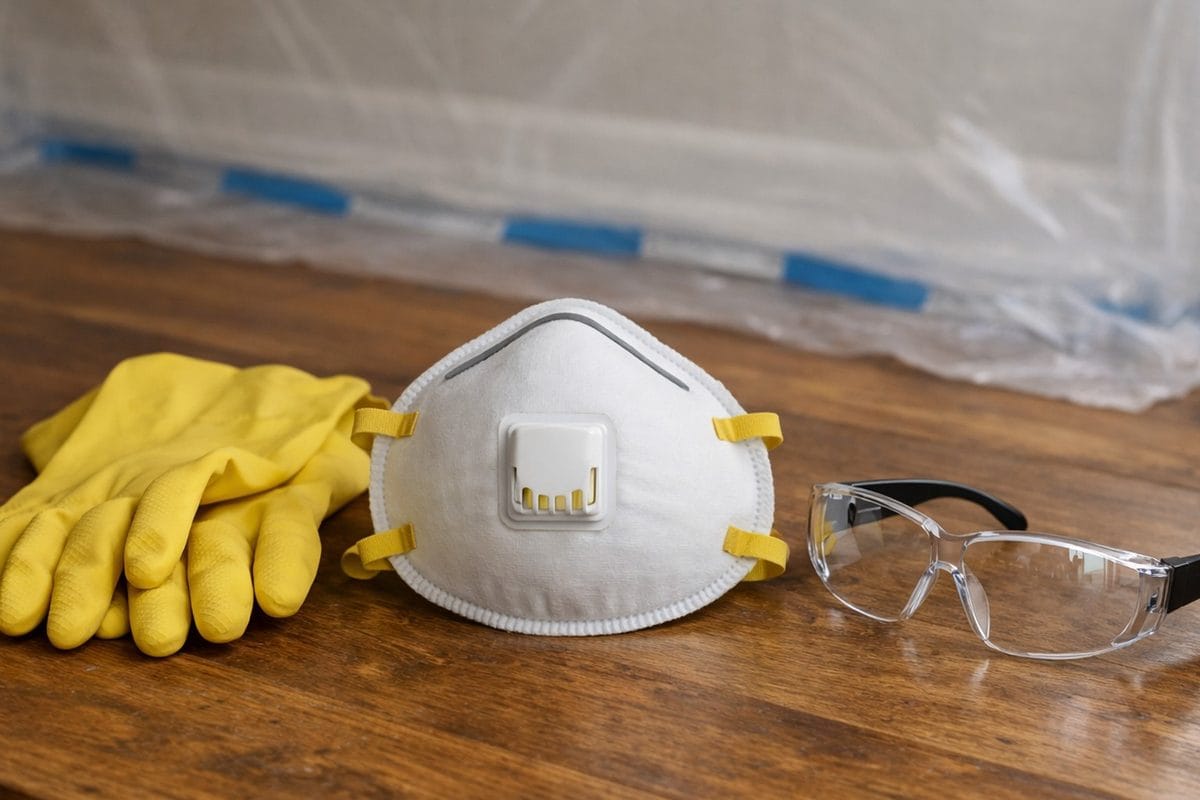
- N95 respirator mask
- Rubber gloves and safety glasses
- Plastic sheeting to protect floors and seal vents
- Wallpaper scoring tool and wide scraper or putty knife
- Wallpaper removal solution (or fabric softener and warm water)
- Mold-killing solution: 1 cup bleach per gallon of water, or a commercial mold remover
- Clean sponges and rags
- Patching compound for any damaged drywall
- Stain-blocking primer (oil-based or shellac for areas with staining)
Step 1: How Do You Set Up and Protect Yourself?
Mold spores become airborne when disturbed. Before you start, put on the N95 mask, gloves, and eye protection. Lay plastic sheeting on the floor and seal off any HVAC vents in the room to prevent spores from spreading through the ventilation system.
Open a window to ventilate but do not use a fan pointed at the wall, that spreads spores more widely.
Step 2: How Do You Remove the Wallpaper?
Score the wallpaper lightly with a scoring tool, just enough to perforate the surface without gouging the drywall beneath. Apply wallpaper removal solution or a mixture of warm water and a small amount of fabric softener, let it soak in for a few minutes, then peel or scrape the paper off. Work in sections and keep the surface wet enough that the paper releases without tearing into the drywall facing.
Wallpaper removal is one of the more tedious parts of any interior repaint. If the existing wallpaper is old or was installed without proper sizing, removal can damage the drywall and require significant patching. I handle wallpaper removal if you would rather not do this part yourself.
Step 3: How Do You Treat the Wall for Mold?
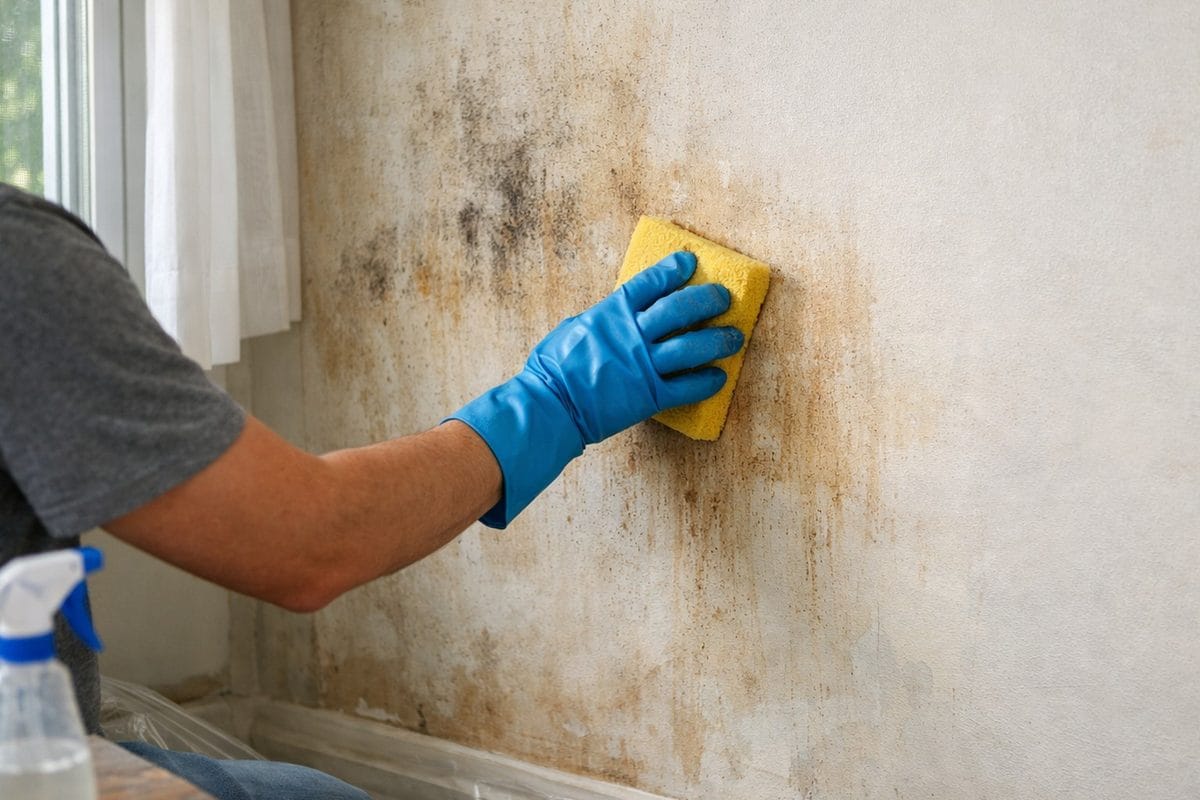
Once the wallpaper is off, inspect the wall closely. Any areas with visible mold or dark staining need to be treated before anything else goes on the wall.
Apply a diluted bleach solution (1 cup bleach per gallon of water) or a commercial mold remover to the affected areas. Scrub with a sponge or stiff brush. Let the solution sit on the surface for at least 10 to 15 minutes before wiping off and rinsing with clean water. Contact time matters, do not rinse immediately.
If the mold has penetrated into the drywall itself, the paper facing has dark staining that does not clean off, or the drywall feels soft, that section of drywall needs to be cut out and replaced.
Step 4: How Do You Patch, Prime, and Prep for Painting?
After treatment and full drying (24 to 48 hours), inspect the surface for any damage from the wallpaper removal. Skim-coat or patch any areas where the drywall facing was torn or damaged. Let the compound dry fully and sand smooth.
Prime the entire wall with a high-adhesion primer. For any areas that had significant mold staining, use an oil-based stain-blocking primer or a shellac-based primer like Zinsser BIN. These seal staining reliably; water-based stain blockers may let heavier staining bleed through. After primer, the wall is ready for the topcoat finish.
What Causes Mold on Wallpaper?
Mold needs moisture to grow. Wallpaper mold almost always traces back to one of these sources:
- Poor bathroom ventilation. Steam from showers and baths condenses on walls and gets behind wallpaper over time.
- Plumbing leaks. A slow leak inside a wall creates consistent moisture that is ideal for mold growth.
- Exterior moisture intrusion. Failed caulk around windows, damaged flashing, or missing vapor barrier can allow moisture into the wall cavity.
- Condensation on cold exterior walls. In older homes without adequate insulation, exterior walls in cold weather can develop condensation.
Removing and treating the mold addresses the symptom. Identifying and fixing the moisture source addresses the cause. If the moisture issue is not resolved, mold will return after the wall is repainted.
When Should You Call a Professional?
If the affected area is larger than 10 square feet, if mold has grown into structural materials, or if you suspect a plumbing or exterior moisture issue is driving it, call a professional mold remediator. For the painting and wallpaper removal side of the job once remediation is complete, get in touch and I can give you a straightforward estimate.
Frequently Asked Questions
Can mold on wallpaper spread to other areas of the house?
Yes. When you disturb mold during removal, spores become airborne and can settle on other surfaces. That is why ventilation, sealing off HVAC vents, and wearing an N95 mask during removal are important. In a home with central air, mold spores from one room can travel through the duct system if vents are not sealed off during the work.
Can I use bleach to kill mold on wallpaper without removing it?
Bleach can kill surface mold, but it does not penetrate porous materials like wallpaper effectively. The mold roots may survive even after the surface looks clean. On top of that, applying bleach solution to wallpaper often damages the paper and backing. The more reliable approach is to remove the wallpaper and treat the wall surface directly.
How do I know if the mold is behind the wallpaper or just on the surface?
Surface mold is visible on the face of the wallpaper and may wipe off with a damp cloth. Mold behind the wallpaper often shows up as a musty smell, soft or blistered wallpaper, or discoloration that bleeds through from behind. If the wallpaper feels soft or spongy in a spot with no visible damage, that is a sign of moisture and likely mold behind the paper.
Do I need to replace the drywall if it has mold?
It depends on how deeply the mold has penetrated. If the mold is only on the paper facing and the drywall is still solid, cleaning and treating the surface followed by a stain-blocking primer is often sufficient. If the drywall is soft, crumbling, or has mold growing through its core, that section needs to be cut out and replaced.
What primer should I use after removing mold from wallpaper?
Use a stain-blocking primer on any areas that had mold or staining. For reliable results on problem areas, an oil-based or shellac-based primer, such as Zinsser BIN or Kilz Original, outperforms water-based stain blockers. Water-based stain blockers are fine for light staining but can let heavier mold staining bleed through standard paint.
How do I prevent mold from coming back after repainting?
Fix the moisture source first. If mold came from bathroom steam, improve ventilation, run the exhaust fan during and for 20 minutes after every shower. In other cases, identify and fix the specific moisture pathway: seal around windows, address flashing issues, repair plumbing leaks. Mold-resistant primer and paint help but do not compensate for an ongoing moisture problem.
Wallpaper removal and interior painting are services I offer throughout Auburn and Placer County. If you need a house painter in Auburn for wallpaper removal or a full interior repaint, take a look at what I offer.
Need Help With Wallpaper Removal or Interior Painting?
Serving Auburn, Granite Bay, Rocklin, and Placer County.