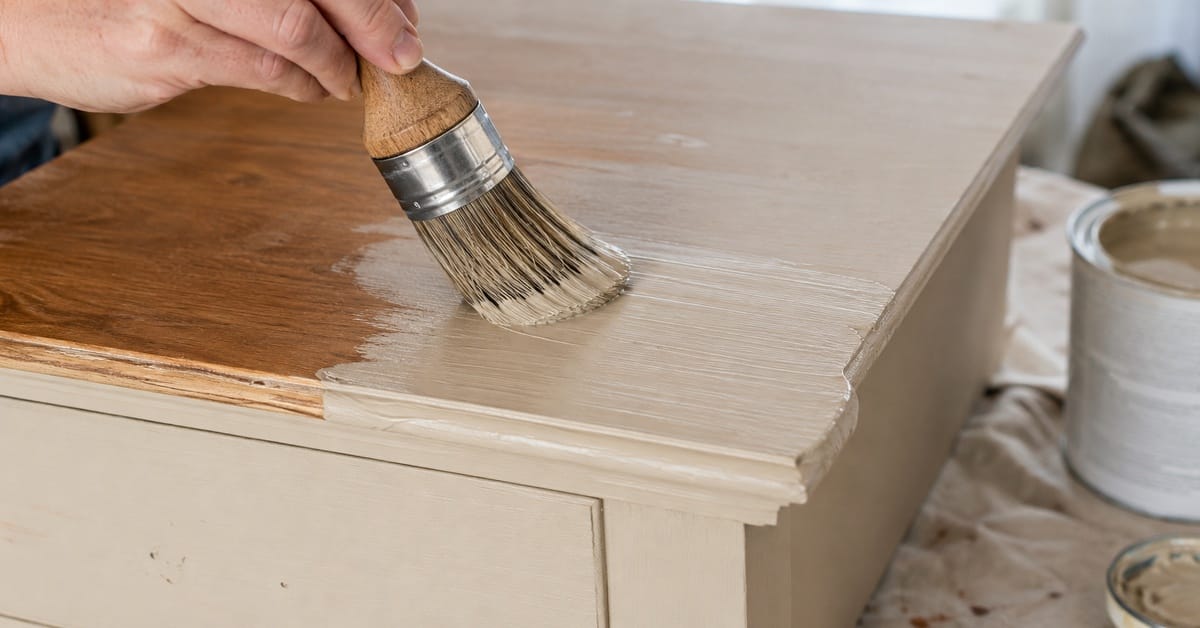
Chalk paint works well for decorative, low-traffic furniture pieces, but it requires a topcoat to be durable. Without wax or polyurethane on top, chalk paint will scratch and wear quickly. The finish looks beautiful, but the paint itself is porous. The topcoat is where the durability comes from, not the chalk paint itself.
Chalk paint is everywhere. You see it in furniture stores, home improvement aisles, and all over social media, dressers, tables, and chairs painted in soft colors with distressed finishes. The appeal is obvious: it goes on thick, covers well, requires almost no prep, and you don’t need any special equipment. But here’s what most people don’t understand: chalk paint is not magic. It’s not more durable than regular paint. It’s not tougher. What it is, is easy to apply. And that’s the real draw. After 20 years painting everything from walls to decks as a house painter in Auburn and throughout the surrounding area, I can tell you exactly where chalk paint excels and where it falls flat.
The honest truth is that chalk paint works great for a specific type of project, decorative pieces in low-traffic areas. For dining chairs, kitchen tables, or anything that gets daily use, chalk paint without a proper topcoat will scratch, chip, and look worn within months. The topcoat is where the durability comes from, not the chalk paint itself. If you understand this going in, chalk paint can be the right choice for the right project. Let me break down when it makes sense and when it doesn’t.
What Is Chalk Paint and How Does It Work?
Chalk paint is a water-based paint with higher pigment content and lower binder content than standard paint. The result is a matte, velvety finish that looks luxe and applies thick. The low binder means the paint particles don’t bond as strongly to each other or to the surface underneath, which is why chalk paint is porous. That porosity is what makes it stick to surfaces without sanding or priming, but it’s also what makes it vulnerable without a protective topcoat.
Think of chalk paint like wallpaper paste: it adheres well without primer because it’s slightly tacky and porous. But like paste, it’s not inherently durable. You can feel the difference immediately. Standard paint feels smooth and hard when dry. Chalk paint feels slightly powdery, you can actually smudge it with your thumb if it hasn’t been topcoated.
This is why brands like Annie Sloan, Rust-Oleum, and others always recommend a topcoat. The topcoat (either wax or polyurethane-based) is what actually protects the finish. The chalk paint is doing the cosmetic work: covering the substrate, providing the color and matte finish, and looking beautiful. The topcoat is doing the durability work.
When Does Chalk Paint Actually Work Well?
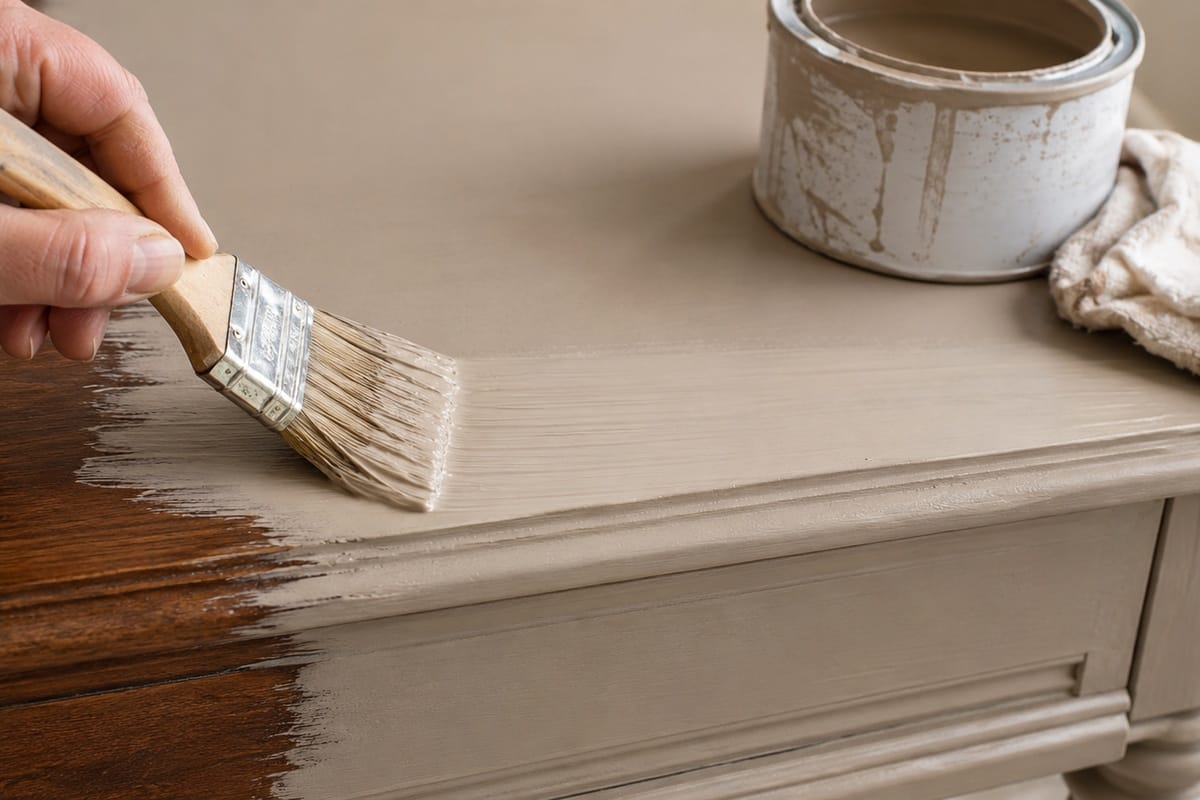
I recommend chalk paint for decorative pieces that live in low-traffic areas or pieces that are more about looks than function. A bookshelf, a nightstand that you don’t use much, a decorative mirror, a plant stand, a small side table, these are good candidates. The chalk paint finish looks beautiful, applies easily, and the risk of wear is low because the piece isn’t getting hammered every day.
If you want professional results, take a look at my specialty painting services.
Distressing (sanding the edges to show wood underneath) works great with chalk paint because the contrast between the matte chalk paint and the bare wood looks intentional and charming. If that finish chips or scratches in the future, it blends with the distressed look rather than looking like damage. This is actually one of chalk paint’s strengths in the right context.
Storage pieces in bedrooms or living rooms, dressers, chests, shelving units used occasionally, work fine with chalk paint plus topcoat. The key is that they’re not being sat on, leaned on, or handled constantly.
Pieces that already have some personality or imperfections are also good candidates. Chalk paint’s matte finish and natural variation hide flaws better than glossy paint. You don’t need a perfect substrate.
When Does Chalk Paint Fail?
Chalk paint without a topcoat will not hold up on a dining table. Dining tables get spilled on, wiped with damp cloths, and covered with hot dishes. The chalk paint finish will soften, scratch, and eventually feel more like drywall than furniture. I’ve seen homeowners paint a dining table with chalk paint, love the look for three weeks, and then despair when the finish starts failing by week four.
Kitchen chairs are another common mistake. Chairs take abuse. People lean back on them, spill on them, wipe them down. Chalk paint chairs need a tough topcoat, and even then, the edge wear where hands grip the backrest will be visible within a season or two. If you like that shabby aesthetic, fine. If you don’t, you’ll be repainting the chairs every year.
Coffee tables are a hard no without a topcoat. Too much happens on a coffee table, coffee cups, moisture, kids, pets. Chalk paint will fail.
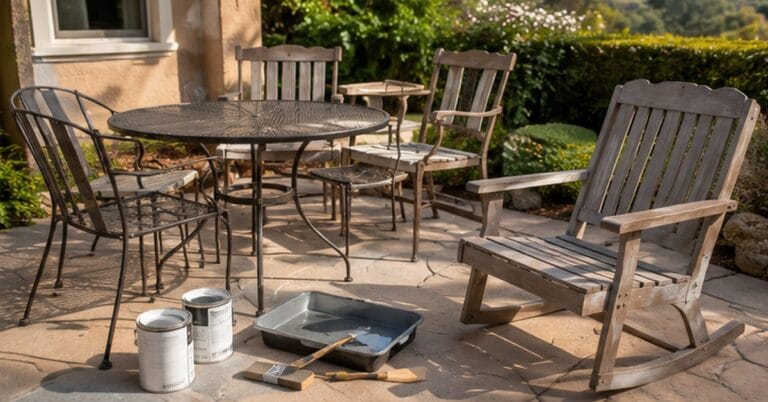
Outdoor furniture painted with chalk paint is also a mistake. Chalk paint is water-based, and outdoor moisture will eventually soften it. UV will fade it faster than it fades indoor paint. Use exterior paint for outdoor pieces.
The problem isn’t that chalk paint is bad paint. The problem is that people use it where it’s not designed to work, or they skip the topcoat to save money or time, and then are surprised when it fails.
Should You Use Wax or Polyurethane as a Chalk Paint Topcoat?
This is where chalk paint projects get complicated. You have two topcoat options, and they’re very different.
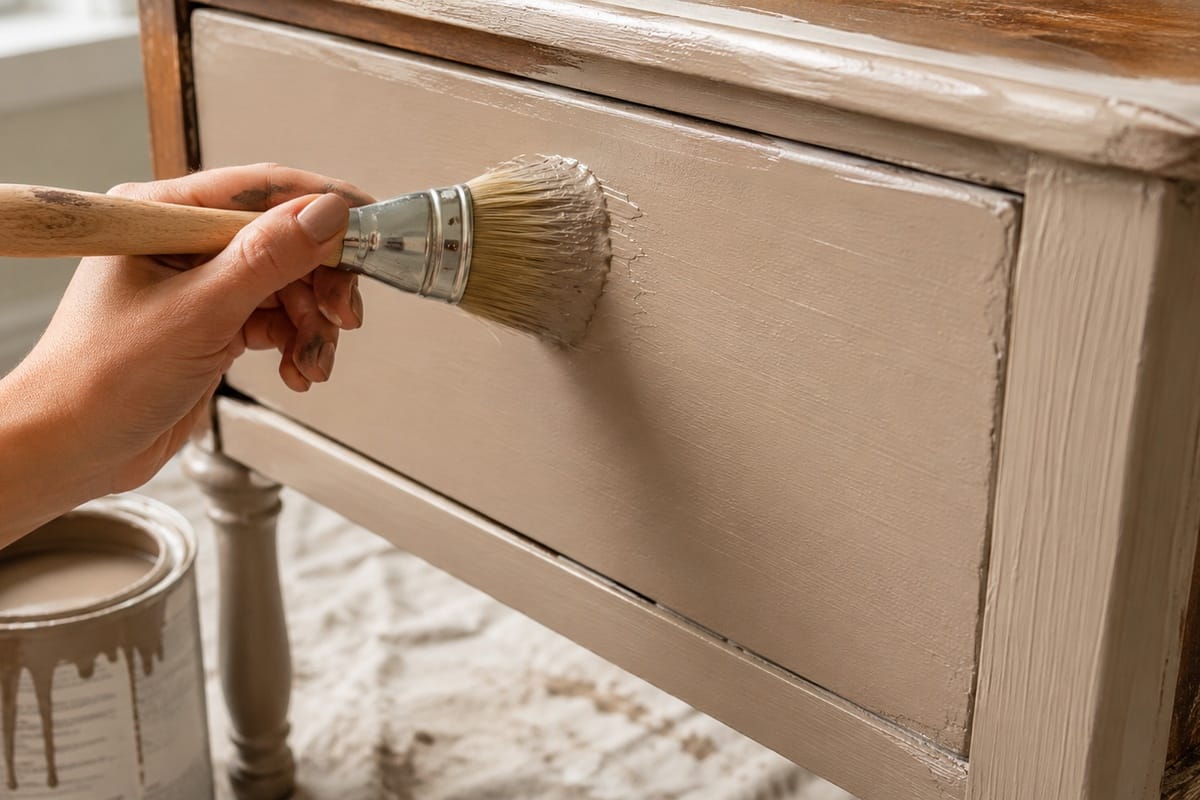
Wax topcoat (like Annie Sloan Clear Wax or similar products) gives a beautiful soft sheen and feels luxurious. It’s easy to apply, just brush or wipe it on, let it dry, and buff it. The downside is that wax needs regular maintenance. Every 6-12 months, depending on use, you need to reapply it. It scuffs and wears faster than polyurethane, so high-traffic pieces will show marks. Wax also isn’t food-safe and can’t handle moisture well, so don’t use it on kitchen tables or pieces that get wet. It’s ideal for low-use decorative pieces.
Polyurethane topcoat (water-based or oil-based) is tougher and more durable. One coat of good poly provides more protection than wax. It handles moisture better, scuffs less, and lasts longer without reapplication. The downside is that polyurethane doesn’t have the soft, luxe feel of wax. It adds shine (unless you use a matte poly, which is rare). It can also yellow slightly over time if you use oil-based poly, and water-based poly can be finicky to apply (it shows brush strokes more easily than wax). But for actual durability on pieces that get use, polyurethane is the right choice.
If you’re painting a dining chair or table, polyurethane is non-negotiable. Wax won’t cut it. If you’re painting a nightstand or decorative piece, wax is fine and looks better. If you want the best of both worlds, prime with chalk paint, apply a base coat of polyurethane for durability, then apply wax on top for the look.
How Many Coats of Chalk Paint Do You Need?
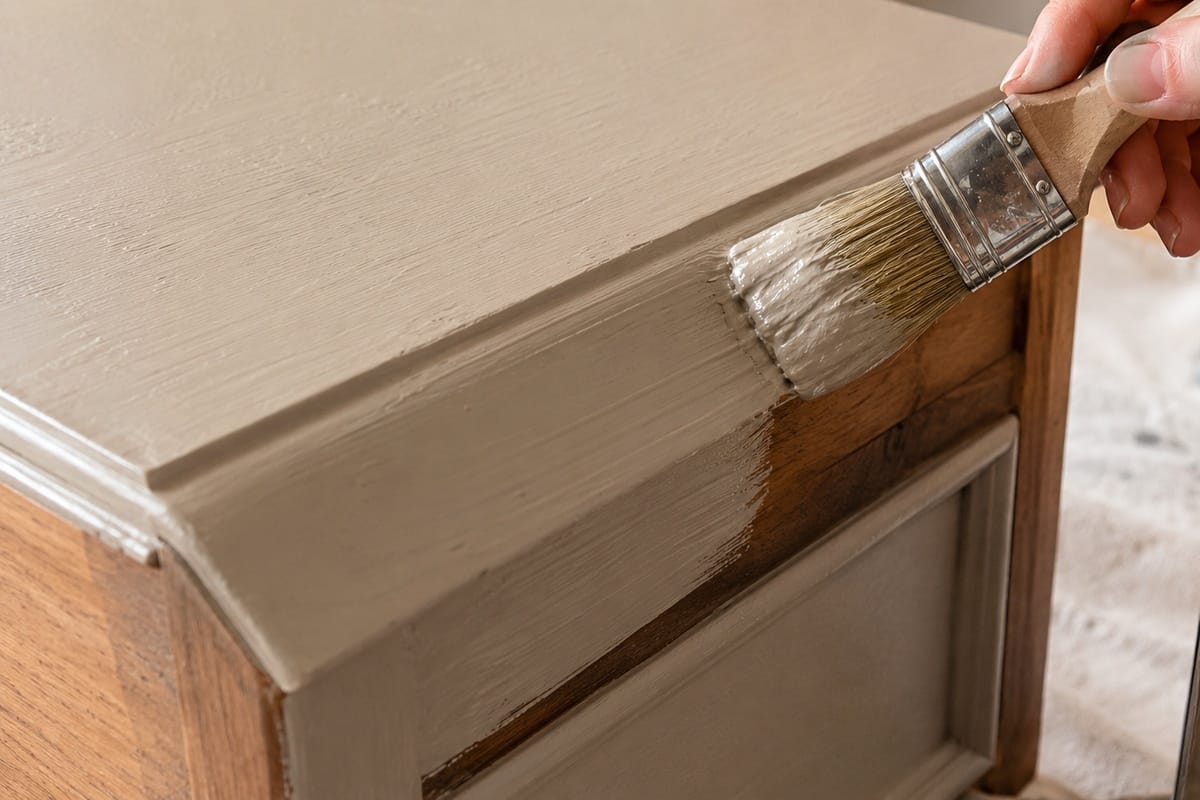
Chalk paint is thick and covers well, but you still need two coats minimum for even color. Apply thin coats rather than one thick coat. Thick coats dry unevenly and can crack or peel. Thin coats overlap nicely and create a more uniform finish.
Let each coat dry fully (check the can, usually 4-6 hours) before applying the next. Don’t sand between coats like you would with regular paint, the whole point of chalk paint is that you don’t need to. Light sanding with 220-grit if you really want to, but it’s optional. Chalk paint has enough tooth that the next coat will adhere without sanding.
If you want a distressed look, do it after both coats are fully dry. Sand the edges, corners, and anywhere that would naturally wear. Use 120-grit sandpaper and sand lightly until the wood or primer underneath shows through. Wipe away the dust before topcoating.
For topcoat, follow the product directions closely. Wax is usually one coat, applied thin with a brush or lint-free cloth, then buffed when dry. Polyurethane is usually two thin coats (unlike chalk paint, you do sand lightly between poly coats). This matters for durability.
How Much Prep Work Does Chalk Paint Actually Require?
This is chalk paint’s genuine advantage. Most furniture doesn’t need to be sanded before chalk paint. You can paint over varnish, stain, gloss, whatever. Clean it, maybe give it a wipe-down with TSP (trisodium phosphate) to remove grease and dust, and you’re ready to paint.
If the furniture is greasy (kitchen cabinets, pieces that have been touched a lot), use TSP. If it’s dusty, just vacuum or wipe. If there’s loose paint or varnish, sand off the loose bits. But generally, chalk paint requires way less prep than standard paint or stain, and that’s real value.
The exception: glossy surfaces. High-gloss finishes (like old polyurethane) should get a light scuff with 150-grit sandpaper before chalk paint. The chalk paint will stick, but the adhesion is better if you rough up that glass-smooth surface slightly.
Is Chalk Paint More Expensive Than Regular Paint?
Chalk paint is more expensive per gallon than standard paint. A gallon of chalk paint runs $30-50, sometimes more for brand names. A gallon of quality latex paint runs $15-25. But chalk paint covers really well, so you use less. A single piece of furniture might only need a quart or two of chalk paint.
The real cost difference appears when you factor in the topcoat. Good wax or polyurethane adds another $15-30. So a modest furniture project, a nightstand or side table, might cost $30-50 in chalk paint plus topcoat, versus $15-25 in standard paint plus stain and topcoat. It’s not dramatically more expensive, but it’s not cheaper either.
Where chalk paint shines cost-wise is the labor. You skip sanding, stripping, or prep. If you’re paying someone to paint furniture, the time savings are significant. For a DIY project, the time savings are personal, you’re giving up a few hours of prep in exchange for a faster application.
Is Chalk Paint Worth It?
Here’s my honest answer: chalk paint is worth it for the right project. If you’re painting a decorative piece, a nightstand, shelf, small dresser, bookcase, and you’re willing to apply a wax or poly topcoat, chalk paint is a great choice. It looks beautiful, applies easily, and holds up fine in low-traffic areas.
If you’re painting furniture that gets actual use, dining tables, chairs, kitchen pieces, chalk paint without a really solid topcoat is a mistake. You’re better off with standard paint or going a different direction entirely (stain, professional refinishing, etc.). And if you’re painting outdoor furniture, skip chalk paint entirely.
The hype around chalk paint often oversells what it does. The reality is more nuanced. It’s a good tool for the right job, not a magic solution. If you understand what chalk paint actually is and isn’t, and you choose your project wisely, it can deliver that beautiful, low-fuss finish everyone wants. But if you’re expecting durability without topcoat, or longevity without maintenance, you’ll be disappointed.
For outdoor pieces, chalk paint isn’t the answer. See my guide on painting outdoor furniture for the right exterior techniques.
If you’d rather have a professional handle the job, I’m a house painter in Auburn who takes on furniture and specialty projects. Get in touch and we can talk through what makes sense.
Frequently Asked Questions
Does chalk paint need a primer?
No, chalk paint does not require primer. That's one of its main advantages. It adheres well to most surfaces, glossy finishes, stain, varnish, paint, without primer. For very glossy surfaces, a light sanding (150-grit) helps adhesion more than primer would. You can paint chalk paint directly over most existing finishes after a clean.
Does chalk paint scratch easily?
Without a topcoat, chalk paint scratches and marks readily. That's because the paint itself is porous and not very hard. With a wax topcoat, some scratching is visible but acceptable for decorative pieces. With a polyurethane topcoat, scratch resistance is much better. For any piece that gets actual use, a topcoat is essential.
What topcoat should I use on chalk-painted furniture?
It depends on the piece. For decorative or low-use furniture, chalk paint wax (like Annie Sloan Clear Wax or similar) looks beautiful and is easy to apply. For furniture that gets daily use, tables, chairs, kitchen pieces, polyurethane is much more durable. Water-based polyurethane is easier to apply and doesn't yellow, but oil-based is also an option. Apply according to product directions, typically 1-2 coats.
How long does chalk paint last on furniture?
With a good topcoat, chalk paint can last several years to a decade on low-to-moderate use pieces. On high-traffic pieces without topcoat or with only wax, you might see visible wear within 6-12 months. Maintenance (re-waxing, gentle cleaning) extends the life. If you want long-term durability on heavily used furniture, standard paint with poly topcoat or professional refinishing is a better investment.
Can you use chalk paint on outdoor furniture?
Not recommended. Chalk paint is water-based and not formulated for outdoor UV exposure or moisture. It will fade, soften, and fail outdoors. For outdoor furniture, use exterior-grade paint (acrylic latex or oil-based), which is made to withstand weather. Or use spray paint formulated for outdoor metal furniture. Follow my guide on painting outdoor furniture instead.
Is chalk paint more expensive than regular paint?
Chalk paint costs more per gallon ($30-50) than standard paint ($15-25), but it covers really well and you use less per project. The bigger cost factor is the topcoat (wax or poly), which adds $15-30. For a single small piece, you might spend $40-60 total versus $20-40 for standard paint. For labor savings on skipped prep, chalk paint can be cost-effective.
Ready to talk through your furniture project? Get in touch and I’ll help you figure out the right approach.