

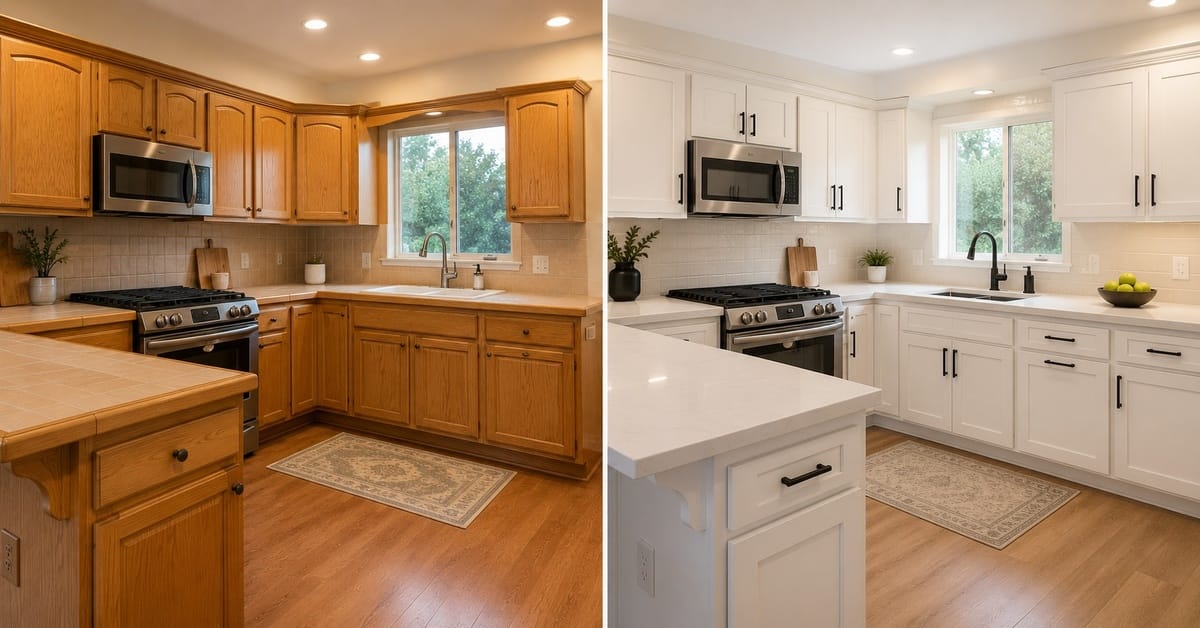
A professional cabinet paint job transforms a kitchen more dramatically than almost any other interior update. The key factors are prep quality, paint selection, and hardware. Dark honey oak to white, builder beige to navy, stained wood to modern gray. These transformations work because the underlying process is repeatable. I’ve done hundreds of cabinet jobs across Auburn and Placer County, and the results look like a new kitchen every time.
There’s a specific moment when I hand a homeowner the keys back after a cabinet painting job. They walk into their kitchen, and something shifts. The space doesn’t just look different, it feels different. The same kitchen, same layout, same appliances. But the cabinets have become a frame, not a distraction, and suddenly the whole room works.
I’ve been painting cabinets across Auburn and Placer County for over twenty years, and the change is dramatic enough that homeowners consistently tell me it looks like a new kitchen. What makes the difference is understanding what drives the transformation: prep quality, the right paint, and hardware that completes the update.
What Are the Most Common Cabinet Color Transformations?
The same color changes appear in kitchens across our area, and there’s a reason. Certain cabinet finishes dominated certain decades, and now homeowners are moving past them. Understanding these common moves helps you think about what direction makes sense for your kitchen.
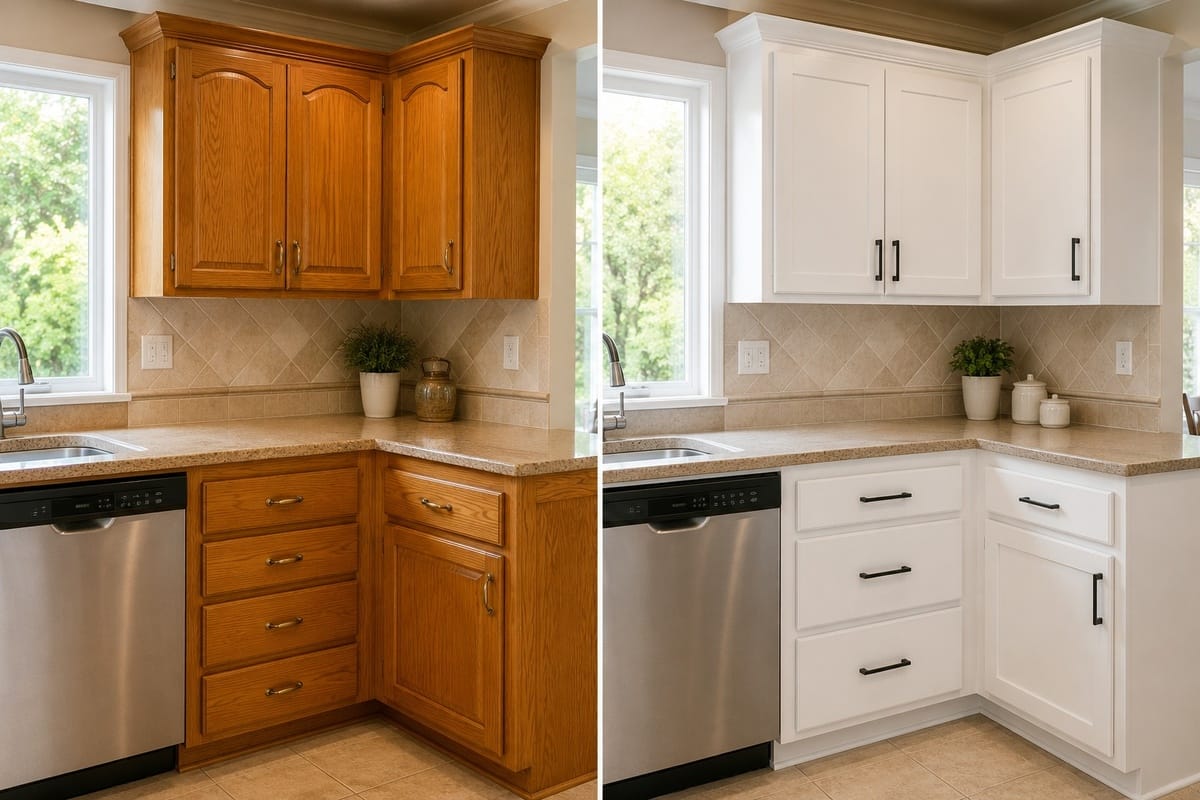
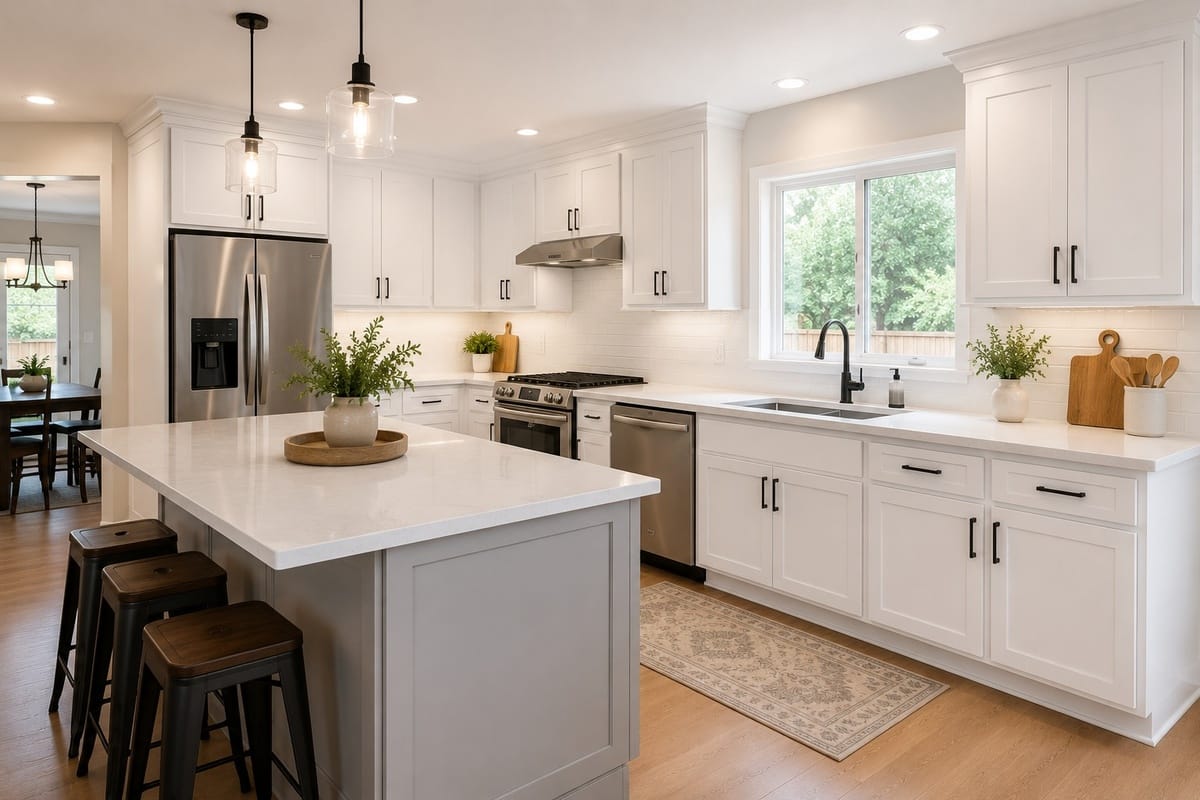
- Dark honey oak to white or off-white. This is the single most common transformation I do. Late 1990s and early 2000s kitchens are full of honey oak cabinets, warm, but dated by modern standards. Painting them a crisp white or soft off-white (Benjamin Moore Swiss Coffee, Chantilly Lace) opens up the entire kitchen visually. Kitchens feel larger, brighter, more contemporary. This works especially well with granite or quartz counters and stainless steel appliances.
- Stained wood to modern gray. Warm wood tones haven’t disappeared, but the shift toward cooler grays is dramatic. Gray-stained or painted cabinets read more modern and pair beautifully with white subway tile, white quartz, and a mix of finishes. This transformation is less about hiding wood and more about refreshing the undertone.
- 90s green or mauve to navy or charcoal. Some kitchens have deeply saturated colors from the 1990s, forest green, dusty mauve, even teal. These read dated instantly. A single paint color change to a sophisticated navy or charcoal (Sherwin-Williams Naval, Urbane Bronze) converts the room to contemporary without structural changes.
- Builder-grade beige to two-tone. Many cookie-cutter homes from the 2000s have flat beige cabinets, upper and lower all the same. Painting uppers white and lowers a deeper gray or navy creates visual interest and sophistication without replacing anything. Two-tone is a designer move that feels intentional.
- Laminate or MDF from the 1980s to any painted finish. Older engineered cabinets often have a dark, plastic-look finish. Painting them white, gray, or cream instantly modernizes them. The existing surface doesn’t matter as much; the transformation of going from dark and dated to light and contemporary is massive.
What Makes a Professional Cabinet Paint Job Look Different from DIY?
The difference between a cabinet paint job that looks custom and one that looks DIY comes down to details that aren’t always obvious until you see the finished product.
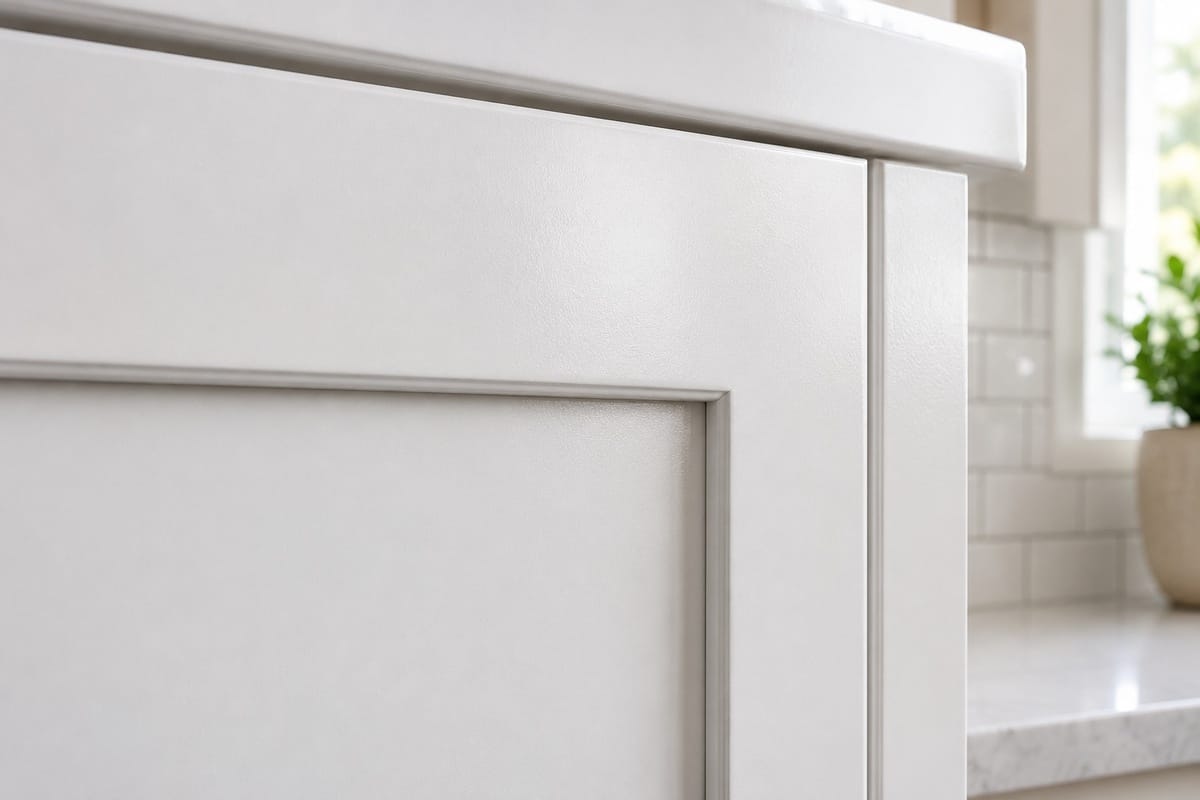
- Smooth, even finish with no visible brush marks or texture. This is why spray application has a reputation: it produces an enamel-smooth finish that catches light evenly. If you brush or roll, the technique matters. For a full breakdown, see my guide on spray vs brush for cabinets. A foam roller with a quality self-leveling paint like Benjamin Moore Advance can produce a near-spray-smooth finish. Poor foam nap texture or visible brush marks read as “homeowner project” instantly.
- Consistent color with no variation between doors and boxes. Professional application controls for environmental factors, temperature, humidity, dust, that affect how paint cures. A door painted on day one and another on day four in different humidity conditions can look subtly different if the painter isn’t paying attention. All doors should look identical from a distance.
- Clean edges and sharp lines on frames and soffits. Painter’s tape, straight cuts, crisp lines where paint meets stained wood or wall color. A sloppy edge or paint bleeding under tape looks amateur. Professional painters spend as much time on tape and edge work as they do on actual paint application.
- Hardware that matches the style and finish level. Worn chrome knobs on fresh white cabinets look wrong. New hardware in a finish that complements the paint color amplifies the professional effect. Polished nickel, brushed brass, matte black, the specific choice matters less than that it looks intentional and new.
- Painted interior of cabinet boxes matches the exterior color. Many DIY painters skip the interior or do a quick coat. Professional work paints the inside of cabinets the same color as outside. This detail is invisible unless you open a door, but it signals completeness and care.
Why do professionally painted cabinets look smoother than DIY?
Professional painters use higher-quality paint formulations that self-level and flow out more evenly than budget options. Application method matters too, spray produces the smoothest finish, but brush-and-roll with self-leveling paint and proper technique creates excellent results. Most importantly, pros control the environment (temperature, dust, humidity) and don't rush the dry time between coats.
How long does a professional cabinet painting job typically take?
A full kitchen cabinet painting job typically takes 3-5 days for a professional. Small kitchens might finish in 3 days; larger kitchens with extensive detail work might take 6-7 days. The timeline includes removal, prep, priming, painting, and reassembly. Your kitchen is functional again at the end of day 5.
Do painted cabinets look cheap compared to new ones?
Not at all. Professional cabinet painting looks virtually indistinguishable from new cabinetry, especially when you update hardware. A $2,500-$3,500 paint job with new knobs and pulls looks like a $10,000+ kitchen update. The transformation is that significant when done correctly.
Can you paint laminate kitchen cabinets?
Yes, but with caveats. Laminate requires extra-thorough prep, degreasing, sanding with a fine-grit pad, and a bonding primer. The finish won't be as durable as painting solid wood, but it works and looks great. Avoid spray application on laminate; brush and roll is more forgiving.
Will new hardware really make that much of a difference?
Yes. Homeowners consistently report that new hardware amplifies the transformation by 30-50% in terms of perceived quality and cost. Fresh paint plus dated hardware looks incomplete. Fresh paint plus new hardware looks designed. The combination is exponentially more impactful than either alone.
What color should I paint my kitchen cabinets?
Start with your counters, backsplash, and lighting. Neutral colors (white, soft gray, warm cream) work almost universally and age well. Test large paint chips in your actual kitchen in natural light before committing. If you want color, soft, muted tones work better than bright or saturated colors. Avoid trends unless you're prepared to repaint every 5 years.
How do I know if my cabinets are worth painting?
If the cabinet boxes are solid (no swelling or water damage), doors close properly, and hinges work, painting is almost always worth it. Inspect the edges and joints for delaminating or separation. Check for moisture damage or soft spots. If the structure is sound, painting delivers transformative results at a fraction of replacement cost.
How Does Paint Sheen Affect How Cabinets Look?
The sheen level, the degree of gloss, dramatically affects how painted cabinets read in finished photos and in real life.
- Matte or flat. Zero reflectivity. Creates a soft, velvety appearance and hides dust and imperfections well. Downside: shows smudges and fingerprints more visibly because there’s no protective gloss layer. Matte paint is lovely for walls but risky for kitchen cabinets that get touched constantly.
- Eggshell (satin). Minimal sheen, just enough reflectivity to protect against fingerprints without looking glossy. This is my preference for most cabinet work. It reads as modern, soft-touch, but with practical durability for kitchens with kids and regular use.
- Semi-gloss or polished. Noticeable reflectivity. Creates a sleeker, more formal appearance. Shows dust and imperfections less, wipes clean easily, very durable. Can feel dated if the color isn’t right, but in a crisp white or soft gray with modern hardware, semi-gloss reads contemporary and professional.
Most magazine-quality transformations use eggshell or soft semi-gloss. For specific product recommendations, see my guide on what paint to use on cabinets. Matte paint on cabinets works visually, but it’s a higher-maintenance choice for actual kitchens.
How Much Does New Hardware Change the Transformation?
I’ve seen homeowners hesitate on hardware costs, thinking $300-$500 for new knobs and pulls is frivolous when the cabinets are being painted. Then they see the finished job with old hardware and immediately want to upgrade. Don’t wait for that moment, plan for hardware from the start.
New hardware does something paint alone cannot do: it signals that the entire kitchen has been thoughtfully updated. Paired with fresh paint, new hardware creates a synergistic effect. Suddenly, the cabinets don’t just look refreshed, they look designed. Homeowners report that new hardware amplifies the transformation by 30-50% in terms of perceived cost and quality of the update.
- Polished or brushed nickel. Contemporary and clean. Works with any cabinet color. Mixes well with white quartz and stainless steel.
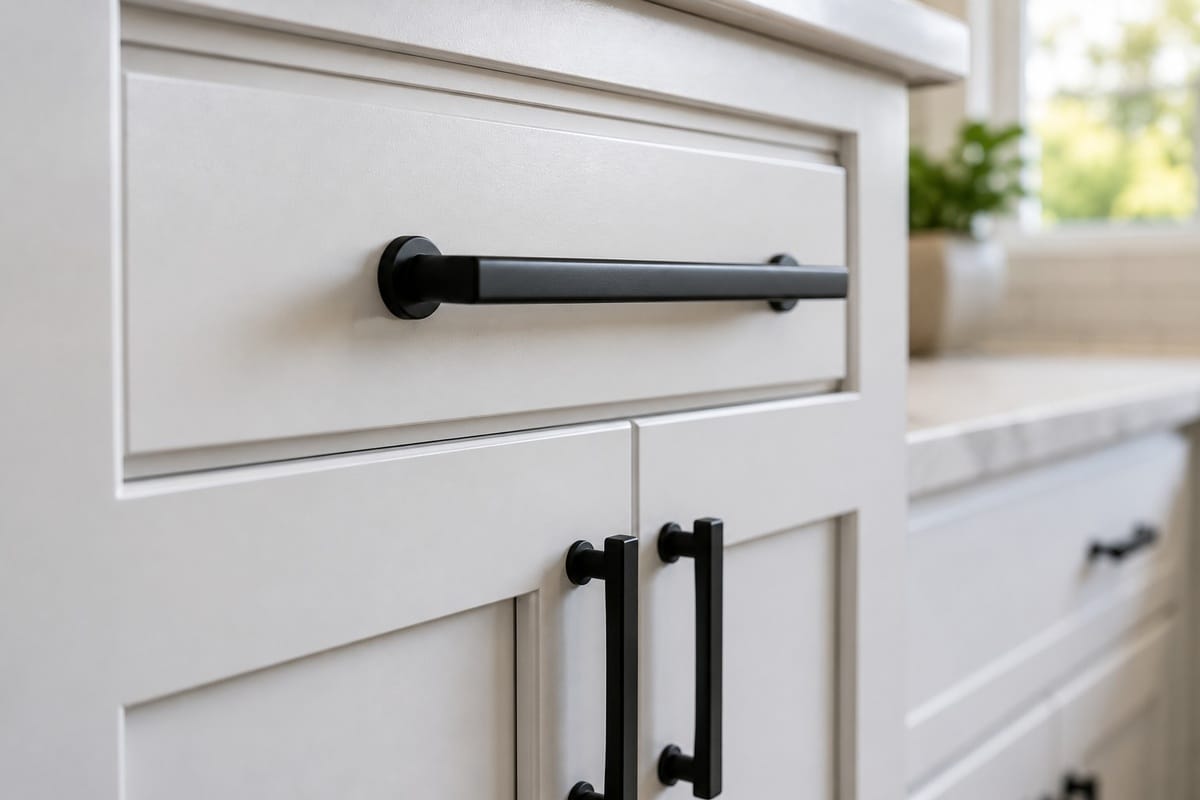
- Matte black. Modern, bold, increasingly popular in transitional kitchens. Pairs beautifully with gray or navy painted cabinets.
- Warm brass or champagne. Trending upward. Creates a high-end feel, especially with white or soft gray cabinets and warm lighting.
- Oil-rubbed bronze. Classic, warm, works with traditional or transitional styles. More forgiving for kitchens with varied finishes.
The key is consistency. All hardware should match in finish. Mixing polished nickel handles with oil-rubbed bronze knobs reads as accidental, not intentional.
Cabinet painting is the most common project I take on across Auburn and Placer County, but it’s not the only one. I also handle exterior painting, interior walls, and color work throughout the foothills. If you need a local painter in Auburn in Auburn for any project around the house, take a look at what I cover.
What Is the Timeline for a Professional Cabinet Painting Job?
Understanding the timeline helps you plan around kitchen disruption and manage expectations for how long paint takes to fully cure.
Day 1-2: Removal. I remove all doors and hardware, label everything, and set up a paint station. Cabinet boxes are cleaned, degreased, sanded or scuffed, and prepped for primer. This is the most important step and takes the longest. Proper cleaning cabinets before painting is what separates a lasting result from one that fails early. A typical kitchen requires 1-2 days of prep work.
Day 3-4: Priming and first paint coat. Boxes are primed and first coated. Doors are hung on a paint stand and primed on both sides. First coat dries overnight.
Day 4-5: Additional coats. Second and sometimes third paint coats applied depending on coverage and color. Most transformations need two coats minimum; some bold colors or dramatic changes require three.
Day 5: Final reassembly. Hardware installed, doors rehung and aligned, everything cleaned and organized. Kitchen is functional again.
Full cure time: Cabinet paint continues to harden for 2-4 weeks. During this time, avoid heavy use, moisture exposure, or placing items directly on painted surfaces. After full cure, durability is excellent.
The entire process for an average kitchen is 4-5 days of work. Some smaller kitchens finish in 3 days; larger or more complex jobs might take 6-7 days.
What Can Paint Not Fix on Kitchen Cabinets?
Paint is transformative, but it’s not magic. There are structural and alignment issues that paint cannot solve, and knowing the difference prevents disappointment.
- Doors that don’t close evenly or have gaps. This is a hinge alignment and cabinet box issue, not a paint issue. Paint won’t fix this. If your doors are misaligned now, they’ll still be misaligned after painting.
- Swollen or warped doors or drawer fronts. Moisture damage causes MDF and particle board to swell. This is permanent and cannot be painted away. Swollen doors will still be swollen and won’t close properly after painting.
- Damaged veneer or delaminating edges. If cabinet edges are separating or veneer is peeling, paint will highlight the problem, not hide it. These require repair or replacement.
- Broken hinges or non-functional drawers. Paint the cabinets all you want; a drawer that sticks still sticks. These mechanical issues need fixing separately.
Before committing to cabinet painting, a good painter will walk your kitchen and point out any structural issues that paint won’t address. If the bones are good, cabinets close properly, hinges work, boxes are solid, paint can transform the kitchen. If there are underlying issues, those need separate attention.
How Do You Choose the Right Color for Your Kitchen Cabinets?
White and off-white are dominating for a reason, they’re forgiving, work with almost any counters and appliances, and don’t feel trendy. But that doesn’t mean you have to go neutral.
The key to choosing the right color is testing it in your actual kitchen, in your actual lighting. Paint samples on large chips, let them sit in natural light at different times of day, and look at them next to your counters, backsplash, and appliances. Lighting in your kitchen is unique. North-facing kitchens look cooler in natural light; south-facing kitchens look warmer. Interior samples at a paint store won’t tell you this.
- Neutral palette. Benjamin Moore Swiss Coffee, Chantilly Lace, Decorator’s White, or Sherwin-Williams Alabaster work in almost any kitchen. These read as “classic,” not trendy, and won’t feel dated in five years.
- Cool grays and greiges. Benjamin Moore Gray Owl, Sherwin-Williams Urbane Bronze (gray-leaning), Agreeable Gray. These feel contemporary without being bold. They pair especially well with white marble or quartz and modern hardware.
- Soft blues and greens. If you want color, soft blue (not bright or saturated) or muted green works for a high percentage of kitchens. Avoid neon or highly saturated colors unless your design is specifically transitional or modern farmhouse.
- Navy or charcoal for lower cabinets (two-tone). Sherwin-Williams Naval (navy), Urbane Bronze (charcoal) paired with white uppers. This is a designer look that feels intentional and expensive.
Test your color choice with your counters, backsplash, flooring, and lighting. If the sample looks good at 9 AM and 3 PM, and it complements your existing finishes, you’re ready to commit.


