A bathroom accent wall transforms the space without a renovation, but bathrooms are harder on paint than any other room. Use bathroom-rated paint in satin or semi-gloss, never flat or eggshell. The wall behind the toilet or vanity is usually the best choice. Prep the surface carefully, confirm it is dry, and keep the exhaust fan running during and after painting. The right finish gives you 5 to 7 years of lasting results.
A bathroom accent wall is one of the easiest ways to transform the space without gutting it. One well-chosen wall can change the entire feel of a bathroom: add depth, create visual interest, and make the room feel more intentional than it did before.
The catch is that bathrooms are harder on paint than any other room in a house. The humidity, temperature swings, and moisture exposure mean that what works in a bedroom will fail in a bathroom in a matter of months. The color choice matters, but so does the finish, the prep, and the paint itself.
This is what I recommend based on the bathrooms I have painted throughout Auburn, Placer County, and the surrounding foothills.
Why Are Bathrooms Different From Other Rooms When Painting?
Before you pick a color or finish, understand what you are working against. A bathroom accent wall faces conditions that bedroom walls and living room walls never see.
Moisture is the first problem. Showers and baths release humidity that saturates the air, especially in a smaller space. That moisture condenses on surfaces, soaks into drywall if there is no proper ventilation, and creates an environment where paint blisters, peels, and fails if it is not rated for wet environments.
Temperature swings are the second problem. Bathrooms go from cold in the morning to hot and steamy during and after a shower, sometimes within minutes. Paint contracts and expands with those temperature changes. Lower-quality paint cracks and peels under that stress. Bathroom-rated paint is formulated to move with the surface without losing adhesion.
The third is air quality. Bathroom spray, cleaning products, and humidity fluctuations all stress a finish. That is why a paint that looks great in a hallway will look rough in a bathroom within a year.
What Are the Best Colors for Bathroom Accent Walls?
Color choice depends on your bathroom size, lighting, and how bold you want to go.
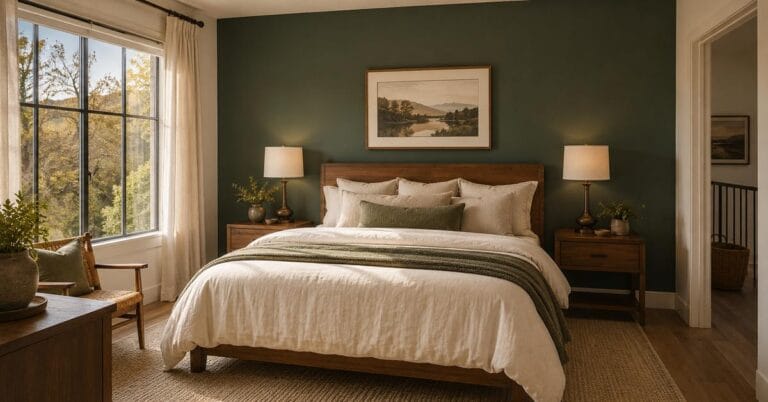
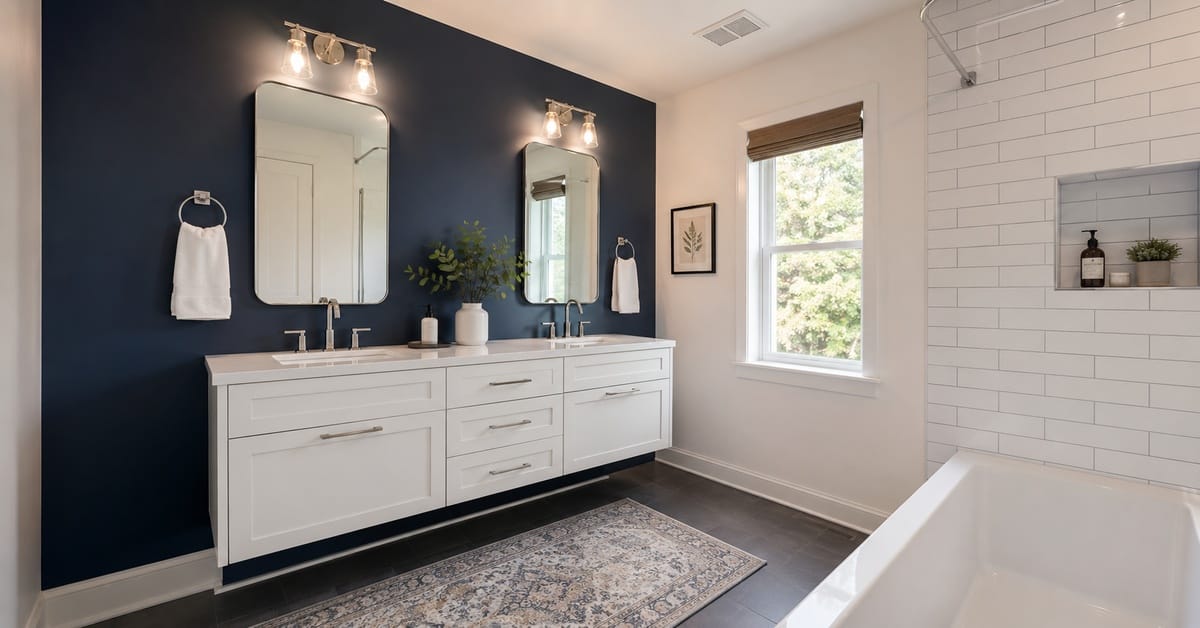
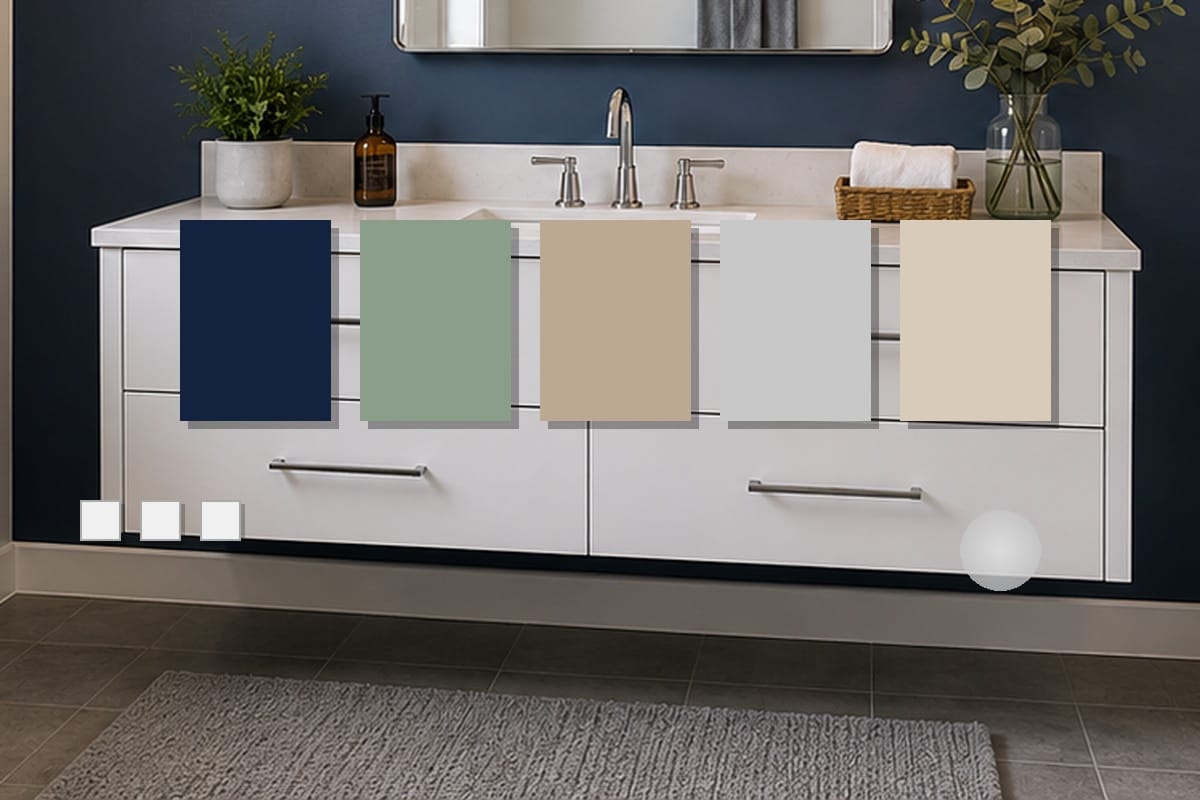
Dark, muted tones work best in larger bathrooms with good natural light. Navy, charcoal, sage, and forest green are popular choices that feel sophisticated without being overwhelming. In Auburn bathrooms with windows that get afternoon light, a soft navy accent wall creates depth and makes the space feel intentional.
Soft, warm neutrals are the safe choice for smaller bathrooms. Warm grays, soft greiges, and light warm taupes feel calming and do not make a small space feel smaller. These also hide moisture stains better than pure white or very light colors.
Accent colors that work include spa-inspired blues and greens, warm terracotta in well-ventilated bathrooms, and soft blushes or warm blacks. The key is saturation: highly saturated colors often feel claustrophobic in small spaces. A muted or dusty version of whatever color you want typically works better than the pure pigment. For specific color recommendations that work well in foothills homes, see my guide on accent wall color ideas for Auburn.
Avoid pure white on an accent wall in a bathroom. White shows water spotting, mold stains, and moisture issues immediately. If you want a light wall, choose a soft off-white or warm white with a slight undertone.
Why Does Paint Finish Matter More in a Bathroom?
This is the part that most people get wrong. They pick the color, then use whatever paint they have or whatever is cheapest at the store. Then within a year the paint starts to show moisture damage, peeling, or mold growth.
Flat and eggshell finishes are wrong for bathrooms. They absorb moisture, cannot be wiped clean without damaging the finish, and are not formulated to resist mildew. Never use them on any bathroom wall, accent or otherwise.
Satin is the standard choice. It has enough sheen to be wipeable and moisture-resistant without looking overly shiny. It is forgiving of minor surface imperfections and is easy to clean. For an accent wall in a regular bathroom, satin is what I use.
Semi-gloss is better for high-moisture areas. In a bathroom that is poorly ventilated, where the shower is on the accent wall, or where you know the humidity is going to be heavy, semi-gloss is more durable. It is easier to wipe down and resists mildew growth better than satin. The tradeoff is that it shows surface prep flaws more clearly, so the wall needs to be smoother going into the paint stage.
The paint formula itself matters. Use a paint that is specifically rated for bathrooms and moisture environments. Many premium paint brands now offer bathroom-specific formulas that include mildew-resistant additives. Do not cheap out on this part. The savings from buying standard interior paint instead of bathroom-rated paint will be eaten up by having to repaint in a year or two.
Which Wall Should Be Your Accent Wall?
Not all walls work equally well as accents.
The wall behind the toilet or vanity is usually the best choice. It is the first thing you see when you look into the bathroom from the doorway. An accent color on this wall frames the space and creates visual interest without feeling cluttered.
The shower wall is riskier. If the accent wall is the wall the shower is against, make sure your finish is rated for that level of moisture exposure. Satin can work, but semi-gloss is better. Never paint a shower wall with eggshell or flat finish. The direct spray from the shower head can damage those finishes quickly.
A narrow wall or feature area between two larger bathroom areas can work well if the room has the depth to carry it. A small wall between the toilet and sink can be a good accent spot without dominating the space.
Avoid painting the wall directly opposite the window or light source. This wall recedes visually and the color will look muted and flat. The wall with the window or that receives natural light will show the color more accurately.
What Feature Wall Options Work for Bathrooms?
Not every accent wall has to be paint. Depending on your style and budget, other options can work equally well and sometimes better in a high-moisture environment.
Painted accent wall is the most affordable and flexible. Color can be changed whenever you want, and the finish is achievable on a weekend with proper prep. Just use bathroom-rated paint in satin or semi-gloss.
Tile or stone accent is the most durable option for the shower wall or any area with heavy moisture. Tile is not affected by humidity, can be wiped clean, and creates a strong visual statement. The downside is cost and the fact that it cannot be easily changed.
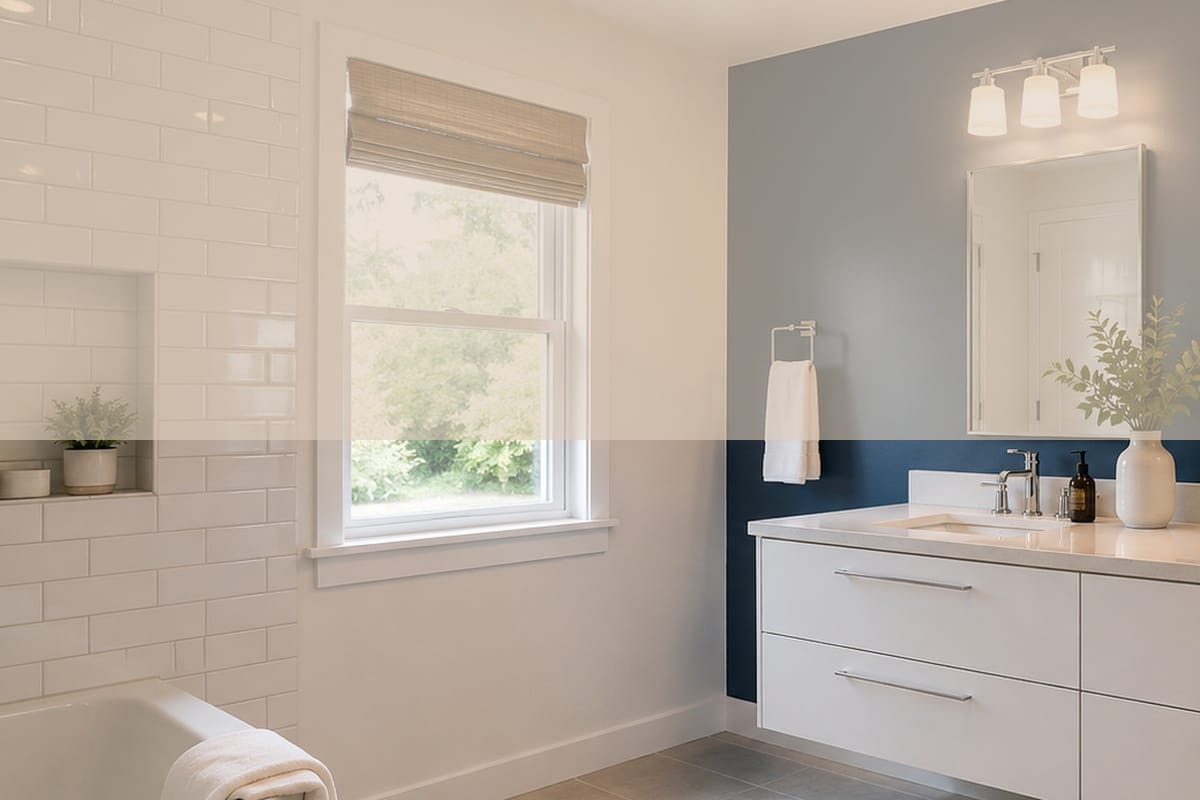
Shiplap or wood accent creates a cottage or farmhouse aesthetic and can look great in the right bathroom. The catch is that wood needs proper sealing to handle bathroom moisture. If you go this route, make sure the wood is sealed with a waterproof finish, not just paint. Unsealed wood in a bathroom will swell and eventually fail. For the full approach to priming and painting shiplap, see my guide on shiplap wall ideas.
What Prep Work Is Critical Before Painting a Bathroom Accent Wall?
The most common reason bathroom paint fails is inadequate prep. Bathrooms collect moisture, dust, and cleaning product residue that prevents paint from adhering properly.
Clean the wall thoroughly. Wipe down the surface with a damp cloth to remove dust and any cleaner residue. If there is mold or mildew on the wall already, that needs to be cleaned with a dedicated mildew killer. Let it dry completely. Do not paint over mold.
Patch and sand any damage. Fill holes and imperfections with spackling compound formulated for bathrooms (it is stronger than standard spackling). Let it dry, then sand smooth. Any rough spots or imperfections will show through the paint more obviously in a satin or semi-gloss bathroom finish than they would in a bedroom with flat paint.
Make sure the wall is dry before painting. If the wall feels damp to the touch, do not paint it yet. Run the bathroom exhaust fan for an hour and check again. Wet drywall will cause the paint to blister and peel.
Prime if necessary. If you are painting over a dark color, over stains, or over any sheen higher than what you are painting, use a primer. In most cases, one coat of a quality bathroom-rated paint can cover previous color without primer, but primer ensures even coverage and better adhesion.
What Application Tips Make a Difference on a Bathroom Accent Wall?
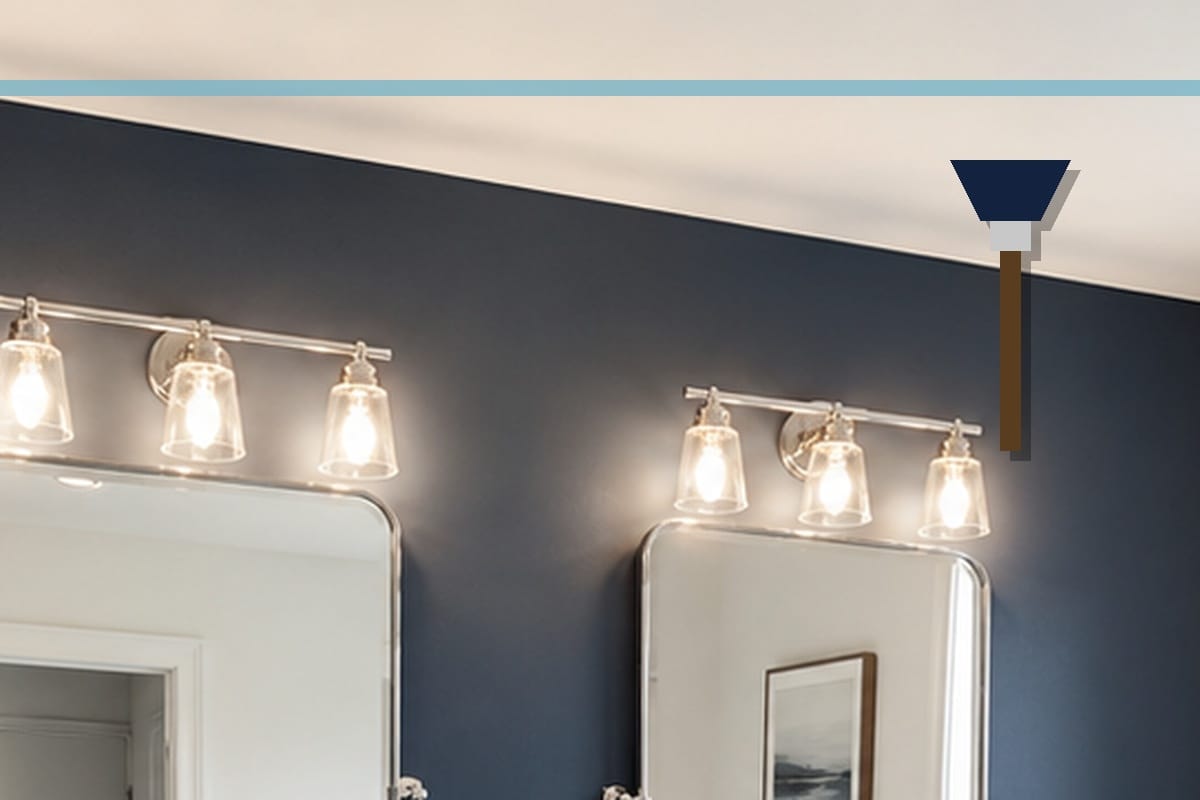
Tape carefully. Use a good quality painter’s tape on the ceiling line and adjacent walls. Low-quality tape lets paint bleed under it. Burnish the tape edge with a putty knife so the seal is tight.
Cut in with a brush first. Use a quality angled brush to cut in along the ceiling, corners, and wall edges. Keep the brush line thin and straight. Do not apply a heavy coat of paint at the cut-in stage. Let the main rolled surface blend into the brush work.
Roll the wall in sections. Use a medium-nap foam roller (3/8 inch) and work in roughly 3-foot-square sections. Roll in a W pattern without lifting the roller off the wall, then fill in the W to distribute paint evenly. Work top to bottom and maintain a wet edge so you do not get lap marks where sections overlap.
Two coats is standard. After the first coat dries, inspect the coverage. Some colors cover in one coat. Most benefit from a second coat for even color and durability. Let the first coat dry fully between coats, usually 2 to 4 hours depending on humidity and paint.
Keep humidity in check while the paint is drying. Run the exhaust fan continuously while painting and for a few hours after. This helps the paint dry evenly and reduces the chance of blotchy coverage. Do not have a window open during painting. The cross-breeze will cause uneven drying.
What Common Mistakes Hurt Bathroom Accent Wall Results?
- Using interior wall paint instead of bathroom-rated paint. Standard interior paint does not resist mildew and will show staining within months in a high-moisture environment.
- Choosing a finish that is too flat. Flat and eggshell absorb moisture and cannot be cleaned without damage. Use satin minimum.
- Painting over mold or mildew. Paint seals it in and the problem gets worse. Clean and kill the mold first, let the wall dry, then paint.
- Not running exhaust ventilation during and after painting. Poor air circulation causes the paint to dry too slowly and unevenly, leading to blotchy coverage and weak adhesion.
- Picking a color without testing it first. Bathroom lighting is often flattering to certain colors and harsh to others. Get paint samples and paint a section on the wall where you will see it in different times of day before committing to a full wall.
- Skipping the prep work. Dust, mold, and moisture on the wall surface prevent the paint from bonding properly. Proper prep takes time but it is what separates a paint job that lasts from one that starts failing in a year.
When Does It Make Sense to Hire a Professional?
Painting a bathroom accent wall is a project most homeowners can handle, but bathroom prep and moisture conditions make it worth getting professional input if you are not sure about any part of the process.
In my experience doing bathroom work throughout Auburn, Granite Bay, Rocklin, and Placer County, the most common issue is that homeowners pick the right color and the right finish but get the prep or application details wrong. The paint looks great for six months, then moisture issues start showing up. By then, the work is harder to fix.
If you want a bathroom accent wall that actually lasts, and you want the finish to look professional, I handle accent wall painting in the Auburn area. I also do full interior painting if you want to paint the whole bathroom at once.
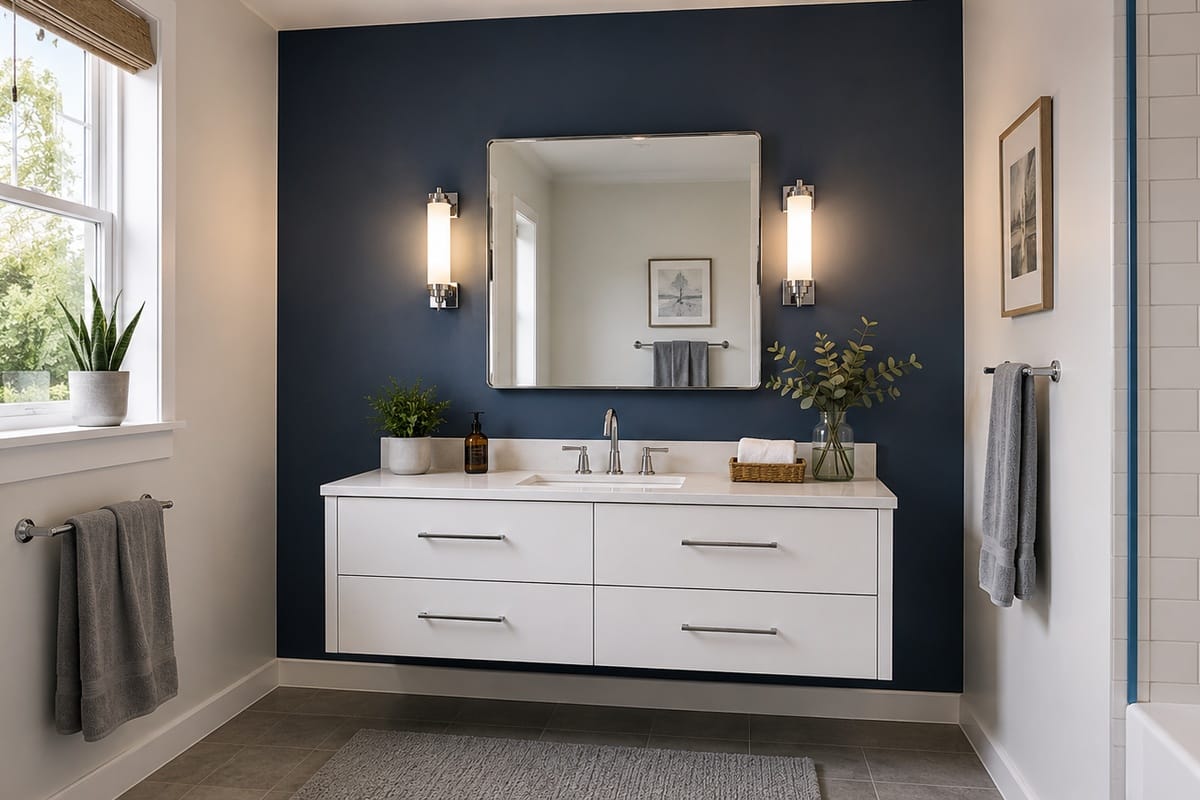
Bathroom and accent wall painting is part of the interior work I take on throughout Auburn and Placer County. If you need a local painter in Auburn that handles bathroom prep and finish correctly, take a look at what I offer.
Frequently Asked Questions
What color accent wall works best in a small bathroom?
Soft, muted colors work better than bold ones in a small space. Warm grays, soft greiges, warm taupes, and muted sage are better choices than a saturated navy or dark charcoal. The wall color should recede slightly, not dominate the space. In bathrooms with limited natural light, avoid pure white and very dark colors. Both can make the space feel either flat or closed-in.
Can I paint an accent wall in a shower?
Yes, but only if it is not the wall the shower spray directly hits. If it is the wall behind the shower head, use semi-gloss bathroom-rated paint, not satin. Semi-gloss is more water-resistant and easier to wipe down. Direct shower spray on any wall requires the most durable finish available. Tile or stone is the most reliable option for a shower feature wall because paint, even bathroom-rated paint, will eventually show wear in direct spray zones.
How long does bathroom accent wall paint last?
With proper prep, bathroom-rated paint, and good ventilation, a bathroom accent wall should look good for 5 to 7 years. The main variables are the paint quality, how well the exhaust fan is run (consistent ventilation extends the life of the finish), and how much direct moisture the wall takes. A wall that is not in the spray zone will last longer than one exposed to constant shower moisture.
Do I need to prime a bathroom accent wall before painting?
Not always. A quality bathroom-rated paint can often cover in one coat without primer, especially if you are painting over a light existing color. If you are painting over a dark color, over stains, or over a glossy finish, use a primer. Primer ensures even coverage and better adhesion, especially important in a high-moisture environment where adhesion is critical.
What finish should I use on a bathroom accent wall?
Satin is the standard. It is wipeable, moisture-resistant, and forgiving of minor surface imperfections. Semi-gloss is better for walls that will take heavy moisture exposure, like the wall directly behind a shower or in a poorly ventilated bathroom. Never use flat or eggshell in a bathroom. Those finishes absorb moisture and cannot be cleaned without damage.
Can I use regular interior paint on a bathroom accent wall?
Not if you want it to last. Regular interior paint is not formulated to resist mildew, moisture absorption, or the humidity swings a bathroom sees. Use bathroom-rated paint or a premium paint specifically labeled as formulated for bathrooms and moisture-prone areas. The price difference is small compared to having to repaint in a year.