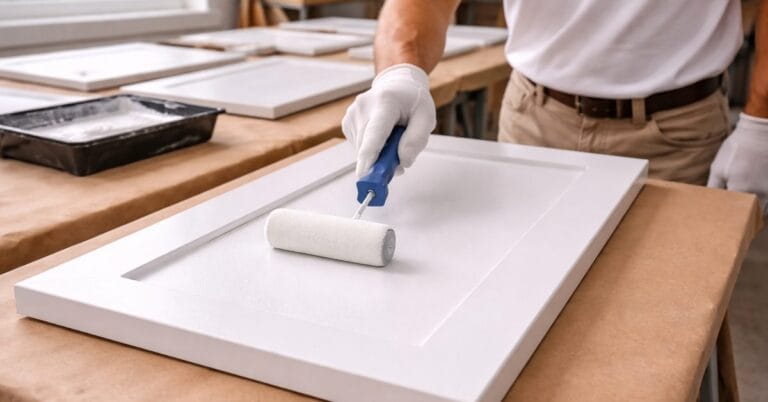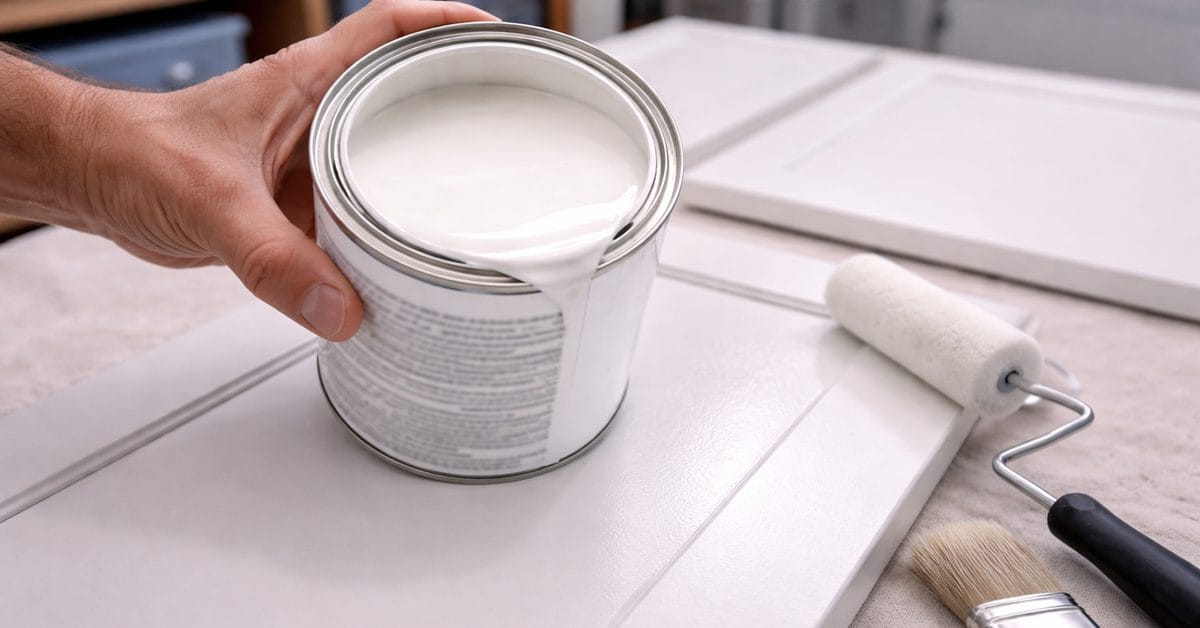
The best paint for kitchen cabinets is a waterborne alkyd formula. Products like Benjamin Moore Advance and Sherwin-Williams Emerald Urethane Trim Enamel combine the hardness and self-leveling of oil-based paint with faster dry time and water cleanup. Use satin for most kitchens. Standard interior wall paint is too soft for cabinets and will chip at door edges within months of normal use.
The most common reason painted kitchen cabinets fail early is not bad application, it is the wrong paint. Standard interior wall paint looks fine when it goes on. Three months later, the door edges are chipping, the areas around the pulls are scuffed, and the whole job looks tired.
Cabinet paint is a different category of product. Here is what the distinction actually is and what I use on cabinet jobs throughout Auburn and Placer County.
Why Is Cabinet Paint Different From Regular Wall Paint?
Wall paint is formulated to cover large flat surfaces and is not designed to handle repeated contact, cleaning, or impact. Cabinet surfaces take a different kind of abuse: they are opened and closed hundreds of times a week, they get wiped down regularly, and they take edge impacts every time something bumps against them.
The relevant properties for cabinet paint are hardness, adhesion, and blocking resistance. Hardness determines how well the surface resists dings and scratches. Adhesion determines how well it bonds to the substrate. Blocking resistance is the technical term for the paint’s ability to not stick to itself, which matters every time a cabinet door closes against the frame.
Wall paint scores poorly on all three. Cabinet-grade formulas are engineered specifically to handle them.
What Are the Main Types of Paint for Kitchen Cabinets?
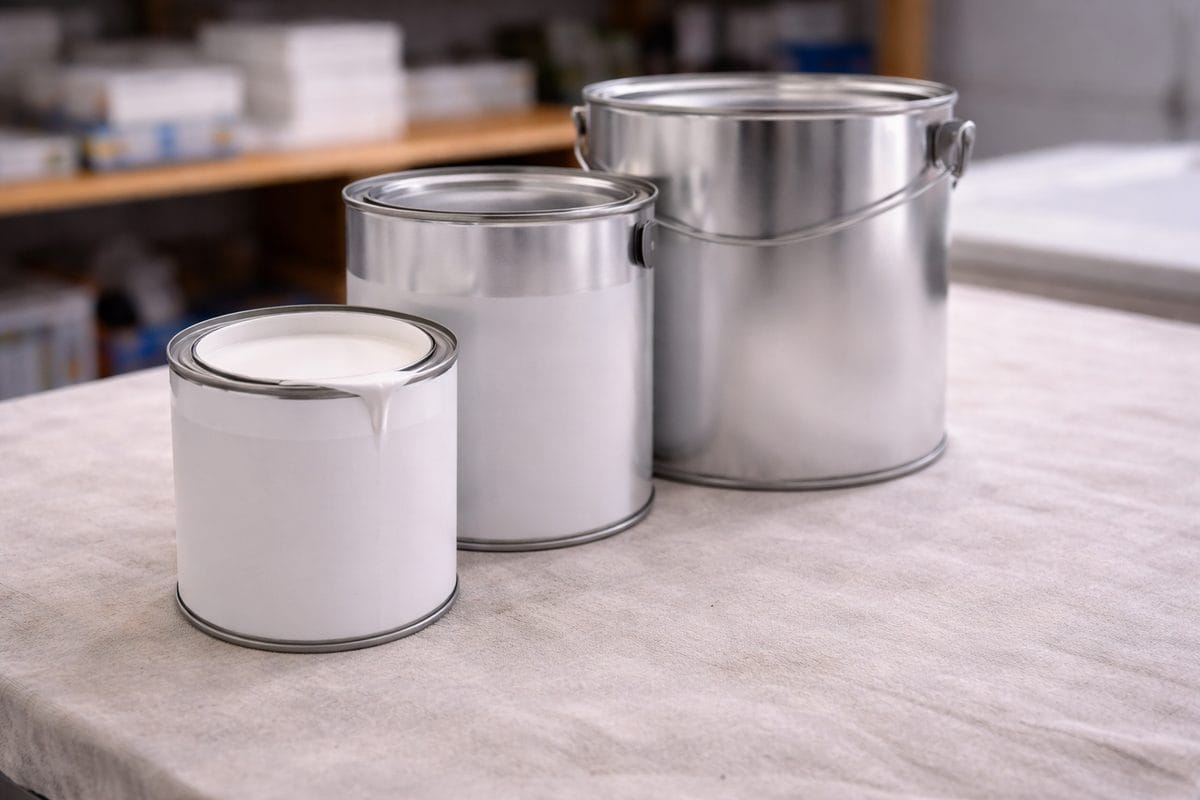
- Traditional oil-based alkyd. Extremely hard with excellent leveling. The downsides: long dry times (24 hours or more between coats), significant VOC content, cleanup requires mineral spirits, and it yellows over time, which matters for white or light-colored cabinets.
- Waterborne alkyd. This is the category I use. Products like Benjamin Moore Advance and Sherwin-Williams Emerald Urethane Trim Enamel use alkyd chemistry in a water-based carrier. You get the hardness and self-leveling of oil paint with lower VOCs, faster dry times (4 to 6 hours between coats), and water cleanup. The finish does not yellow.
- 100% acrylic cabinet formulas. Several manufacturers now make acrylic-based products specifically rated for cabinets. They dry faster than waterborne alkyds and are more flexible. Most are not quite as hard as a good waterborne alkyd, but for most kitchens, either works well.
What Paint Do Professionals Actually Use on Cabinets?
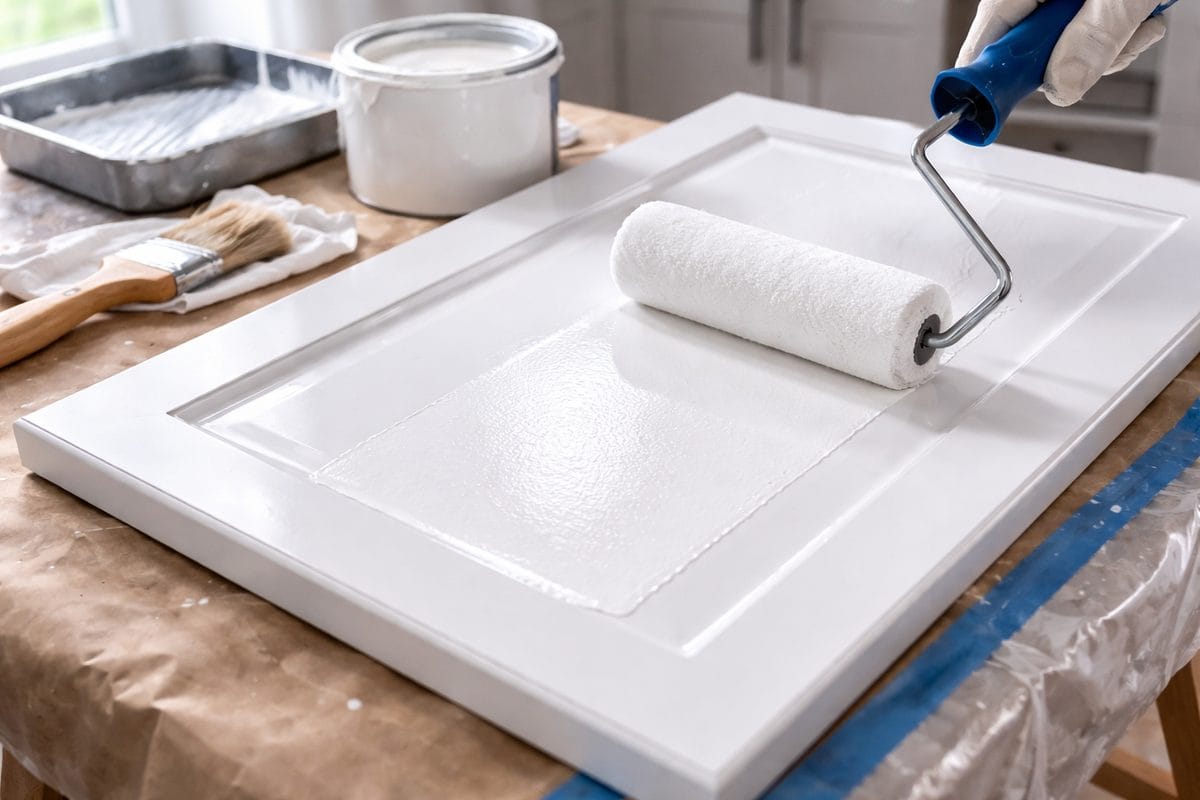
My go-to for most cabinet jobs is Benjamin Moore Advance in a satin finish. It levels exceptionally well, leaves a smooth surface that does not show roller texture, and cures to a hard, cleanable finish that holds up in a working kitchen. The 4 to 6 hour recoat window keeps jobs moving without the multi-day dry times of traditional oil.
If you’re considering hiring out, take a look at my professional cabinet painting.
Sherwin-Williams Emerald Urethane Trim Enamel is the other product I reach for regularly. It has a slightly different leveling profile but comparable hardness. Both are waterborne alkyds with a urethane component, the urethane chemistry is what gives the finish its scratch resistance and cleanability.
Which Paint Sheen Is Best for Kitchen Cabinets?
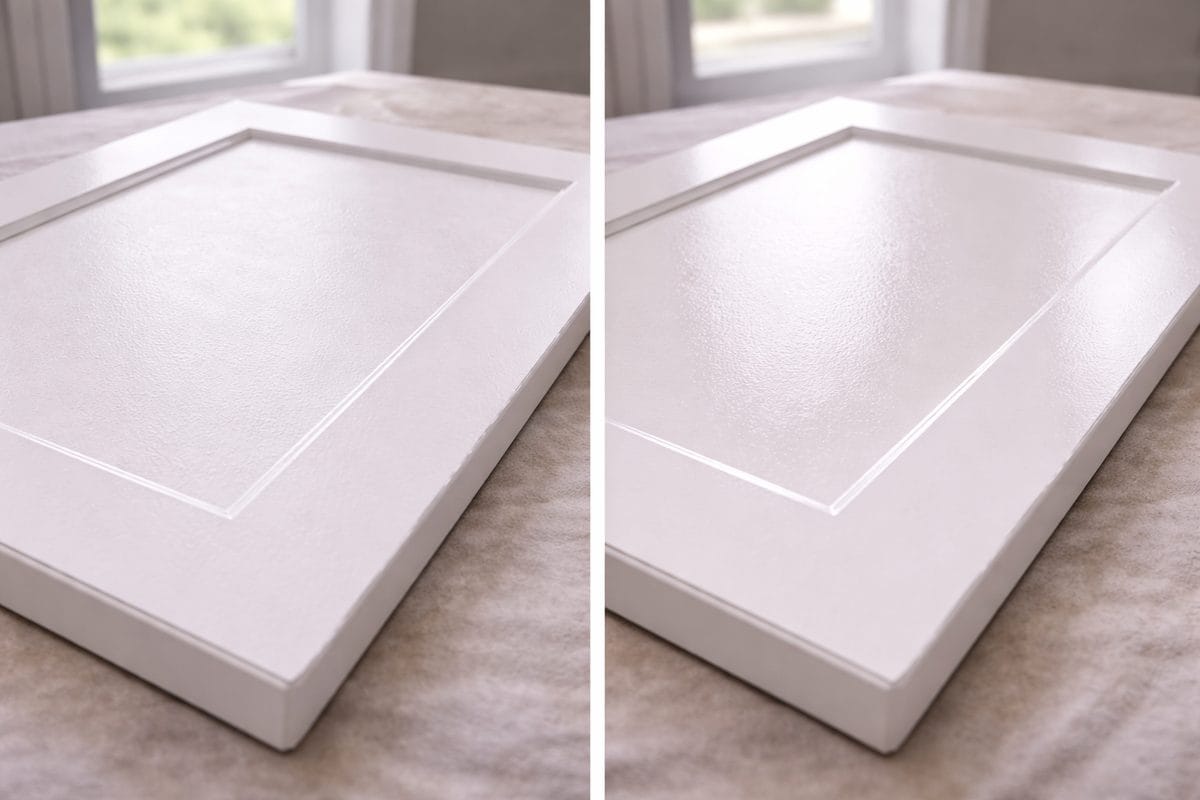
For most kitchen cabinets, I use satin. It has enough sheen to be wipeable and durable without making every surface imperfection visible the way higher gloss finishes do.
Semi-gloss is the right choice if the cabinets will take heavy use and you want maximum durability and cleanability. It is also a good choice for bathroom vanities. The higher sheen does show surface preparation flaws more clearly, so prep needs to be tighter.
Flat and eggshell finishes are not appropriate for cabinets. They are too soft, too difficult to clean, and they absorb grease and staining over time.
What Paints Should You Avoid on Kitchen Cabinets?
- Standard wall paint. Even premium wall paint is too soft for cabinet surfaces. It will chip at door edges within months of normal use.
- Chalk paint without a topcoat sealer. Chalk paint is highly porous and requires a protective topcoat to be practical in a kitchen environment. The topcoat becomes the performance layer, the chalk paint underneath is essentially irrelevant to durability.
- Cheap paint-and-primer combinations. One-coat products do not deliver cabinet-grade results. Prime properly with a dedicated primer, then topcoat with a purpose-formulated cabinet product.
- Oil-based alkyd for light colors. The yellowing effect is real and noticeable over time in white kitchens. Waterborne alkyds do not have this problem.
Why Is Paint Only Part of Getting a Good Cabinet Finish?
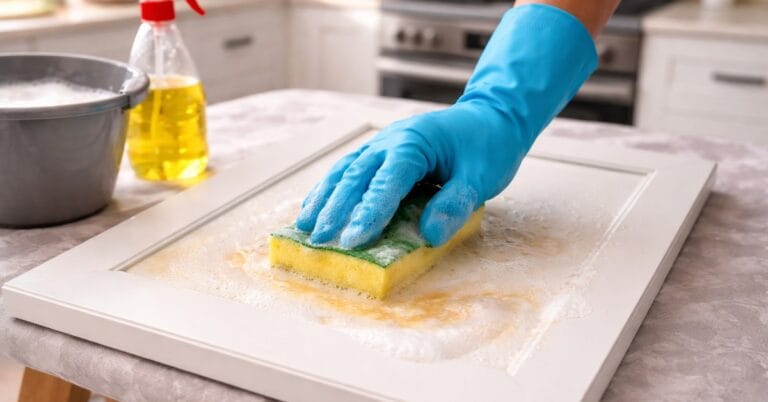
Even the best cabinet paint will fail if the prep is not done correctly. Proper degreasing before any sanding or primer is the step that determines whether the paint holds long-term. And the primer you use matters as much as the topcoat, a high-adhesion cabinet primer creates the bond layer that everything else depends on.
For the complete sequence from start to finish, cabinet painting process covers every stage in detail.
Cabinet painting is a big part of my work throughout Auburn and the foothills, but I handle exterior and interior painting too. If you need an Auburn painter for any project around the house, take a look at what I offer.
Frequently Asked Questions
Is Benjamin Moore Advance worth the higher price?
For kitchen cabinets, yes. The price difference between a budget paint and a product like Benjamin Moore Advance is small compared to the total cost of a cabinet painting project. Using a cheaper topcoat to save $40 on paint and having the finish fail in two years is a bad trade. The cabinet-grade products produce noticeably better results in hardness, leveling, and durability.
Can I use the same paint on cabinets as on trim and doors?
Yes. Waterborne alkyd trim enamels, including Benjamin Moore Advance and Sherwin-Williams Emerald Urethane Trim Enamel, are designed for trim, doors, and cabinets. They work well on all of those surfaces and give the interior a consistent finish quality.
What sheen should I use on white kitchen cabinets?
Satin is the standard recommendation for white or light-colored kitchen cabinets. It is durable, wipeable, and does not show smudges or minor surface imperfections the way semi-gloss does. Semi-gloss is a reasonable choice if you prefer higher durability, just know it requires cleaner prep because it reveals more surface texture.
How many coats of paint do kitchen cabinets need?
Two coats of topcoat is the standard, applied over a properly primed surface. One coat does not provide full coverage or durability. Three coats is occasionally warranted when going from a very dark color to a light one, or when extra durability is a priority. Between each coat, sand lightly with 220-grit and wipe clean before applying the next.
Do I need a special primer for cabinets or will any primer work?
You need a primer formulated for cabinets, furniture, or hard surfaces, not a standard drywall primer. Standard drywall primer does not bond reliably to slick cabinet surfaces and will result in adhesion failure over time. High-adhesion primers like Zinsser Bulls Eye 1-2-3, Benjamin Moore Fresh Start, or Sherwin-Williams Extreme Bond Primer are appropriate for most cabinet substrates.
Can I paint over laminate cabinets?
Yes, with the right prep. Laminate cabinets need to be scuffed with 220-grit sandpaper and primed with a bonding primer specifically rated for slick or non-porous surfaces. The bond is not as strong as on wood or MDF, and the finish is more vulnerable to edge chipping, but a correctly prepared laminate cabinet can hold a paint job for several years with normal care.
Want Your Kitchen Cabinets Painted?
Serving Auburn, Granite Bay, Rocklin, and Placer County.