Painting a garage door without it looking painted comes down to technique and surface prep. Clean and degrease the surface, sand with a scuff pad or 220-grit to give primer something to grip, and prime with a rust-inhibiting primer on steel. Apply paint with a foam roller on the flat panel faces and a brush for recessed edges. Two coats in satin or semi-gloss produces a factory-smooth finish.
The reason most painted garage doors look bad is not the paint. It is the prep and the application. A garage door that looks obviously painted, with brush marks visible across every panel, uneven color, and a flat chalky surface, almost always got that way because someone skipped the steps that matter most.
Done right, a painted garage door looks like it came from the factory that way. I’ve painted hundreds of garage doors for homeowners across Auburn and Placer County. This is how I approach it.
Why Are Garage Doors Harder to Paint Than They Look?
A garage door is one of the largest visible surfaces on the front of a house. It takes up a significant portion of the facade and gets scrutinized from the street every time someone drives by or pulls into the driveway.
It also takes more abuse than most exterior surfaces. It cycles up and down constantly, which flexes and stresses the finish. It bakes in direct sun. It gets hit with road dust, rain, and seasonal temperature swings. And the panels have raised geometry that makes brushwork visible if you are not deliberate about how you apply the paint.
Material matters too. Most residential garage doors are steel, but older homes may have wood doors. Each surface needs a different approach to primer and prep.
What Do You Need to Paint a Garage Door?
For metal/steel doors:
- Degreaser or TSP substitute
- 220-grit sandpaper or scuff pad
- Rust-inhibiting primer
- Exterior paint in a satin or semi-gloss finish, rated for metal
- 4-inch high-density foam roller
- Quality angled brush for panel edges and detail work
For wood doors, substitute a quality exterior wood primer in place of the rust-inhibiting primer. The roller and brush setup is the same.
Step 1: How Do You Clean a Garage Door Before Painting?
Garage doors collect a concentrated layer of road grime, vehicle exhaust residue, and oxidation. Wash the door down with a degreaser and water, working top to bottom. Pay attention to the recessed panel areas where grime builds up along the edges. Rinse thoroughly and let the door dry completely.
If you have access to a pressure washer, use it. It strips surface contamination faster than hand-washing. Keep the pressure moderate. You want to clean the surface, not blast it.
Step 2: How Do You Sand and Address Rust or Peeling?
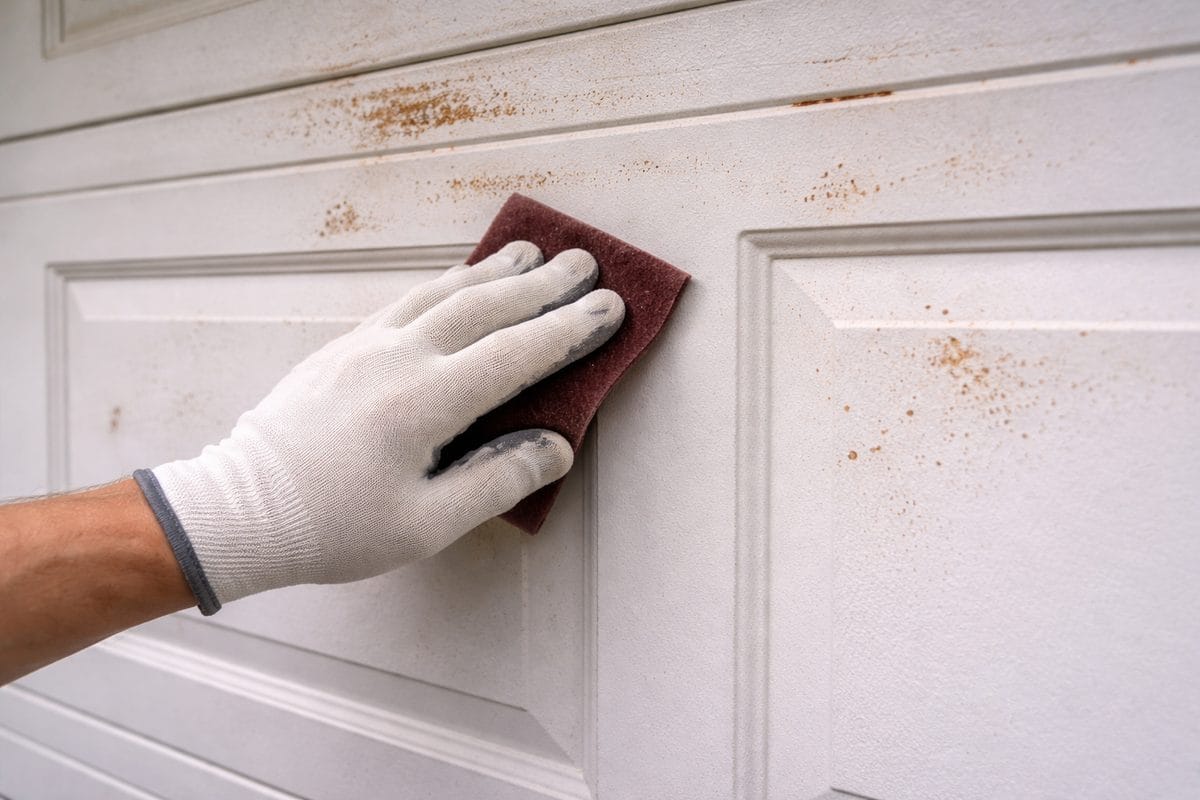
On a steel door, run a scuff pad or 220-grit sandpaper over the entire surface to give the primer something to grip. If there is any rust, address it now. Light surface rust can be sanded off and treated with a rust-inhibiting primer. Active rust that has pitted the metal needs to be removed to bare metal, treated with a rust converter or primer, and allowed to cure fully before moving on.
On a wood door, sand with 120-grit to scuff the existing finish, then finish with 220-grit. Feather any edges where old paint is peeling. Wipe everything down after sanding. Dust telegraphs through the paint as texture.
Step 3: Which Primer Should You Use for a Garage Door?
For steel doors, use a rust-inhibiting primer. Even on a clean steel surface without visible rust, rust-inhibiting primer creates a better bond and more durable foundation than a standard primer. For wood doors, use a quality exterior wood primer, as bare wood soaks up paint unevenly without it.
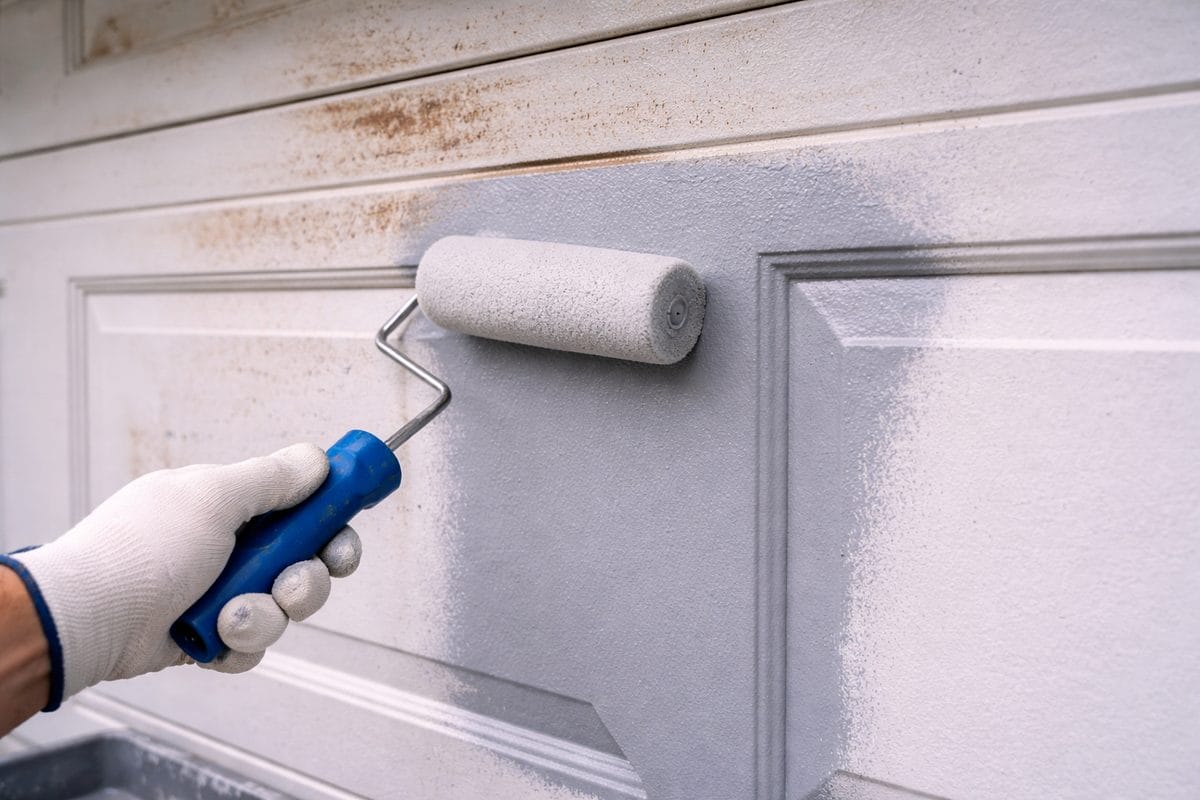
Apply primer with a foam roller on the flat panel faces and use a brush to work into the recessed edges and profiles. Keep the coat thin and even. Let primer cure fully, typically 24 hours in dry conditions.
Step 4: How Do You Apply Paint to a Garage Door?
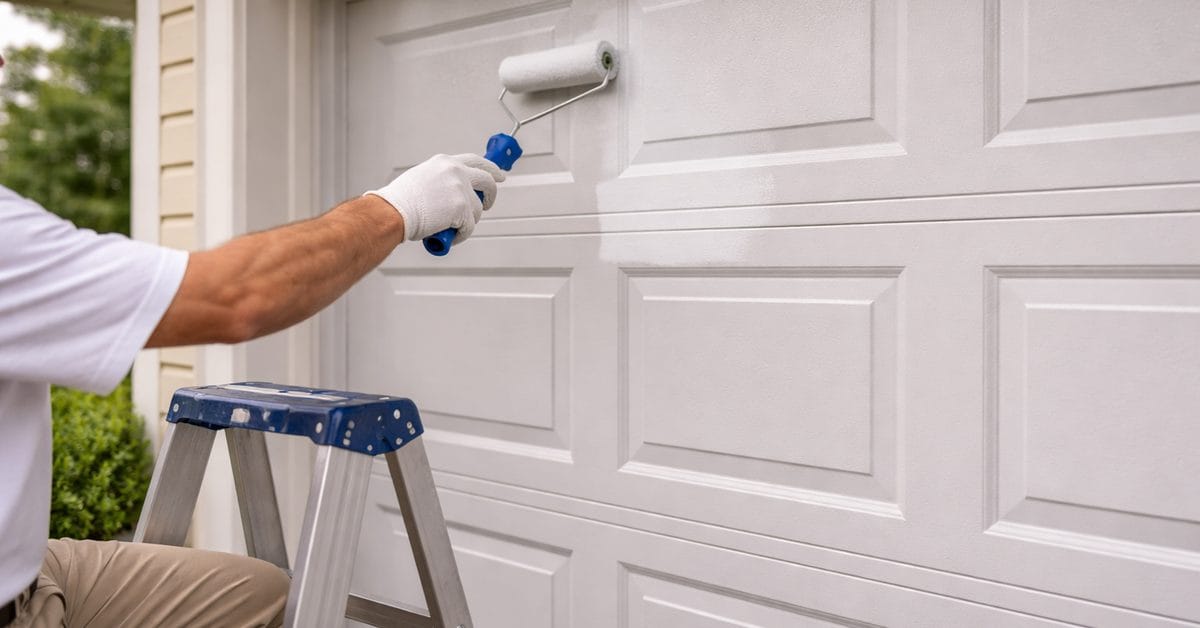
Start with the recessed panel areas first. Use a brush to cut into the inside edges and corners of each panel, then immediately follow with a foam roller to smooth out the brushwork while the paint is still wet. This is the move that makes garage door panels look smooth and factory-finished instead of obviously hand-painted.
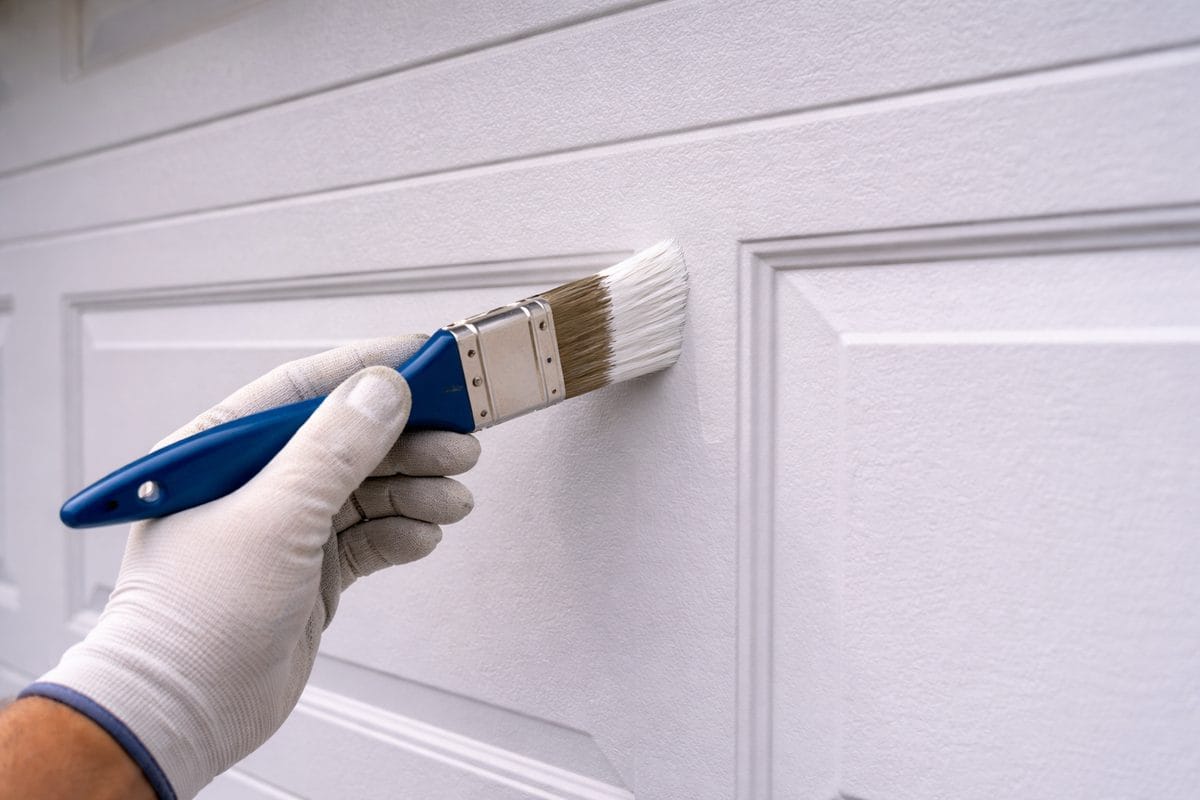
Once all the recessed areas are done, roll the flat faces of each panel. Work methodically from top to bottom and keep a wet edge so you do not get lap marks where sections overlap. The rails and stiles (the framing pieces between panels) get rolled last. Two coats is standard, with a light 220-grit sand between coats.
What Sheen Should You Use on a Garage Door?
Flat and eggshell are wrong for garage doors. They absorb moisture, show every mark, and cannot be cleaned without damaging the finish. Satin is the standard: durable, wipeable, and forgiving of minor surface imperfections. Semi-gloss works well for a more polished look or heavy-use doors, but it makes surface prep flaws more visible, so the preparation needs to be cleaner.
What Are the Most Common Mistakes That Make a Garage Door Look Painted?
- Brushing without following with a roller. Using a brush alone on flat panel faces leaves marks that are visible in direct light. Always roll flat surfaces; use the brush only for edges and recessed profiles.
- Painting in direct sun. The paint dries too fast to maintain a wet edge. Paint early in the morning or on a cloudy day, with temperatures between 50 and 85 degrees.
- Skipping primer on a steel door. Paint applied directly to steel without primer will eventually peel, especially at panel edges where moisture can sit.
- Using interior paint. Interior paint is not formulated for UV exposure, temperature extremes, or moisture. Use exterior paint rated for the door material.
- Rolling too fast. Fast rolling on steel creates air bubbles that pop and leave small pockmarks in the finish. Roll slowly with light, consistent pressure.
- Not painting the door frame and trim at the same time. A fresh door next to weathered trim draws attention to the contrast.
How Does a Garage Door Fit Into a Full Exterior Paint Job?
On most of the exterior painting jobs I do in Auburn and Placer County, the garage door is part of the overall scope, one surface among many, including siding, trim, fascia, and the front door. The garage door gets treated the same way as the rest of the exterior: thorough prep, correct primer for the material, and exterior paint formulated to hold up to weather and UV.
If your whole exterior needs work, the full exterior painting process covers everything from pressure washing through final coats. Doing the garage door at the same time gives you a consistent result and avoids the problem of a fresh door next to surfaces that have not been touched. If you’re seeing signs your exterior needs paint across the full house, adding the garage door to the scope makes sense.
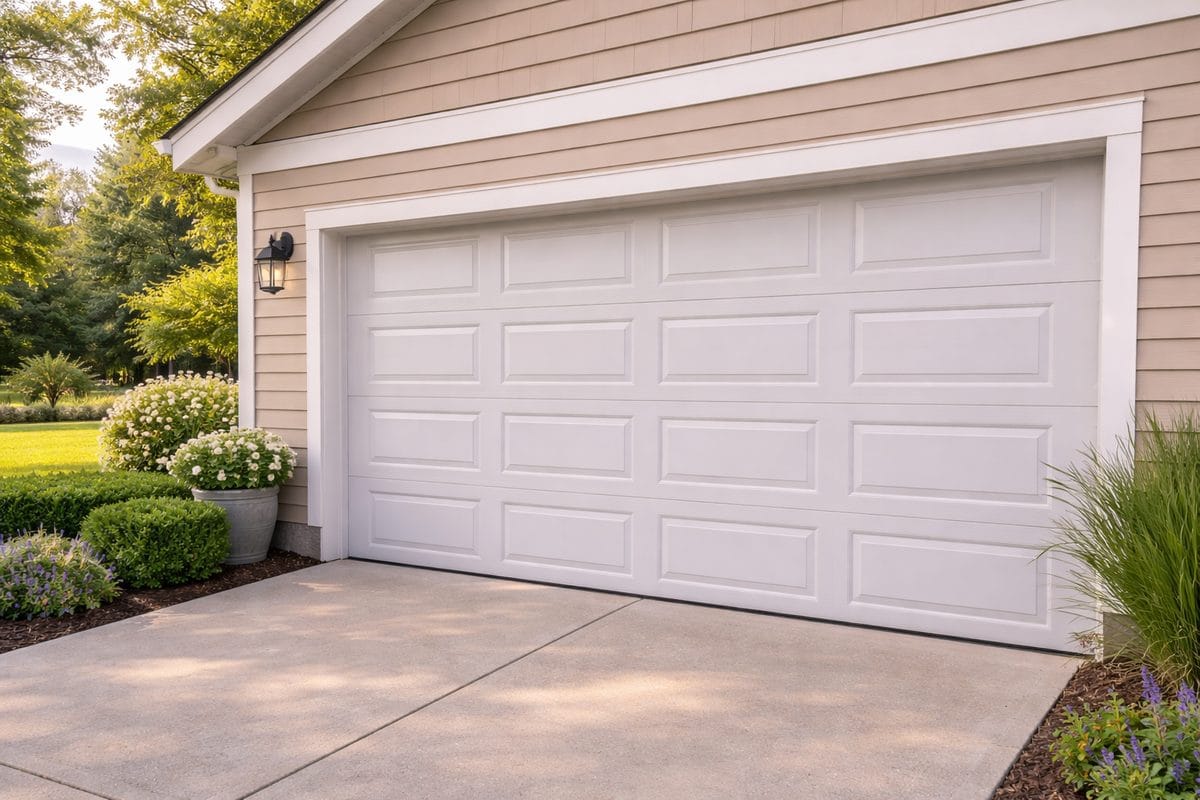
I paint garage doors, siding, trim, and full exteriors throughout Auburn and Placer County. If you need a house painter in Auburn for any project around the property, take a look at what I offer.
Frequently Asked Questions
What kind of paint do you use on a steel garage door?
Use an exterior paint formulated for metal surfaces, or a high-quality exterior acrylic that specifies compatibility with metal. Satin or semi-gloss finish. Pair it with a rust-inhibiting primer on any steel door. Standard exterior paint without a proper primer will bond poorly to metal and will not hold up over time.
Do I need to sand a garage door before painting?
Yes. On a steel door, sanding or scuffing the surface gives the primer something to adhere to. On a wood door, sanding removes rough spots and old peeling paint so you start with a smooth surface. Skip sanding and the finish will look uneven and will not last as long.
Can I spray a garage door instead of rolling it?
Yes, and spraying produces a more factory-like finish than rolling if you have the right equipment and experience to use it correctly. It also requires more masking of the surrounding area. For most residential garage doors, a foam roller with good technique gets close to the same result without the equipment and overspray risk.
How long does a painted garage door last?
With proper prep, good primer, and a quality exterior paint, a painted steel garage door should hold up for 5 to 10 years before it needs repainting. Wood doors typically need attention every 3 to 5 years depending on sun exposure. A garage door on the south side of a house that gets full afternoon sun will wear faster than one in shade.
Should I paint my garage door the same color as the house trim?
It depends on the style of the house. Matching the garage door to the trim is a safe and common choice that gives the exterior a cohesive look. Some styles look better with the garage door matched to the body color or a contrasting accent. If you are not sure what works for your house, get in touch and I can walk through color options with you.
Is it worth painting a garage door or should I just replace it?
If the door is structurally sound, with no significant dents, rot, or serious rust, painting it is almost always the better value. A new garage door installation costs significantly more than a professional paint job. Painting gives you a fresh, clean look for a fraction of the cost of replacement.
If you want the garage door repainted or need a quote on the full exterior, schedule a free estimate.