Stripping and restaining a deck is necessary when the existing finish is peeling, flaking, or failing. The process requires chemical deck stripper, scrubbing, pressure washing, wood brightener, full dry time, and fresh stain. Done correctly in the Auburn and Placer County foothills, a stripped and restained deck holds up 3–5 years. Rushing the dry time stages is the most common cause of early failure.
The reason deck stain fails is not the fault of the stain itself. It is usually the fault of what was done before it was applied. When you add new stain on top of old stain that is peeling, flaking, or has failed in any way, the new coat sits on top of loose material and fails almost immediately. The only reliable fix is to start over.
As a house painter in Auburn, I see this on most deck restoration jobs throughout Placer County. A homeowner applies fresh stain over an aging deck, expecting a rejuvenated surface. Within a year or two, the new stain is peeling in the same pattern as the old stain underneath. This happens because the root problem was not addressed. The old finish had to come off completely.
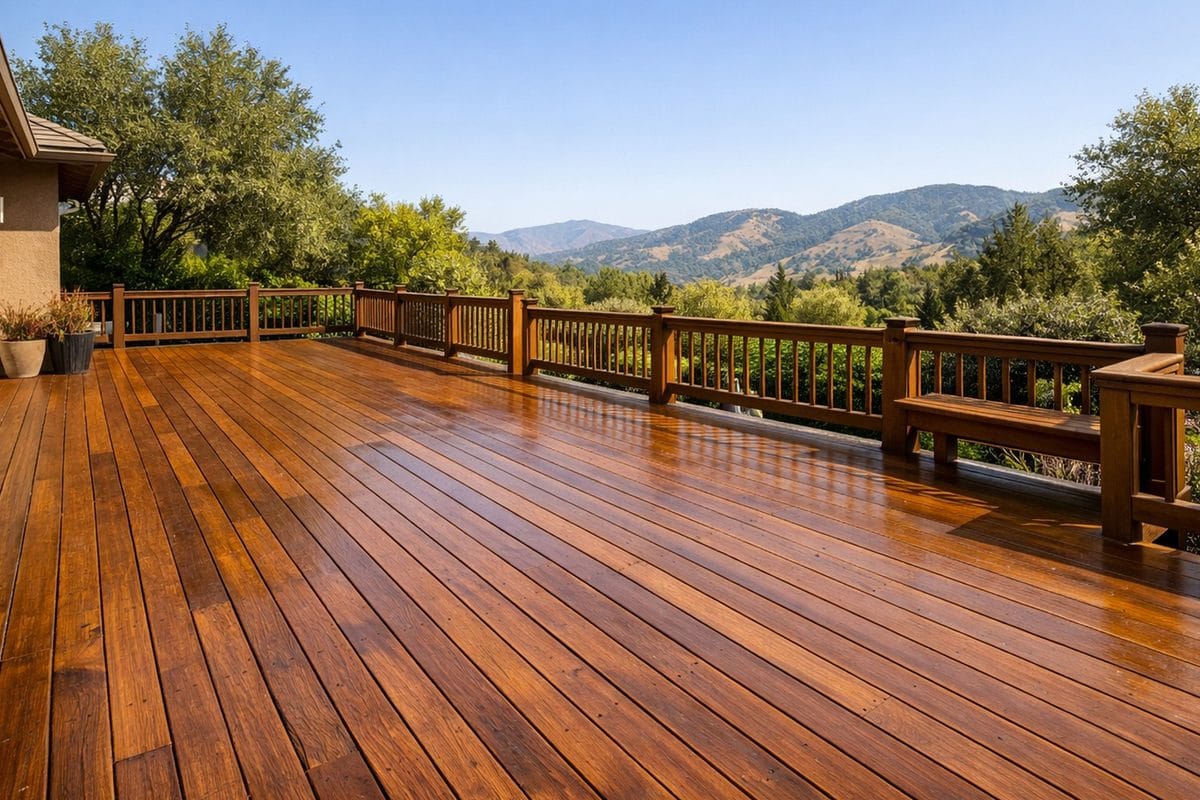
When you do the stripping and restaining process correctly, a deck can look and perform like new for years. Here is how to recognize when stripping is necessary and how to do the job right.
How Do You Tell If Your Deck Needs Stripping?
Not every weathered deck needs stripping. Some just need cleaning and recoating. Others have problems that make a fresh coat of stain worthless. Here is what to look for:
Stripping is necessary if you see any of these:
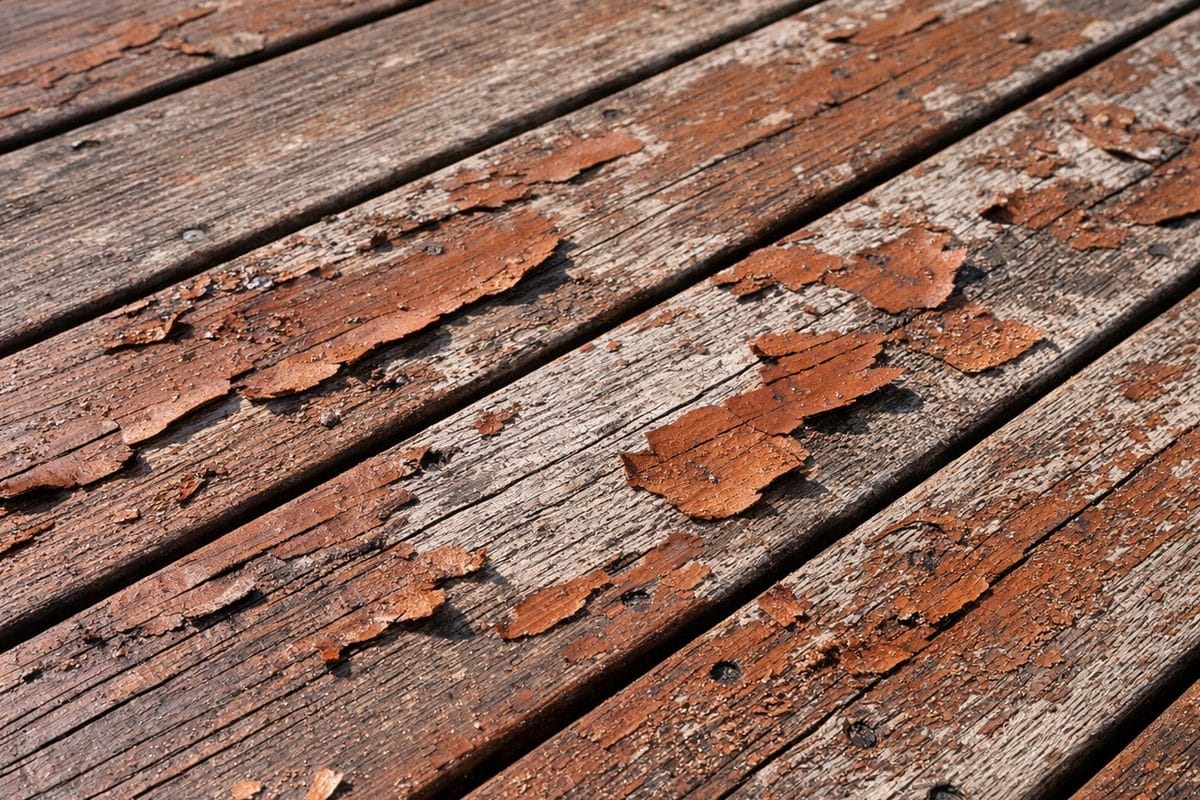
- Stain peeling or flaking off in sheets or chunks
- Stain lifting at edges, corners, or end grain
- Alligatoring: deep cracking in a web-like pattern across the surface
- Gray, weathered wood underneath where stain has failed
- Solid stain that looks more like paint than wood stain
- Mildew or dark discoloration that does not wash away with cleaning
Cleaning and recoating may be enough if:
- The existing stain is intact and adhered well
- The wood is only light gray or faded, not weathered to silver
- There is no peeling or flaking visible
- The deck just looks like it needs a color refresh, not structural repair
What Do You Need to Strip and Restain a Deck?
Gathering all materials before you start is essential. A deck project spans several days with dry time between stages, and you do not want to stop mid-process because something is missing:
- Deck stripper (chemical stripper formulated for deck stain, not paint stripper)
- Stiff-bristled scrub brush
- Pressure washer (2500 to 3000 PSI, with nozzle control)
- Wood brightener (usually a two-part system)
- Sandpaper: 80-grit for heavy scrubbing, 120-grit for final prep
- Deck stain: semi-transparent or solid depending on wood condition
- Stain applicator: roller, brush, or pad designed for deck stain
- Drop cloths or plastic sheeting for surrounding landscaping
- Gloves, eye protection, and respirator for stripper application
- Pressure washer safety gear
How Do You Apply Deck Stripper Correctly?
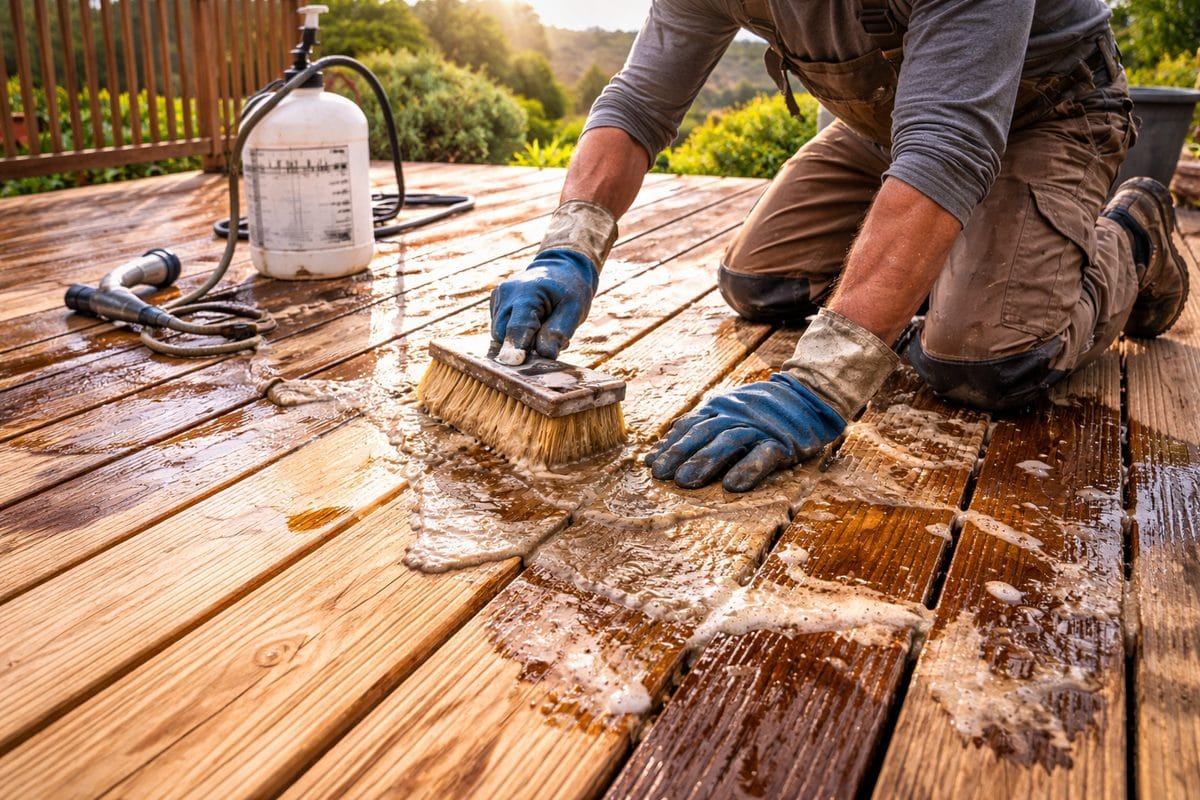
Deck stripper is aggressive chemistry. It works by breaking the bond between the stain and the wood. You apply it generously, let it sit for the time the product specifies, then scrub and rinse it off.
Read the stripper label carefully. Different products have different dwell times, usually 15 to 30 minutes. Do not assume all strippers work the same way.
Apply the stripper evenly across the deck surface with a brush or pump sprayer. Work in sections so you can keep an eye on dwell time. You want the surface to stay wet with stripper for the full recommended time. If it starts to dry before dwell time is up, apply another coat to keep it wet.
Weather matters. Stripping in direct sun causes the chemical to dry too fast. Overcast days or early morning are better. Avoid stripping if rain is expected within the next few hours, as you need to rinse thoroughly and let the wood dry after scrubbing.
Pro Tip
Mix your stripper in a large plastic bucket so you can apply it consistently across the entire deck. Keep the bucket in the shade during the dwell time so it does not dry out. Once dwell time is complete, you have a narrow window to scrub before the chemical starts to cool and lose effectiveness.
How Do You Scrub Off the Loosened Stain?
After the dwell time is complete, use a stiff-bristled scrub brush to agitate the surface and break up the loosened stain. Work in the direction of the wood grain. The stripper should have softened the stain enough that it comes off with moderate scrubbing pressure. You should not have to attack it. If it is not coming loose, either the dwell time was too short or you did not apply enough stripper.
For particularly stubborn areas, reapply stripper to just that spot and let it sit another 10 minutes before scrubbing again.
How Do You Rinse and Dry the Deck After Stripping?
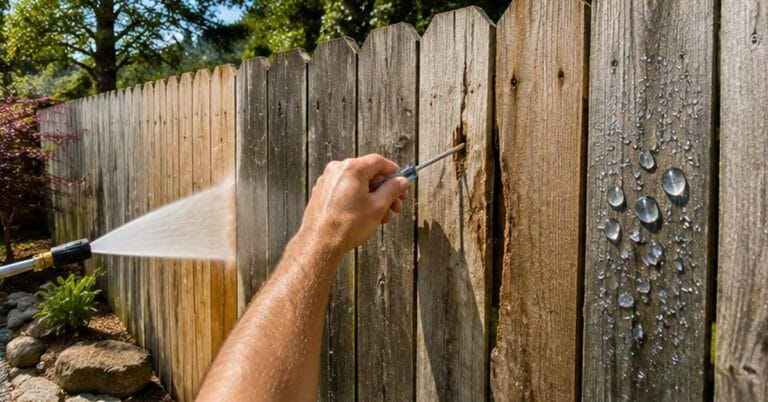
Once the loose stain has been scrubbed off, rinse the deck completely with a pressure washer. Use moderate pressure, around 2500 to 3000 PSI. Too high and you can damage the wood surface. Too low and you will not rinse away all the stripper residue and old stain.
Work the pressure washer in straight lines parallel to the wood grain. Keep the nozzle moving so you do not concentrate pressure on one area. Rinse until the water running off the deck is clear, not gray or brown.
Let the deck dry completely. Depending on weather and wood thickness, this takes at least 24 to 48 hours. Do not move to the next step until the wood is completely dry. Applying brightener to damp wood does not work.
Why Do You Need Wood Brightener After Stripping?
This is the step most DIYers skip, and it is also the step that makes the biggest difference in the final appearance.
Stripping and pressure washing leaves the wood looking dark and sometimes slightly gray. Wood brightener is a chemical treatment, usually a two-part system, that restores the wood color and prepares it for stain. It neutralizes the stripper residue and opens the wood surface to accept stain more evenly.
Apply brightener according to the product instructions. Most require mixing, then brushing or spraying on the deck surface and letting it sit for 10 to 20 minutes, then rinsing thoroughly again. A second pressure wash at this stage removes all brightener residue and leaves the wood light and open.
Let the deck dry again. This is another 24 to 48 hours depending on weather. The wood should be a uniform light tan color, ready for stain.

When Do You Need to Sand After Stripping?
After brightening and drying, feel the wood surface. If it feels rough or splintered, a light sanding with 80-grit followed by 120-grit will smooth it out. Most of the time, if stripper and brightener work as they should, sanding is not necessary. But if you find raised grain or rough spots, take them down before stain goes on.
After any sanding, vacuum or brush off all dust thoroughly. Dust telegraphs through stain and shows up as texture in the final finish.
How Do You Apply New Stain After Stripping?
Stain selection is important. You have two main categories to choose from:
Semi-transparent stain: This type lets the wood grain show through while adding color. It works best on newer wood or wood that is in good condition. Auburn area decks with good structural wood benefit from semi-transparent stain because it showcases the natural character of the wood.
Solid stain: This covers more of the wood color and acts more like a thin paint. It works better on older, weathered, or gray wood. If your stripped wood still looks uneven or discolored after brightening, solid stain will hide those imperfections.
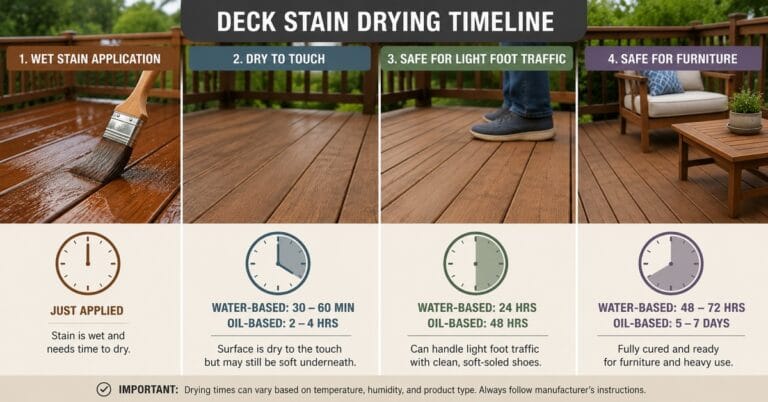
Oil-based penetrating stain: In the hot, dry California foothills where Auburn and Placer County sit, oil-based penetrating stain holds up longer than water-based stain. It penetrates into the wood rather than sitting on the surface, and it resists UV damage better. Oil-based stains typically last 3 to 5 years before the deck needs another refresh, while water-based stains may need attention every 2 to 3 years.
Apply stain with a brush, roller, or applicator pad designed for deck stain. Work in the direction of the grain. Apply thin, even coats rather than one heavy coat. Most deck stains benefit from two coats. Follow the dry time between coats specified on the can. Typically this is 4 to 8 hours but can be longer if the weather is cool or humid.
Do not apply stain if rain is expected within 48 hours. The stain needs time to cure and any water contamination during cure will ruin the finish.
Pro Tip
Stain around the perimeter of the deck first with a brush, getting into the edges and around posts and railings. Then use a roller or pad to fill in the large open areas. Blend the brushwork into the rolled areas while the stain is still wet so you do not get lap marks or uneven coverage.
How Long Does a Properly Stripped and Restained Deck Last?
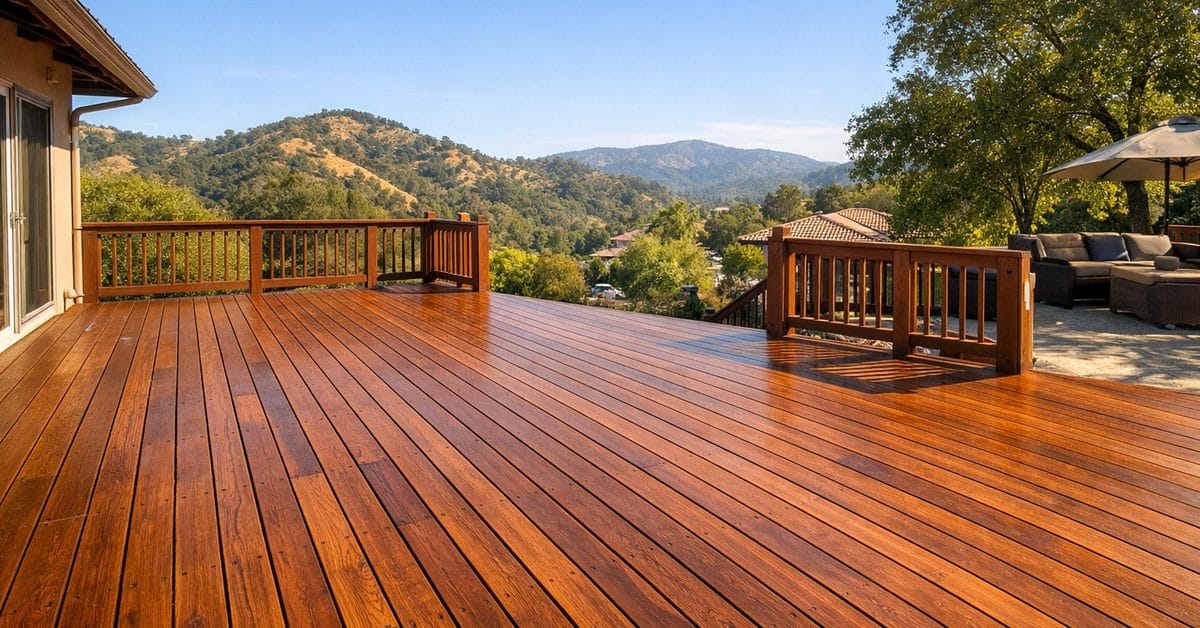
Done correctly, a stripped and restained deck lasts significantly longer than a deck that just got a fresh coat of stain over old finish. With proper stripping, brightening, and a quality semi-transparent or solid stain applied over bare wood, you should expect the finish to hold up for 3 to 5 years. In the Sierra Nevada foothills where UV exposure is intense, that may be on the lower end. Oil-based stains tend to last longer than water-based in this climate.
The key variable is whether you use a proper semi-transparent or solid stain. Cheap deck stains or paint applied over properly stripped wood will not last as long as a quality product. The cost difference between a budget stain and a quality stain is minimal compared to the cost and effort of the stripping and prep work.
What Are the Most Common Mistakes That Make a Restaining Job Fail?
- Not letting the stripper dwell long enough. Dwell time is critical. Rush this step and the stain does not fully soften, and you end up scrubbing for hours without getting clean wood underneath.
- Applying stripper in direct sun. The chemical dries before it has time to work. Apply in shade, in early morning, or on an overcast day.
- Skipping the wood brightener. This step restores wood color and ensures the new stain bonds evenly. Skip it and you end up with blotchy, dark wood that takes stain unevenly.
- Applying stain to damp wood. Stain does not penetrate properly into wet or damp wood. Wait for the wood to dry completely, usually 24 to 48 hours after the final rinse.
- Using the wrong type of stain for the climate. In Auburn and the surrounding foothills, oil-based penetrating stain is the better choice. Water-based stains fade faster under intense UV.
- Applying stain when rain is forecast. Even light rain within the first 24 to 48 hours of application can ruin the cure and create an uneven, patchy finish.
When Should You Hire a Professional for Deck Restoration?
Deck stripping and restaining is physically demanding and involves chemicals that require care and respect. The prep work alone takes several days, and multiple dry times mean the project stretches out over a week or longer.
Most homeowners can handle a small deck, but on larger decks or decks with multiple levels, pressure washers, and strict dwell times, the work gets complicated fast. A professional painter has the right equipment, knows how to work safely with deck stripper, and understands how to get the best adhesion and longevity from the new finish.
If your deck is in Auburn, Granite Bay, Rocklin, Lincoln, Newcastle, Loomis, or elsewhere in Placer County and you want the job done right, I handle the stripping, brightening, and restaining from start to finish. Take a look at my deck staining services. A properly stripped and restained deck lasts years, and the first step is getting the surface prep correct.
I’m a house painter in Auburn who handles deck stripping and restaining throughout Placer County. Get in touch if you want the job done right from prep through final coat.
Frequently Asked Questions
What is the difference between deck stripper and paint stripper?
Deck stripper is formulated to soften and lift stain from wood without aggressive damage to the surface. Paint stripper is designed for harder finishes and can damage or burn the wood surface if used on a deck. Always use a stripper marked specifically for decks and stain.
How long does it take to strip and restain a deck?
A typical deck takes 5 to 7 days from start to finish, including application, dwell time, scrubbing, rinsing, drying, brightening, another drying period, and final stain application. Most of that time is drying time, not active work time. Rushing the drying stages leads to poor adhesion and early failure.
Can I just power wash a deck instead of using stripper?
Power washing alone can remove some loose or flaking stain, but it will not fully remove a well-adhered coat. If the stain is peeling badly, pressure washing is part of the process after stripper. If you are just refreshing a faded deck that is not peeling, cleaning with pressure wash and applying a new coat of stain over the old may work. If the old stain is loose, you need chemical stripper.
Is wood brightener really necessary?
Yes, especially if you want even stain color across the entire deck. After stripping and pressure washing, the wood can look dark and uneven. Brightener lightens the wood and opens the surface for even stain absorption. Skip it and you risk dark, blotchy areas where the new stain does not take evenly.
What is the best stain for decks in a hot, dry climate?
Oil-based semi-transparent or solid stain holds up best in the hot, dry California foothills. Oil-based stain penetrates the wood and resists UV damage longer than water-based stain. In Auburn and Placer County, oil-based stains typically last 3 to 5 years versus 2 to 3 years for water-based options.
How often should I restain my deck after stripping it once?
If you use a quality semi-transparent or solid oil-based stain, you can go 3 to 5 years before the deck needs attention. After that, you may be able to clean it and apply a fresh coat of stain without full stripping, if the existing stain is still well-adhered. Only full stripping is necessary if stain is peeling or failing again.
Ready to give your deck a fresh start? Reach out for a free estimate. I’ll assess the deck condition, walk you through the process, and make sure it’s done right.