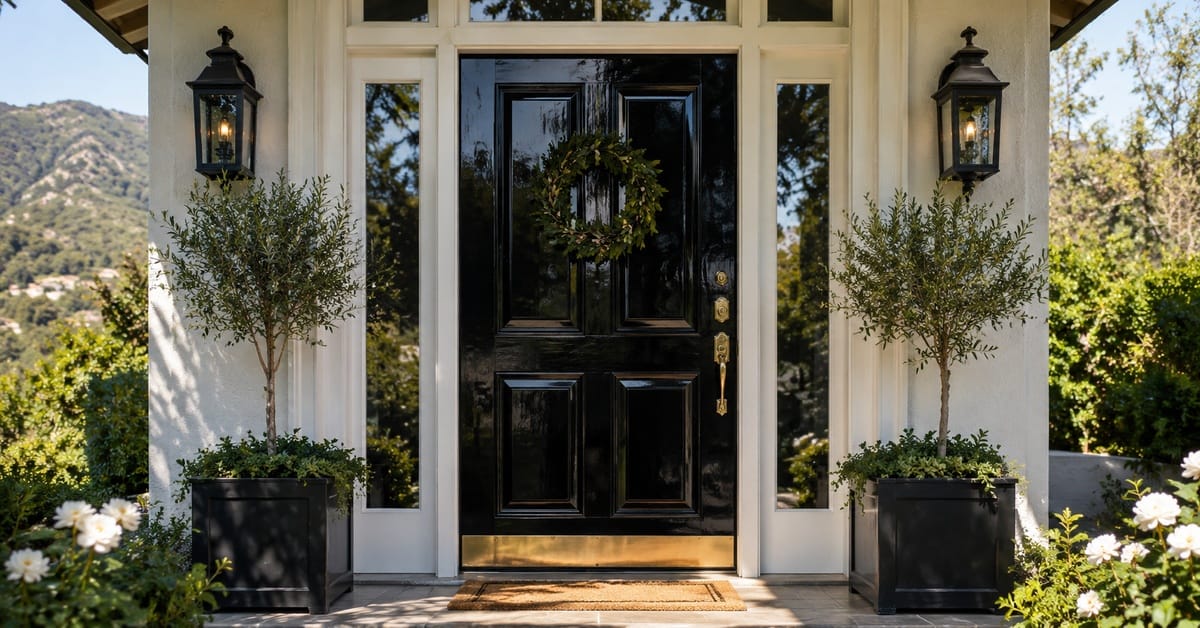
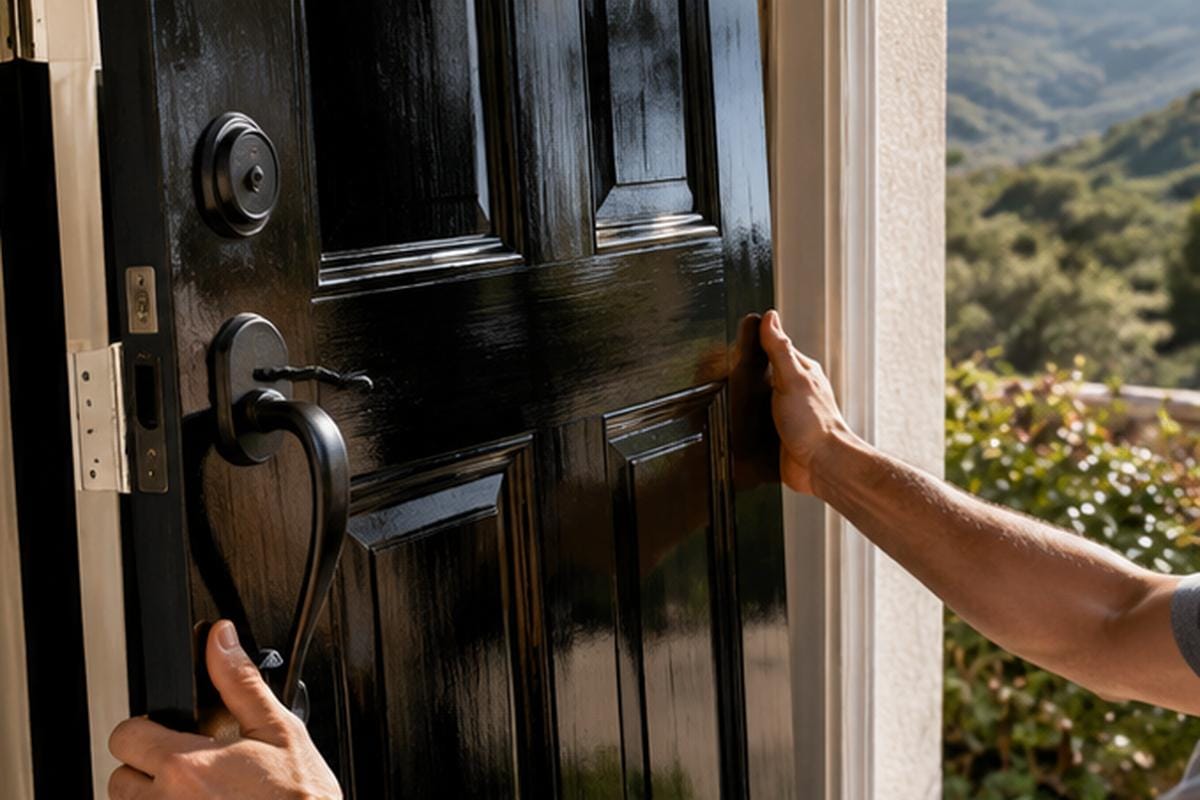
The best paint for a black front door is an oil-based alkyd or urethane-alkyd exterior formula in semi-gloss or high-gloss sheen. Black absorbs more heat than any other color, which means the paint needs flexibility, durability, and excellent adhesion to handle the thermal stress a dark door faces in a sunny climate. Products like Benjamin Moore Aura Exterior or Sherwin-Williams Emerald Exterior deliver the leveling and durability black doors require.
A black front door is one of the highest-impact, most affordable curb appeal upgrades you can make. But done wrong, it looks like an amateur painted it. The finish shows every brushstroke, the paint fades within a couple of years, or it chips at the edges and looks shabby within months. I’ve learned the hard way that black is particularly tricky: it absorbs heat, it shows imperfections, and it demands the right paint and technique to look professional and last.
In my two decades painting homes across Auburn and the foothills, I’ve painted hundreds of front doors. The difference between an amateur black door and a professionally painted one comes down to paint selection, application technique, and understanding why black is so different from lighter colors. Here’s what actually works.
Why Is Black Paint Tricky on a Front Door?
Black absorbs nearly all light wavelengths, which means it absorbs heat relentlessly. On a hot summer day in Auburn, a black front door surface can reach 140-160°F. That’s not just uncomfortable, it puts stress on paint and the substrate. Vinyl or wood expands with heat; cheap paint films can’t flex with that expansion, and adhesion fails. The paint bubbles, blisters, and peels as the substrate moves beneath it.
This is why not all exterior paints work on black doors. A standard latex paint doesn’t have the flexibility or durability to handle the thermal cycling of a dark color in our foothills climate. You need paint engineered for this specific challenge.
There’s another issue: black shows every imperfection. A single brushstroke that would be invisible on white is glaringly obvious on black. Dust, debris, and uneven coverage all stand out. This is why application technique matters enormously. Sloppy application on a black door looks terrible. Careful, professional application looks beautiful.
What Are the Best Paint Types for a Black Front Door?
Here’s the counter-intuitive truth: oil-based or urethane-alkyd paints actually perform better on doors than latex. Don’t let the “modern = better” thinking fool you. These traditional paints have superior flow and leveling, which means they spread out and smooth themselves, hiding brushstrokes. They also have better adhesion to glossy surfaces and superior durability in the heat cycling situation black doors face.
If you’d like to see what professional results look like, check out my exterior painting services.
For a truly professional black door, use an exterior oil-based alkyd or urethane-alkyd paint. Benjamin Moore Aura Exterior (available in oil or water-based formulations) is excellent. Sherwin-Williams ProClassic Exterior is also outstanding, it’s a pre-catalyzed lacquer that levels beautifully and cures to an incredibly durable finish. These paints are pricier than standard latex, but on something as visible as a front door, the investment is worthwhile.
If you prefer water-based latex for environmental or application reasons, use premium products like Benjamin Moore Aura Exterior (water-based version), Sherwin-Williams Emerald Exterior, or Behr Premium Plus. These are substantially better than budget latex and have much better flow and leveling than basic exterior paints. They won’t perform quite as perfectly as oil-based options, but they’re respectable alternatives.
Avoid cheap latex paints. They don’t flow well, they show brushstrokes heavily, they don’t have the flexibility for heat cycling, and they fade faster. On a door this visible, you’ll regret it within a year.
Should You Use Gloss or Semi-Gloss Sheen on a Black Front Door?
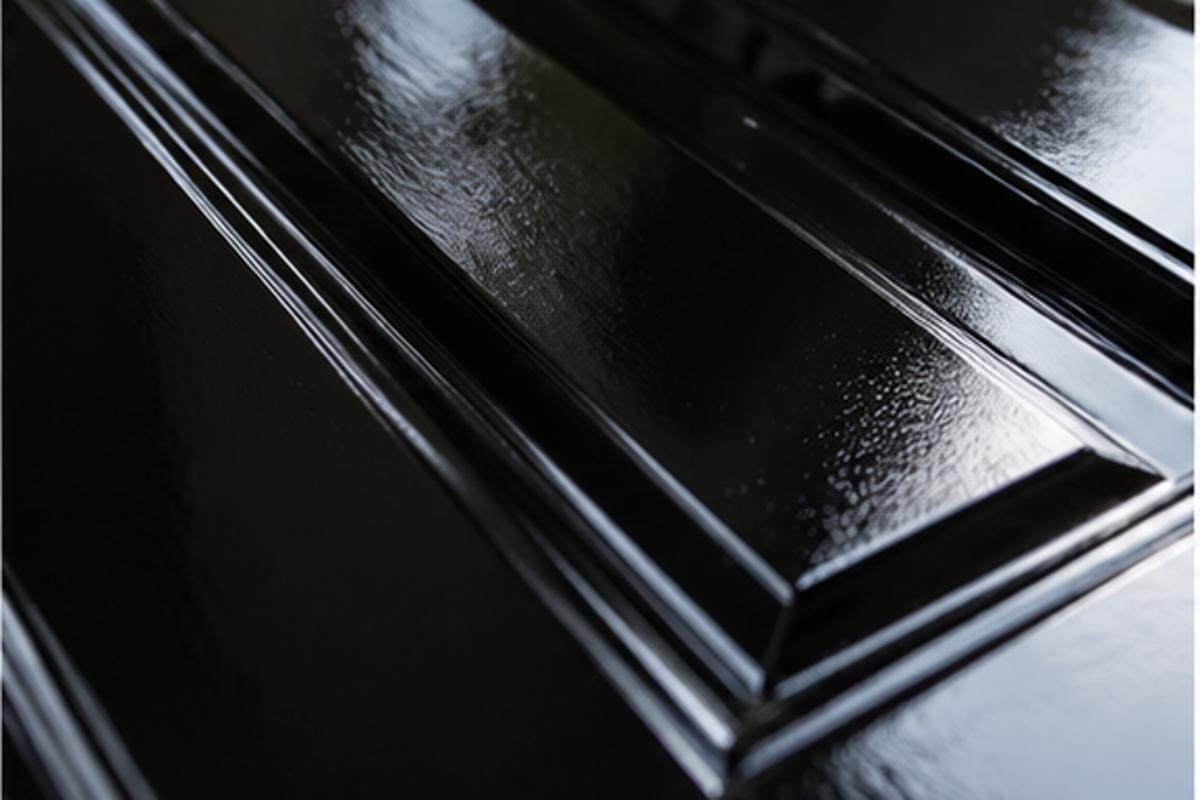
For a black front door, use semi-gloss or high-gloss sheen. Never flat or eggshell. Here’s why: a flat finish on a door gets scuffed, marked, and dirty immediately. Kids touch it, weather marks it, and you’re cleaning it constantly. Gloss finishes are durable, easy to clean, and they look more refined. The sheen also enhances the richness of the black color, it looks deeper and more sophisticated with a gloss finish than it does flat.
Semi-gloss is practical for a door because it’s slightly less reflective than high-gloss, making minor imperfections slightly less visible. High-gloss is more dramatic and formal, but it shows every speck of dust. Pick based on your aesthetic preference. Either works fine; semi-gloss is slightly more forgiving.
Which Black Paint Shades Are Most Popular for Front Doors?
“Black” isn’t one color. There’s a spectrum of blacks, and choosing the right one for your house matters. Here are the most popular professional choices.
Benjamin Moore Onyx. A true, deep black with no brown or gray undertones. It’s classic and works with almost any architectural style. This is my go-to for homeowners who want a “pure black” door.
Sherwin-Williams Tricorn Black. Similar to Onyx, a pure, true black. It’s widely available and pairs well with any exterior color.
Benjamin Moore Wrought Iron. Very dark gray-black with subtle undertones. It’s slightly less stark than pure black but still reads as black from a distance. It’s sophisticated and works especially well on traditional homes.
Sherwin-Williams Iron Ore. Also a very dark gray-black. Similar to Wrought Iron, less harsh than pure black, more elegant and timeless.
If your house has warm tones (beige, tan, golden undertones), go with a pure black like Onyx or Tricorn. If your house has cool tones (gray, blue-gray, white), Wrought Iron or Iron Ore (the slightly softer blacks) work beautifully. The subtle undertones harmonize better with the existing color palette.
What Prep Work Does a Black Front Door Need?
Prep is everything. A great paint job on a poorly prepped door will eventually look bad. A great paint on a perfectly prepped door looks fantastic for years.
Clean the door thoroughly. Wash it with mild soap and water to remove dirt, dust, and any chalky residue. Rinse well and dry completely. Any dirt will be trapped under the new paint.
Sand the existing finish lightly. You’re not trying to strip the door down to bare wood. You’re roughing up the existing surface so the new paint has something to grip. Use 120-150 grit sandpaper and sand in the direction of the wood grain. This takes maybe 30 minutes on a standard door. Wipe away all dust with a tack cloth.
Prime bare spots. If the door has any gouges, scratches, or areas where you’ve sanded through to bare wood, prime those spots with a stain-blocking primer. This prevents tannin bleed-through that can discolor the finish coat. A quick spot-prime with a small brush takes minutes.
Caulk gaps and joints if needed. If the door has gaps where trim meets the frame, or if there are visible cracks or separation, use exterior caulk to seal them. This keeps moisture out and looks cleaner. Smooth it with a wet finger and let it cure per manufacturer directions.
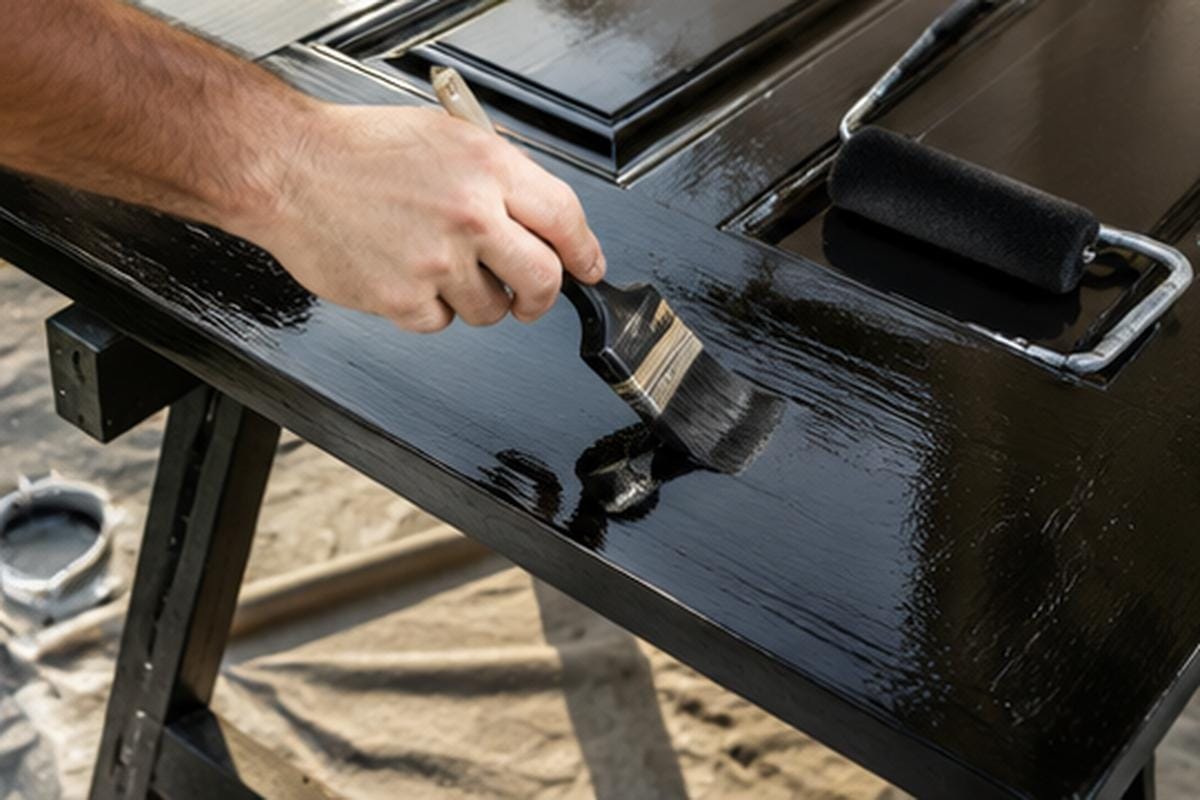
Remove the door from hinges if possible. Painting a door while it’s hanging is doable, but removing it is better. Lay it flat on sawhorses, paint both sides evenly, and you’ll get a far superior finish with no drips. Allow drying time before rehinging.
What Application Technique Gets the Best Results on a Black Door?
This is where amateur jobs fail. Application matters enormously on a dark door.
Use quality tools. A cheap brush sheds bristles into the paint. A cheap roller leaves stipple and tracks. Spend $15-20 on a quality 2-3 inch brush (angled sash brush works great for doors) and $10-15 on a foam roller if you’re using one. The difference is noticeable.
Apply thin coats, not thick ones. One thick coat looks worse than two thin coats. Thick paint shows all the brush marks and can sag or drip. Use long, even strokes. Follow the grain of the wood or the direction of the panels. Let the first coat dry completely before applying the second.
Foam roller for flat panels, brush for edges and trim. A foam roller (3-4 inches wide) applies paint smoothly to flat panel areas. A brush handles the edges, frame, and trim details where a roller won’t reach. Use a brush with a light touch, don’t press hard or you’ll drag and create visible strokes.
Maintain a wet edge. Work fast enough that you’re not going back over semi-dried paint. Overlapping wet paint blends seamlessly; overlapping semi-dried paint leaves lap marks. This is especially visible on black.
Number of coats. Dark colors need more coats than light colors. Plan on 2-3 coats minimum for full, rich black coverage. After the first coat, you’ll see the base color (usually white or primer) showing through. Don’t panic. That’s normal. The second coat covers much better, and the third coat (if needed) ensures full, even coverage and a richer color.
Drying time between coats. Follow the paint manufacturer’s recommendations. Some high-end paints need 24 hours between coats. Budget is usually 4-8 hours. Don’t rush this. Wet paint over barely-dried paint can create adhesion issues.
Pro Tip
Paint your door early on a warm, dry day. You want afternoon sun to help cure the paint without rushing it. High heat can cause paint to dry too fast and show brush marks. Overcast but warm days are ideal.
How Do You Protect Black Front Door Paint From Fading?
Black fades. There’s no way around it. UV attacks the pigment relentlessly. In the foothills sun, a black door will noticeably lighten over 5-7 years, even with quality paint. This is just the reality of black paint in a sunny climate.
The best mitigation is to use quality paint (it fades slower than budget paint) and accept that you’ll need to refresh it periodically. Some homeowners touch up their black doors every 3-4 years. Others repaint them fully every 5-7 years as part of a larger refresh. This is cheaper and easier than painting other exterior surfaces, so it’s not a huge burden.
If your door is in deep shade, it’ll last longer. A door in direct sun will fade faster. Consider shade from an overhang or tree coverage if possible.
What Results Can You Expect From a Well-Painted Black Front Door?
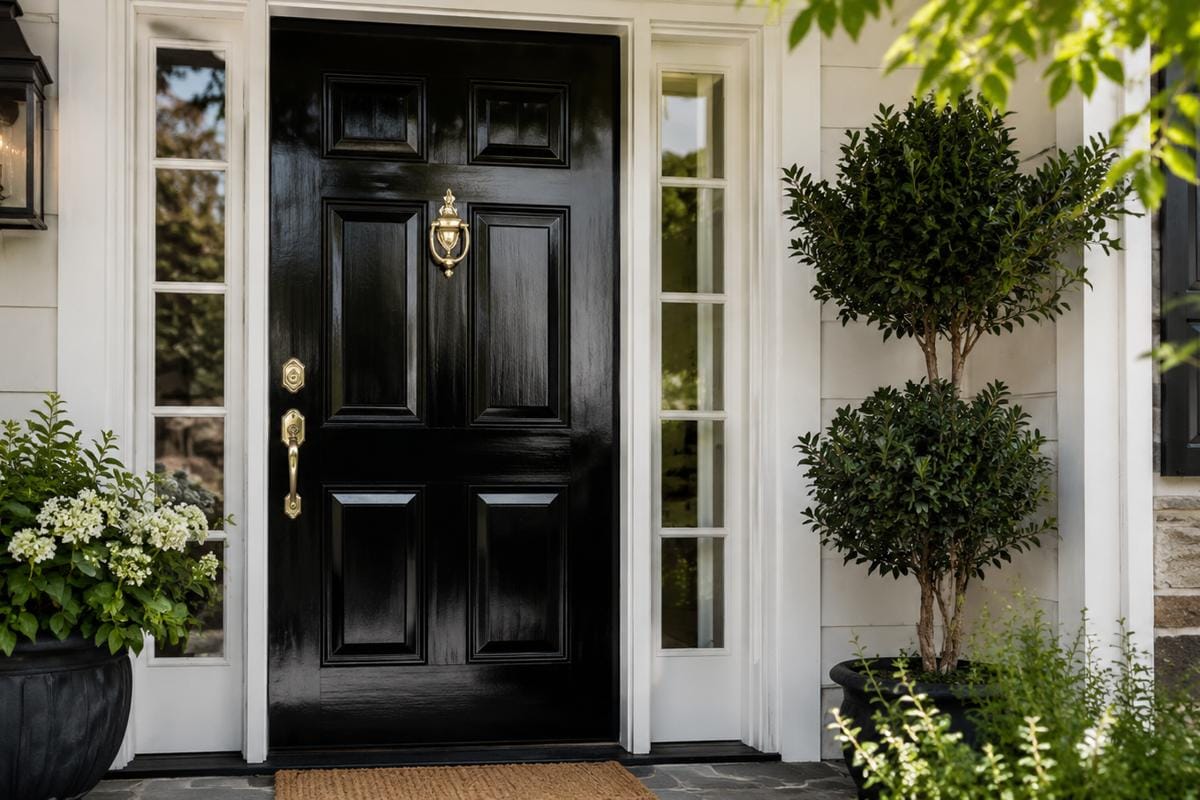
A well-executed black front door is one of the best curb appeal investments you can make. It’s bold, professional, and transformative. If your garage door is looking tired alongside a freshly painted front door, see my guide on painting a garage door for a coordinated exterior result. The cost is minimal, you’re looking at $200-500 in materials and a few days of labor if you DIY, or $500-1,000 if you hire a pro. The visual impact is huge. If the rest of your exterior is also showing wear, the signs your exterior needs paint guide helps you assess whether a more comprehensive repaint makes sense alongside the door.
If you want a black door but aren’t confident in your painting skills, or if you want the best possible result, reach out from an Auburn painter who specializes in getting doors right. It’s a small project but a visible one, and it deserves to be done well.
Front door painting is one of the exterior projects I take on throughout Auburn and Placer County. If you need a house painter in Auburn for doors, siding, trim, or a full exterior refresh, take a look at what I cover.
Frequently Asked Questions
What's the best black paint for a front door?
Benjamin Moore Aura Exterior (oil or water-based) or Sherwin-Williams Emerald Exterior for premium results. Benjamin Moore Onyx or Sherwin-Williams Tricorn Black are excellent true-black shades. Use semi-gloss or high-gloss sheen. Oil-based or urethane-alkyd paints level better than latex, but premium latex works if you prefer water-based.
Should front door paint be glossy?
Yes. Use semi-gloss or high-gloss sheen, never flat or eggshell. Gloss finishes are durable, easy to clean, look more refined, and the sheen enhances the richness of black. Semi-gloss is slightly more forgiving of imperfections than high-gloss.
How do you keep a black door from fading?
Use quality paint, it fades slower than budget paint. Expect some fading over 5-7 years regardless. If the door gets afternoon sun, that accelerates fading. Maintain it with a refresh coat every 3-4 years or a full repaint every 5-7 years. Quality paint and proper maintenance keep it looking rich and dark.
How many coats of paint does a black door need?
Two to three coats minimum. Dark colors need more coats than light colors for full, even coverage. After the first coat, primer or base color shows through, that's normal. The second coat provides better coverage. A third coat ensures rich, even color and maximum durability.
Do you need to prime a front door before painting?
Prime any bare wood spots with a stain-blocking primer. If the door is painted and in good condition, priming isn't strictly necessary, but light sanding and cleaning are essential. If you're painting raw wood or making a dramatic color change, prime the entire door for best adhesion.
How often does a front door need repainting?
A black front door in sunlight typically needs refreshing every 3-4 years for touch-ups, or a full repaint every 5-7 years. Quality paint lasts longer than budget paint. Doors in shade last longer. Climate and sun exposure are the biggest factors.