The most reliable deck stain colors for Auburn foothills homes are warm browns and teak tones. They complement the area’s warm golden light, work on every wood species, and fade gradually rather than shifting dramatically.
Grays and reds look attractive initially but fade faster under intense UV. For most foothills decks, an oil-based semi-transparent stain in a medium warm brown is the safest long-term choice.
Choosing a deck stain color is one of those decisions that seems straightforward until you’re standing at the paint counter with a dozen sample cards, realizing they look completely different in the morning sun than they did indoors.
After twenty years doing deck staining in Auburn and the foothills, I’ve learned that color selection for wood is more constrained, and more nuanced, than most homeowners expect. The wood species, age, grain pattern, and how the sun hits your yard all play a role in how the final color will look and how it will age.
There’s also a hard reality: you can’t go as dark as you might want on weathered wood, and the stain will look dramatically different wet versus dry versus after sitting in our intense Sierra Nevada sun for a few months. I want to walk you through the real options, the colors that actually work in our climate, and how to test before you commit to staining your entire deck.
How Does Stain Opacity Affect Your Color Options?
Before you pick a color, you need to decide between semi-transparent and solid stain. This choice fundamentally changes how color will look on your deck.
Semi-transparent stain. The wood grain shows through completely. The stain is thin, it acts more like a tint that lets the natural character of the wood show. Colors are subtle and warm. You see the wood texture, grain variation, and color variation between boards. This works beautifully on cedar, redwood, or newer pressure-treated wood where you want to preserve the wood look.
The downside: semi-transparent stain is less durable than solid stain (typically lasts 2-3 years in our climate before it needs refreshing), and it won’t hide imperfections, weathering, or discoloration in old wood.
Solid stain. This is almost like paint, it provides full color coverage and hides the wood grain almost entirely. The wood texture is still visible (it’s not a paint film), but the color is opaque. Solid stain works well on weathered pressure-treated wood, old decks where the grain has lost its character, or if you want a true architectural color like deep charcoal or forest green. It lasts longer (typically 3-4 years), and it hides previous stain colors, weathering, and discoloration.
The trade-off: you lose the “natural wood” aesthetic.
In my experience, semi-transparent is the right choice for most Auburn foothills homes with newer cedar or redwood decks. Solid stain is what you reach for when you’re refreshing an old pressure-treated deck or when you want color control on a heavily weathered surface.
What Deck Stain Colors Work Best in the California Foothills?
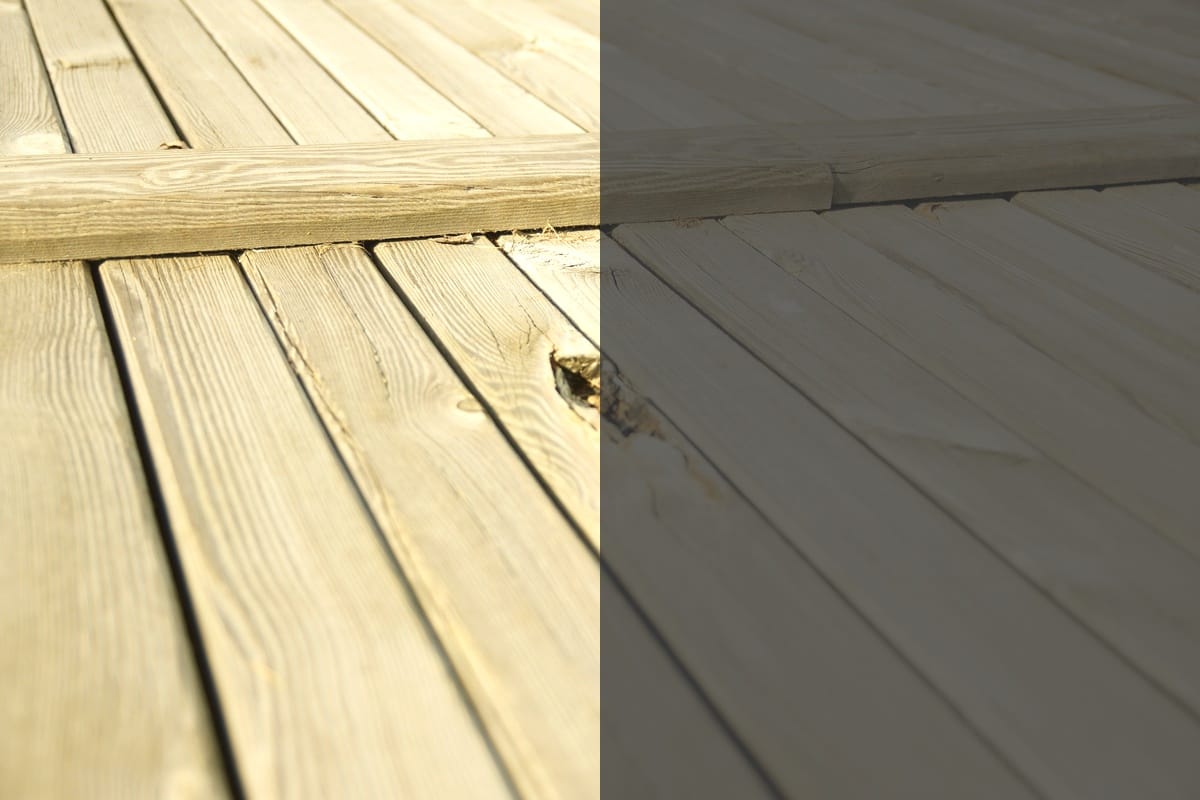
The natural light in Auburn and the Sierra foothills is warm and golden, especially in summer. That warm, golden light changes how colors read. Certain colors that look great in coastal California or northern climates can feel off in the foothills because of how the light hits them. Here’s what actually works:
Want a pro to handle it instead? Take a look at my deck staining services.
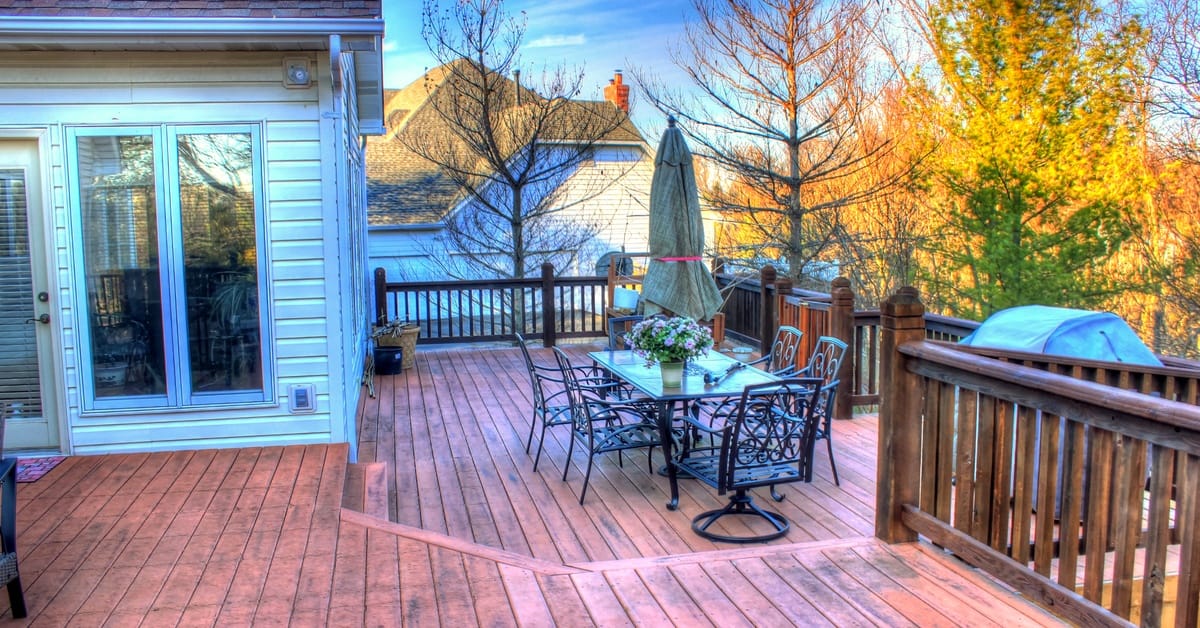
Warm browns and teak tones. This is the most popular choice I see, and for good reason. Medium to dark brown stains, amber, honey, golden brown, or teak, look natural on almost every wood species. They complement the warm light and don’t fight with the natural wood tones you already have in your siding and landscape. These colors age gracefully in our climate; they fade slowly rather than shifting dramatically. If you want to play it safe and get a color that will look good for years, pick a warm brown.
Brands like Cabot Australian Timber Oil in Merbau or Naturals Blonde-Ash, or Armstrong-Clark in Cedar Tone, are solid choices.
Grays. Gray is having a moment, and I understand why. A soft gray or greige (gray-beige) stain can look sophisticated and modern.
The catch: gray stains fade to almost white in strong foothills sun. What looks like a rich taupe-gray when wet can look washed out and chalky after six months of UV exposure. If you want gray, go with a slightly warmer tone (greige or warm gray rather than cool gray), and expect it to fade. You’ll need to recoat every 2-3 years to maintain the color.
Earthy reds and rust tones. Cedar and redwood have warm red undertones, so a red or rust-toned stain can look beautiful and complement those natural undertones.
The challenge: red stains fade faster than any other color in UV light. A rich cedar-red can turn brick-red or even brownish-orange within a year or two in the foothills sun. If you love this look, go in knowing the color will shift, and that’s part of the charm. Some homeowners love the aged patina; others find it disappointing.
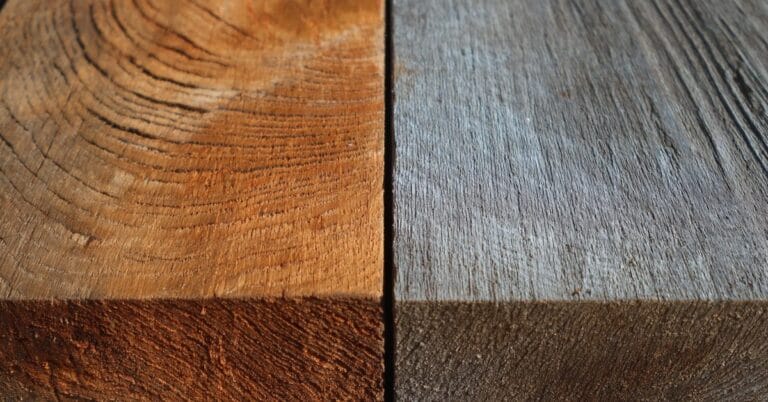
- Natural cedar and clear tones. If you have a new cedar deck, you might choose a clear or very light cedar-toned semi-transparent stain that just enhances the wood color without changing it. This is the most “natural” approach. The wood will weather toward gray over time (more on that below), but while it’s protected, it maintains its warm cedar tone.
How Does Foothills UV Light Change Your Deck Stain Color Over Time?
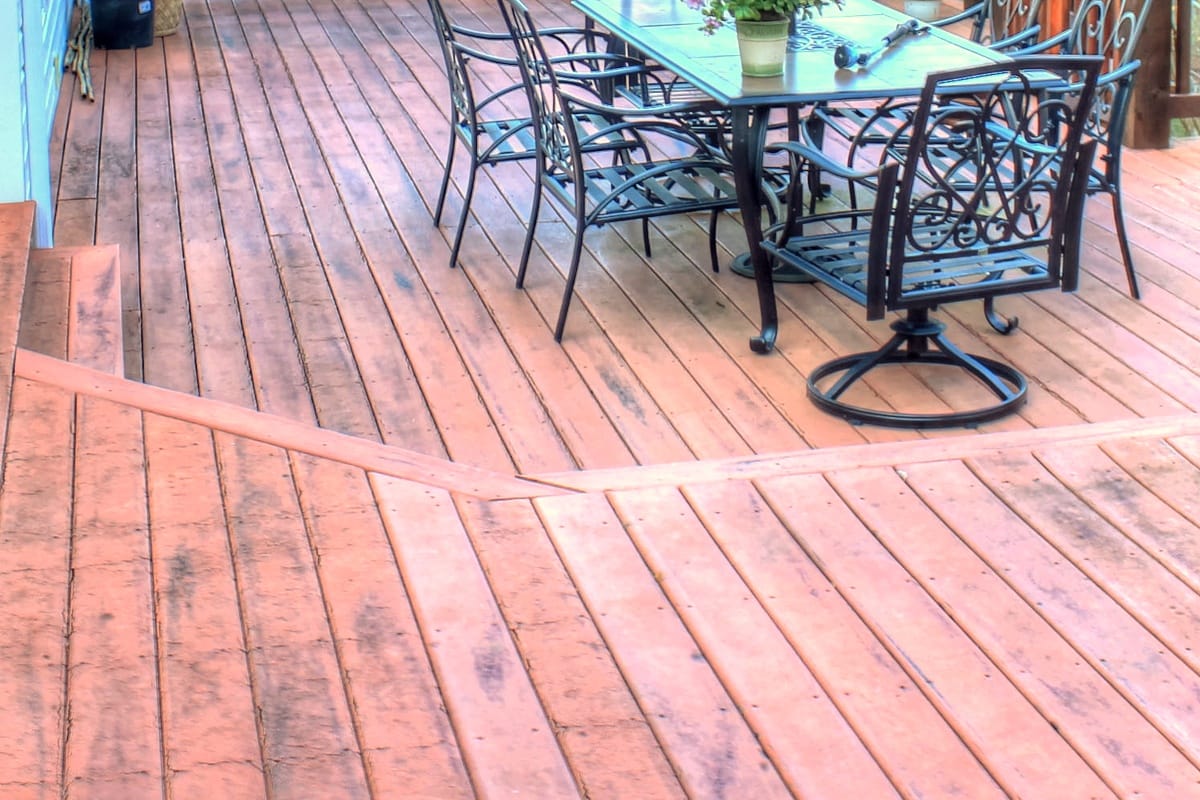
This is the real clincher, and it’s something a lot of guides gloss over. The Auburn and foothills area gets intense sun, especially in summer, and that UV hits your deck from above without much cloud cover to buffer it. Stain colors don’t just fade evenly; they shift.
- Browns fade to gray. A medium or dark brown stain will gradually lose its warmth in the sun. Over 2-3 years, it can develop a silvery or grayish cast, especially on the most sun-exposed side of the deck. This isn’t necessarily bad, the aged look appeals to some people, but it’s important to know that your rich chocolate brown won’t stay chocolate brown forever.
- Reds fade to brown. A cedar-red or rust tone will shift toward brown and eventually take on gray undertones. Again, this is natural aging, not failure.
- Grays wash out. Light gray and greige stains fade to almost white or pale chalky gray in strong sun. They lose definition.
- Blacks and very dark colors trap heat. Dark stains get hot in the sun and can accelerate the breakdown of the finish. I’ve also seen dark stains bleed (release tannins or color) more readily when wet. Avoid pure black or very dark charcoal for outdoor decks in the foothills unless you’re committed to heavy maintenance.
The takeaway: pick a color knowing that it will change. The warm browns and natural wood tones age more gracefully than trend colors. If you love a specific color despite knowing it will fade, that’s fine, just plan to recoat every 2-3 years to refresh it.
Why Is Color Matching So Hard When You Recoat a Deck?
Here’s a scenario I run into regularly: a homeowner wants to refresh their deck with a new coat of stain, but they want to match the original color. The problem is that the original color has faded, and you can’t match faded wood with a fresh stain application. The new stain will be darker and richer than the faded boards around it, or you’ll end up stripping the whole deck and starting over.
If you need to recoat and want consistent color, you have two real options. One: strip the old stain. My guide on stripping and restaining a deck covers the full process. Two: pick a new color that complements the aged color you have. Sometimes the best approach is to make an intentional design choice: stain the fresh sections a slightly different shade that looks intentional, not like a patched job.
The moral of the story is this: think about your color choice not as permanent, but as something that will age and evolve. Pick something you’ll still like when it’s faded and weathered.
Why Should You Always Test Your Deck Stain Color Before Committing?
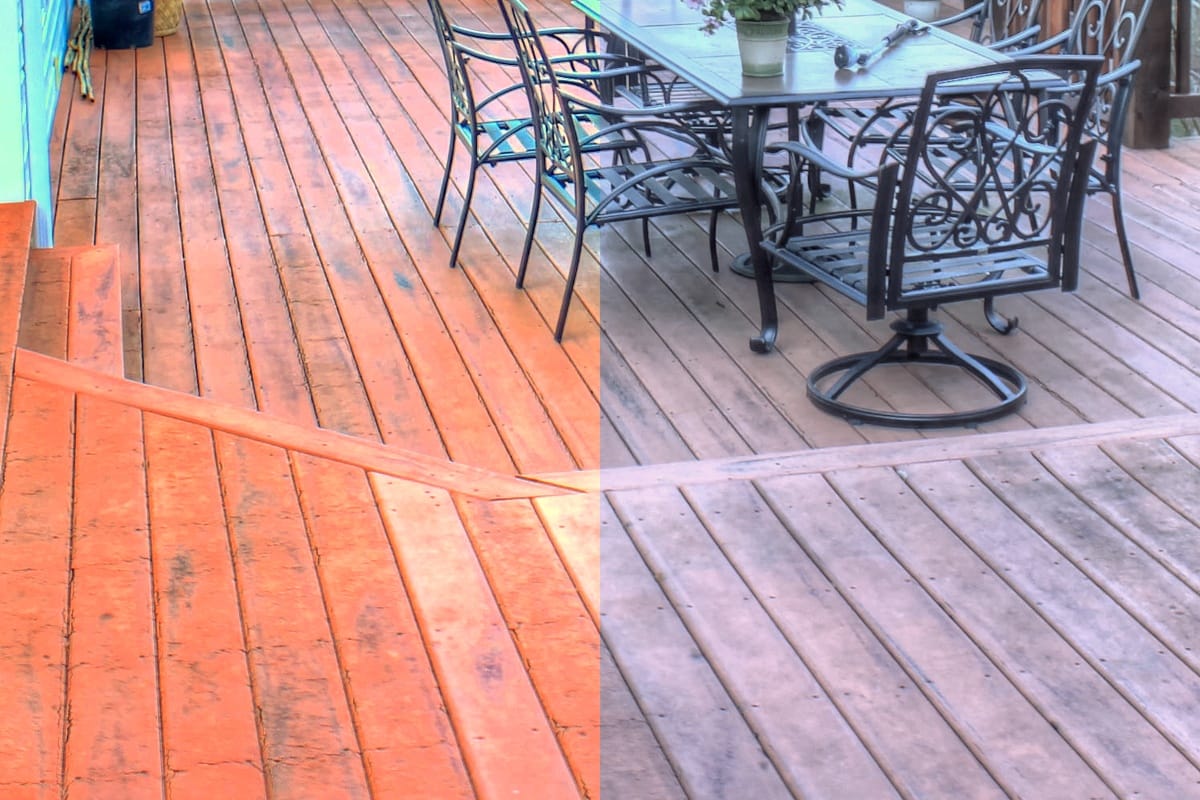
I can’t stress this enough: buy a quart of your chosen stain and apply it to a small, inconspicuous area of your deck, maybe a section under the stairs or on the back edge, and let it cure for at least a few days. Stain looks very different on different wood species and different ages of wood.
- New pressure-treated wood is often greenish and can have a waxy coating that resists stain penetration. The same stain color will look different on new wood than on aged wood. It may also look darker or lighter depending on moisture content.
- Old or weathered wood is thirsty and absorbs stain more deeply. The same color can look richer and darker on old wood than on new wood.
- Cedar and redwood soak up stain quickly and evenly. Pressure-treated wood is inconsistent and may need a second coat.
- Wood grain variation between boards means the stain won’t look identical board to board. Some boards are tighter-grained and denser; others are looser. The stain color will vary slightly across the deck, and that’s normal.
I always tell homeowners: test first, commit second. A quart costs $20-30 and saves you from a $500+ mistake.
Once you’ve settled on a color, my guide on how to stain a deck covers the full application process.
Is Two-Tone Deck Staining Worth It?
If you want to get creative, consider a two-tone approach. I’ve done beautiful decks with the main surface in one color and the railings, stairs, or fascia in a complementary color.
- Surface and railings. Warm brown deck surface with darker charcoal stain on the railings creates a nice visual boundary and makes the railings recede visually.
- Deck and stairs. Different colors on the main deck and the stairs leading down to the yard can define the space and look intentional.
- Composite and wood mix. If you have composite deck boards with wood railings, staining just the wood elements a richer color while leaving the composite its factory color is a solid look.
The key is that the colors should either complement (warm brown + warm gray) or contrast clearly (light stain + dark railings). Half-committed two-tone choices tend to look confused.
How Do You Match Your Deck Stain to Your House Exterior?
Your deck stain doesn’t exist in isolation, it’s part of the overall aesthetic of your home. The color should work with your siding, trim, roof, and landscaping.
- If your house has warm-toned siding (tan, cream, light brown, warm gray), a warm brown or golden-toned deck stain will tie everything together. Avoid cool grays or very dark colors that fight with the warm tones.
- If your house has cool-toned siding (white, gray with blue undertones, cool tan), you can still go with a warm brown deck stain, it provides warmth and contrast. Just be intentional about the contrast; don’t pick a color that’s halfway between warm and cool.
- For modern homes with dark siding, a lighter stain (warm gray, natural cedar tone, or light brown) provides contrast and keeps the deck from looking as heavy as the house.
- For rustic or farmhouse homes, warm browns and natural wood tones feel cohesive. Gray stains can feel too modern.
Look at your house and your landscape together. Your deck color should feel like it belongs in that context, not like an afterthought.
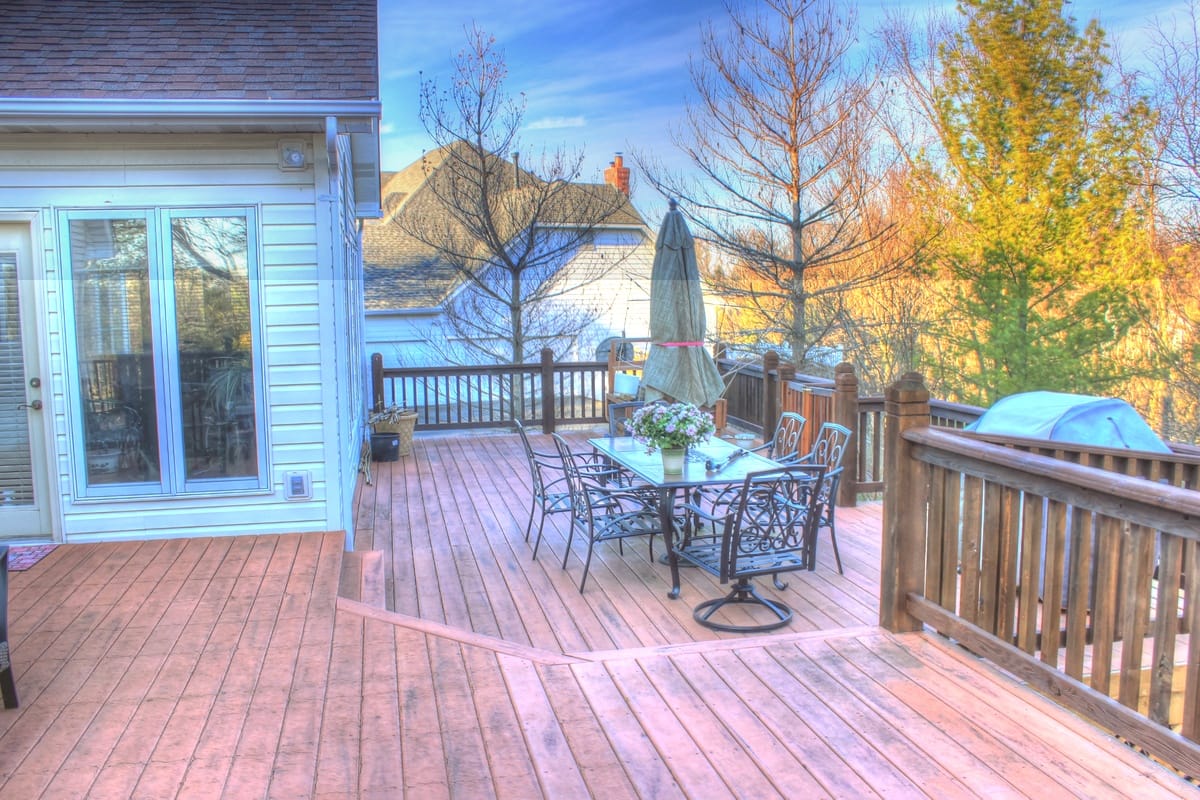
If you want to see how different stain colors have turned out on real decks across the foothills, take a look at some of the projects I’ve completed. It gives you a sense of how colors shift over time and in different lighting conditions.
Beyond deck staining, I handle exterior and interior painting throughout Placer County. If you need a local painter in Auburn for any project around your home, I cover it all.
Frequently Asked Questions
What color deck stain is most popular?
Warm brown tones, honey, amber, golden brown, and teak, are the most popular. They work on almost every wood species, they age gracefully in California foothills sun, and they complement both traditional and modern homes. Semi-transparent stains that let the wood grain show through are more popular than solid stains for this reason.
Does deck stain dry darker or lighter?
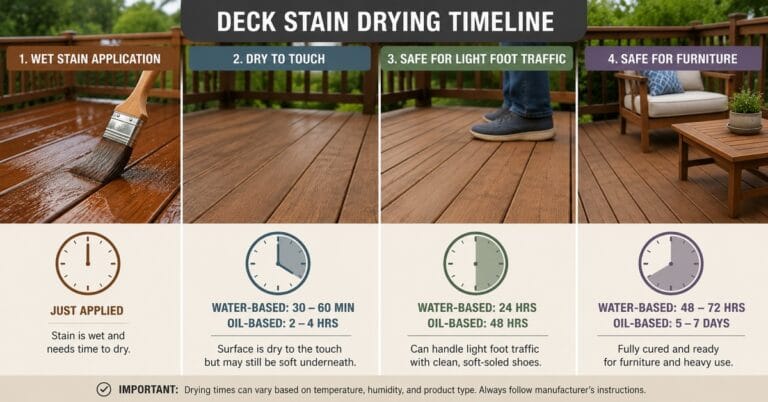
Deck stain typically dries darker than it appears when wet. When you're applying it, it looks quite rich and saturated. As it dries, it will look even darker until it's fully cured (which takes 48-72 hours depending on the product). This is why testing on a small area is so important, you need to see the final dried color, not the wet color.
What stain color hides weathering best?
Solid stain hides weathering, discoloration, and grain variation better than semi-transparent stain because it provides opaque coverage. Among colors, warm medium to dark browns hide weathering better than light colors or grays. If your deck is weathered and gray, a semi-transparent stain will reveal all that weathering; a solid stain will cover it.
Can you change deck stain color?
Yes, but it depends on the condition of the current finish. If the old stain is still intact and just faded, you can sometimes apply a darker semi-transparent stain over it (the new stain will darken the old color). If the old stain is peeling or you want a dramatic color change, you'll need to strip the old finish first, which is a bigger project. For any color change, test on a small area first.
Should I use semi-transparent or solid stain for better color?
If you want the richest, most opaque color and maximum coverage on an old or weathered deck, solid stain is the choice. If you want to see the wood grain and have a more natural look, semi-transparent is better. Semi-transparent colors are more subtle; solid stain colors are bolder. The choice depends on your aesthetic preference and the condition of the wood.
How do I match an existing deck stain color?
If your deck is faded, matching the faded color exactly is almost impossible, fresh stain on faded wood won't look the same. Instead, either strip the entire deck and start fresh (so the whole deck gets the new color), or pick a complementary new color that intentionally looks different. If you're just adding a fresh coat to maintain the color, buy a sample of the original stain from the manufacturer and test it; the color should freshen up as you recoat.
Choosing the right deck stain color is an important decision, and getting the prep and application right matters just as much as the color itself. If you’re in Auburn, Granite Bay, Rocklin, or anywhere in the foothills and you want to make sure your deck staining is done right, reach out for a consultation. I’m happy to walk you through color options and help you make a choice you’ll love for years to come.