Fence staining is more demanding than deck staining because the surface is vertical, both sides need coverage, and drips are visible from the street.
Use oil-based semi-transparent stain applied top to bottom in small sections, back-brushing drips immediately. Prep follows the same process as a deck: clean, dry completely, and evaluate the existing finish. But application requires more precision and patience per square foot.
Fence staining looks similar to deck staining on the surface, you’re protecting wood with stain, but the differences trip up a lot of DIYers. Fences are vertical, which means water and stain drain differently. The pickets are thinner and more exposed. The sunlight hits them at different angles than a horizontal deck.
And most crucially, mistakes on a fence are visible from the street, so you want to get it right. I’ve stained thousands of feet of fencing throughout Auburn and the foothills, and the homeowners who succeed are the ones who understand how fence staining differs from deck staining and who don’t try to use deck-staining techniques on fence boards.
Let me walk you through what actually works for fence staining, the common mistakes I see, and how to avoid them.
How Is Staining a Fence Different from Staining a Deck?
If you’ve tackled staining a deck, you might think fences are just a different application of the same skills. They’re not. Here are the critical differences:
- Vertical surfaces drain differently. On a deck, the horizontal surface holds stain and gives you time to work. On a fence, stain immediately starts dripping down the picket. You can’t “flood and back-brush” a fence the way you do a deck. You have to work faster and in smaller sections, constantly managing drips.
- Both sides need staining. A deck has a top surface that’s visible and important. A fence has two visible sides. You’ll be applying stain to both faces of every picket, which means double the work and double the time.
- Drips are permanent. On a horizontal deck, a drip can be feathered out. On a vertical fence, a drip runs down and stays visible. Drip control is essential.
- Weather exposure is equal on both sides. A deck top surface gets pounded by sun and weather from above. A fence gets equal exposure on both sides simultaneously. This affects how quickly the stain weathers.
- End grain is more of an issue. Fence pickets have end grain at the top and bottom. These areas absorb stain fast and show the most weathering. They require extra attention.
How Do You Know If Your Fence Is Ready to Stain?
Before you open a can of stain, assess what you’re working with.
Want a pro to handle it? Take a look at my deck and fence staining services.
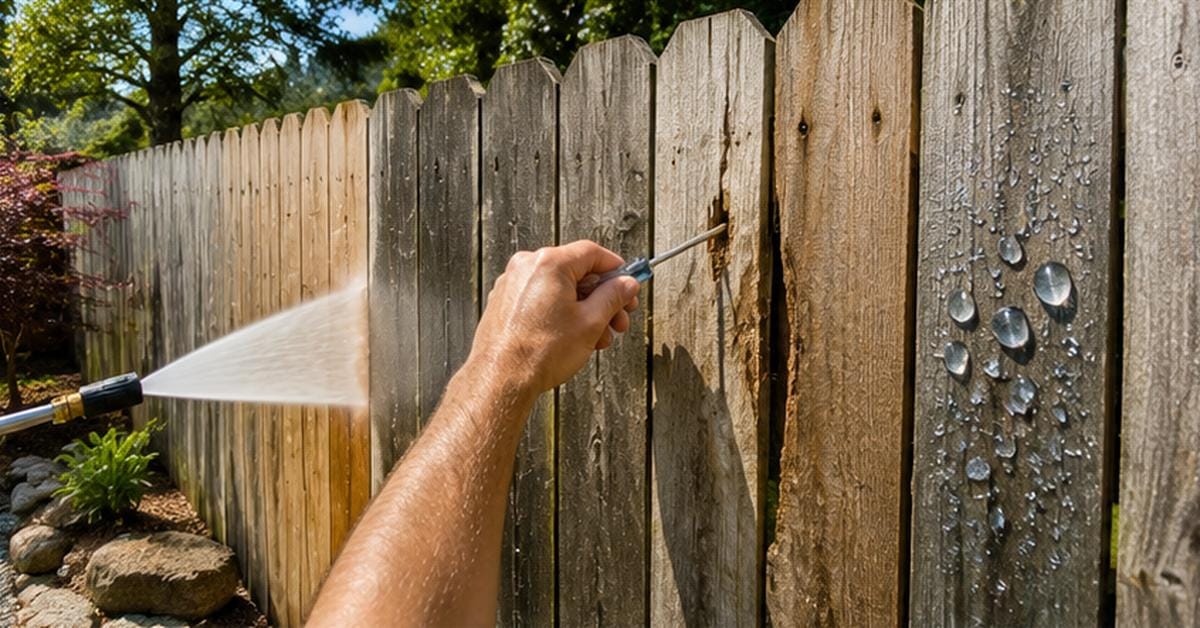
- Power wash to clean. Dirt, algae, and mold growth are common on fences, especially on the shaded side. Power wash gently (1500-2000 PSI, never higher) to remove surface contamination. Let it dry completely (48-72 hours) before staining.
Check for rot. Run a screwdriver along the fence boards, especially at the bottom where moisture collects and at the top where water sits in the post cap area.
If the screwdriver sinks easily, you have rot. Rotten boards need to be replaced before you stain. Staining over rot is pointless, it will continue to decay under the stain.
Evaluate the existing stain. If your fence has old stain, test whether it’s still sealing the wood. Sprinkle water on a board. If it beads up, the old stain is still protecting the wood and you can overcoat.
If the water soaks in, the old stain has failed and you need to strip before recoating. A failed finish will cause your new stain to fail too.

Should You Use Oil-Based or Water-Based Stain on a Fence?
The same general rules apply to fences as to decks, but with a fence-specific consideration.
- Oil-based penetrating stain is the standard choice. It penetrates into fence wood, seals from the inside, and lasts 3-4 years. It flows well and is forgiving during application on vertical surfaces. The downside: longer drying time between coats (24+ hours) and the smell.
- Water-based stain dries faster (4-6 hours between coats), which can be appealing. But on vertical fence boards, water-based stain can show drip marks more easily because it dries unevenly on the vertical surface. If you use water-based, you have to be meticulous about drip control.
- Semi-transparent vs. solid: Semi-transparent on a nicer fence where you want to see the grain; solid on a weathered or heavily damaged fence where you want complete coverage. For most residential fences in the foothills, semi-transparent oil-based is the standard.
Which Tool Works Best for Staining a Fence?
Fence staining can be done with several methods, each with trade-offs.
- Brush and bucket. The traditional method. A brush gives you control over application and drips. You can work section by section, managing the stain carefully. It’s slower than other methods (a 100-foot fence takes a full day), but the finish is typically the most even and professional. If you’re DIYing, this is the safest choice.
- Paint pad or roller. A pad or roller covers ground faster than a brush, and it works on the flat face of pickets. But you need a brush for the edges, gaps, and ends. Use a pad for the main surface and a brush for detail work. This is faster than brushing alone but slower than spraying.
- Airless sprayer. A sprayer is fastest. A professional can spray a fence in a few hours. But sprayers create mist and overspray, so you need to mask off adjacent plants, vehicles, and buildings. Also, you’re more likely to get uneven coverage or drips if you’re not experienced with the equipment. Rent or hire a professional for spraying if you want that speed.
How Do You Stain a Fence Without Making a Mess?
Here’s the specific technique that works for fences.
- Work in small sections. Don’t try to stain an entire 6-foot-wide section at once. Work one to three pickets at a time (or roughly a 2-foot width). This keeps the stain from drying too fast and becoming uneven.
- Stain both sides as you go. Don’t stain the entire front, then come back for the back. Stain the front of a section, then immediately flip around and stain the back. This approach keeps you moving and doesn’t require you to come back and redo sections.
- Control drips by working top to bottom. Start at the top of each picket and work down. Any drips that form will flow downward into areas you’re about to stain anyway, so they blend in. Don’t work bottom to top, drips will land on already-stained areas and show.
- Back-brush drips immediately. If a drip forms (and they will), immediately run your brush lightly over it to blend it in. Don’t let drips dry on the surface.
- Don’t miss the edges and gaps. The edges of each picket and the gaps between pickets are visible and need stain. These areas are easy to skip, which results in an unfinished look. Take time to brush into the gaps and along all edges.

Why Do Fence Posts and End Grain Need Extra Attention?
Fence posts and the end grain at the top of pickets weather faster and need extra protection.
- Fence posts. The vertical fence posts are typically thicker and more exposed. Apply stain carefully to all four sides of each post. The ends of posts (top and bottom) are end grain and absorb stain heavily, give these areas an extra coat or a stain-sealer specifically for end grain.
- Post caps. If you have decorative post caps, stain them too. Water sits on top of post caps, so adequate stain protection here is important. Some people skip the caps or assume they’ll shed water naturally, but caps benefit from stain protection.
- Picket tops. The top edge of each fence picket is end grain and is one of the first areas to weather and gray. Apply an extra coat to picket tops or consider a concentrated end-grain sealer.
What Are the Most Common Fence Staining Mistakes?
Here’s what I see go wrong most often:
- Painting instead of staining. Some people use exterior paint on fences because they think it will last longer. It won’t. Paint forms a film on top of the wood. As the wood expands and contracts with weather, the paint cracks, peels, and flakes. Stain penetrates the wood and flexes with it. Use stain, not paint, on wood fences.
- Applying stain too thick. More stain isn’t better. A thick coat sits on the surface instead of penetrating, and it takes forever to dry. It also peels more easily. Use thin, even coats instead.
- Not addressing old failing stain before new application. If the old stain is peeling or flaking, you can’t just stain over it. The new stain won’t stick. Strip the old finish first.
- Staining in direct afternoon sun on a hot day. The surface dries too fast, trapping moisture underneath. Stain in early morning or late afternoon, or choose a mild day.
- Forgetting both sides. A fence has two visible sides. Both need stain. This doubles the work but it’s necessary. Don’t skip it.
How Often Do Foothills Fences Need to Be Restained?
After you stain your fence, staying on schedule with maintenance keeps it looking good.
- Inspect annually. Walk the fence and look for areas where the stain is fading or where water no longer beads. This tells you when recoating is needed.
- Plan to recoat every 2-3 years. In the intense foothills sun, expect to recoat a fence every 2-3 years. Shaded sides may last longer; sun-exposed sides may need recoating sooner.
- Clean before recoating. When it’s time to refresh, power wash the fence and let it dry. Light sanding helps the new stain adhere. Then apply a fresh coat.

Fence staining keeps me busy through spring and summer across the foothills. I also take on deck staining, exterior painting, and interior work throughout Placer County. If you need a house painter in Auburn for any project around the property, I handle it all.
Frequently Asked Questions
Is it better to paint or stain a fence?
Stain is better for wood fences. Stain penetrates the wood and flexes as the wood expands and contracts. Paint forms a film on the surface that cracks and peels as the wood moves. Stain looks more natural and lasts longer on wood fences.
How long does fence stain last?
A quality oil-based semi-transparent stain on a fence lasts 2-3 years in the foothills climate. Shaded sides last longer; sun-exposed sides fade faster. Recoating every 2-3 years keeps the fence looking good and protected.
How do you prepare an old fence for staining?
Power wash to remove dirt and algae, let dry 48-72 hours, check for rot and replace damaged boards. Test the old stain: if water beads, you can overcoat; if water soaks in, the old stain has failed and you need to strip it first. A properly prepared surface is essential for stain adhesion.
Can you stain a fence with a roller?
Yes, a roller covers the flat face of pickets quickly. But you need a brush for edges, gaps, and detailed work. A combination of roller for the main surface and brush for detail is faster than brushing alone while still giving good control.
What's the best fence stain for the California foothills?
Oil-based semi-transparent stain formulated for exterior wood. Brands like Cabot Australian Timber Oil, Armstrong-Clark, or TWP are solid choices. They provide good UV protection, penetrate well, and last 2-3 years in the foothills climate. Test on a small section first to confirm the color works for your fence.
How often should you re-stain a fence?
Every 2-3 years in the foothills, depending on sun exposure and stain quality. Perform a water-bead test annually: if water no longer beads on the wood, it's time to recoat. Shaded sides may last longer; south and west-facing sides typically need recoating sooner.
Fence staining is detailed work, and getting it right means understanding the differences from deck staining. If you have a fence in Auburn, Rocklin, Granite Bay, or anywhere in the foothills and you want it stained professionally, reach out for a consultation. I’ll assess your fence condition, recommend the right stain, and make sure it’s protected and looking great for years to come.